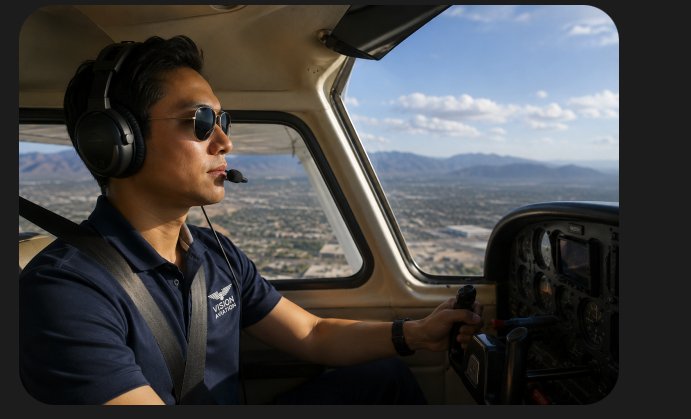
Best Flight Schools in Phoenix: Your 2026 Guide to Arizona Pilot Training
What if the most expensive flight school in Arizona actually costs you more in lost career momentum than a leaner, tech-forward program? You've likely spent hours scouring forums, only to find confusing "hidden" fees and schools still teaching on 1970s steam gauges. It's frustrating to realize that your "affordable" training might leave you unprepared for a modern airline flight deck. Finding the best flight schools in Phoenix requires looking beyond the glossy brochures to find a training environment that mirrors the technology you'll actually fly in 2026. Precision matters. Quality matters.
We understand that you want more than just a license; you want a competitive edge. You deserve a training path that prioritizes Garmin Glass avionics and provides efficient multi-engine time building opportunities. This guide will show you how to choose a school that offers modern G3X cockpits and robust IFR training environments. We'll explore how to secure your advanced ratings efficiently, ensuring you're ready for the 660,000 new pilot roles Boeing projects will be needed over the next 20 years. From mastering high density altitude in a 180HP Cessna to building multi-engine cross-country experience, we're here to help you navigate your journey to the skies.
Key Takeaways
- Leverage Arizona’s consistent VFR weather and complex airspace to build superior situational awareness and technical proficiency in a high-intensity environment.
- Identify the best flight schools in Phoenix by auditing fleet standards, ensuring you train on modern glass cockpits rather than outdated analog systems.
- Choose between accelerated airline-track programs and specialized boutique training environments based on your specific professional or certification objectives.
- Discover why starting your journey with G3X and Garmin Glass avionics reduces long-term training costs and better prepares you for 2026 airline standards.
- Fast-track your path to the flight deck by securing high-performance multi-engine time and advanced IFR cross-country experience in modern twin-engine aircraft.
Why Arizona is the Global Hub for Flight Training in 2026
Phoenix isn't just a desert city; it's a high-performance laboratory for the next generation of aviators. Aspiring pilots from across the globe choose the "Valley of the Sun" because the environment demands a level of precision that few other regions can match. When you evaluate the best flight schools in Phoenix, you're choosing a location where the geography itself serves as an instructor. It's a place where reliability meets complexity, creating the perfect forge for professional pilots who want to lead the industry.
Arizona's heat introduces a critical daily lesson: density altitude. This isn't a theoretical concept in the desert; it's an operational reality that directly impacts aircraft performance. Training in an aircraft with a high-performance 180HP engine, such as a modified Cessna 172P, provides the necessary safety margins and climb performance required when temperatures rise. This power advantage ensures you can focus on mastering your maneuvers rather than struggling with a sluggish airframe in thin air. Additionally, the high concentration of Designated Pilot Examiners (DPEs) in the region helps you avoid the "checkride bottleneck." You can complete your FAA pilot certification requirements and move directly into your exam without the months of waiting common in other states.
Navigating Phoenix’s Complex Airspace
Training under the Phoenix Class Bravo shelf builds a level of radio confidence that rural programs simply can't replicate. You'll operate in close proximity to major hubs and busy satellite airports like Deer Valley and Falcon Field, the latter of which sees over 300,000 annual operations. This exposure to high-intensity commercial environments early in your training is invaluable. It forces you to develop professional communication skills and superior situational awareness. You'll master real-world IFR procedures in one of the nation's busiest corridors, ensuring you're ready for the transition to a commercial flight deck.
The Weather Factor: 300+ Flying Days
Predictable weather is the backbone of an efficient training program. With over 300 flying days per year, you won't suffer from the "rust" that accumulates during long weather delays found in the Pacific Northwest or the Midwest. This consistency allows for a steady, daily progression through your syllabus, which is especially critical for complex goals like multi-engine time building. While the clear skies are the primary draw, the seasonal monsoon and desert thermals also serve as excellent training tools. They provide safe, supervised opportunities to learn about convective activity and atmospheric stability. The best flight schools in Phoenix use this atmospheric variety to build well-rounded, resilient pilots who are ready for any environment.
Key Criteria: How to Evaluate a Flight School in Arizona
Selecting a training provider is the most critical decision you'll make in your early aviation career. While many advertisements look identical, the reality of daily operations varies wildly between the best flight schools in Phoenix and high-volume "mills" that prioritize throughput over proficiency. You need a partner that offers more than just a syllabus. You need a school that invests in the technology of 2026 and respects your individual progression. Safety, modern equipment, and instructor availability are the three pillars that will determine how quickly you reach the flight deck.
When choosing a flight school, prioritize these four essential factors:
- Fleet Modernity: Training on 1970s steam gauges in a digital world is a disservice to your future career. Modern airlines fly glass; your trainer should too.
- Instructor Ratio: High student-to-instructor ratios lead to frustrating scheduling delays and rushed briefings. Ensure you have dedicated time for thorough pre- and post-flight analysis.
- Maintenance Rigor: Safety is non-negotiable. Ask to see the maintenance logs or visit the hangar to ensure the fleet receives proactive, high-standard care that prevents last-minute cancellations.
- Specialized Pathing: Look for schools offering multi-engine time building and high-performance endorsements. These are the credentials that set you apart in a crowded job market.
Avionics: The Glass Cockpit Standard
The Garmin G3X suite has become the gold standard for pilots who want a competitive edge. While the G1000 is common, the G3X offers a more intuitive interface that mirrors the latest trends in general aviation and corporate cockpits. It provides crystal-clear situational awareness that is vital in busy desert skies. Using the GFC 500 autopilot during your IFR training isn't about "cheating"; it's about learning to manage advanced systems under pressure. This high-tech environment builds the mental muscle you'll need when navigating the busy Phoenix corridors mentioned in the previous section. If you're looking for a mentor to guide you through these advanced systems, Vision Aviation provides the high-tech training environment necessary for modern success.
Hidden Costs and Training Efficiency
Don't let a low hourly rate fool you. Many schools advertise "dry" rates, which exclude the cost of fuel and can lead to budgeting surprises at the end of the month. A "wet rate" is an all-inclusive hourly price that covers both the aircraft rental and the fuel consumed during the flight. Beyond the hourly cost, consider the price of "wait time." If a school has twenty students for every one aircraft, you'll spend more on ground school and "rust" than you would at a more efficient, specialized facility. Efficiency is the true measure of value. The best flight schools in Phoenix maintain a balanced fleet to ensure you stay on schedule and on budget while achieving your goals.
Comparing Phoenix Flight Schools: Career Factories vs. Specialized Training
Choosing between a high-volume career academy and a specialized training center is the primary fork in the road for every Arizona pilot. While the best flight schools in Phoenix often fall into one of these two categories, the right choice depends entirely on your current experience level and final destination. Career factories prioritize throughput; they're designed to move zero-time students through a rigid, full-time syllabus as quickly as possible. In contrast, specialized boutique schools focus on high-performance mastery and technical proficiency, offering a more tailored environment for those pursuing advanced certifications or career-accelerator ratings.
The regulatory path you choose also dictates your pace. Part 141 schools follow an FAA-approved, highly structured curriculum that can sometimes reduce the total hours required for certain certificates. However, many pilots in 2026 find that the flexibility of a Part 61 program allows them to focus on specific weaknesses or build multi-engine time more efficiently. This flexibility is vital when you're targeting high-performance endorsements or IFR mastery in the complex desert corridors we discussed earlier. You aren't just a number in a system; you're a pilot refining a specific skill set.
Who Should Choose a Career Program?
These "Career Mill" models are best for students with zero flight time who can commit to a full-time, high-pressure schedule. You'll gain the benefit of a clear, airline-focused path. The trade-off is often significantly higher costs and a lack of flexibility regarding aircraft choice or instructor pairing. It's an immersive, high-volume environment, but the standardized experience may not account for your individual learning pace or specific technical interests.
The Case for Specialized Advanced Training
If you already have your private pilot license or are seeking IFR proficiency, specialized training is the superior choice. These programs prioritize modern avionics and high-performance fleet types. Understanding how Garmin G3X vs G1000 for flight training impacts your learning curve is essential for modern career preparation. The G3X suite offers a more intuitive transition for pilots aiming for 2026 airline standards. Specialized schools provide the mentor-led environment needed to master these systems. They are particularly effective for multi-engine time building, where you need a modern Garmin Glass cockpit to remain competitive in the current hiring landscape. Every hour you log in a twin-engine aircraft should contribute directly to your proficiency in the high-tech environments you'll encounter at the professional level.

The Critical Role of Modern Avionics in 2026 Flight Training
The flight deck is evolving at an incredible pace. While some training providers still rely on 1970s analog "six-pack" instruments, the best flight schools in Phoenix have fully transitioned to integrated glass cockpits. This isn't just about aesthetics or modern convenience; it's about career readiness and safety. Transitioning to glass early in your training saves significant money by reducing the learning curve when you eventually move into complex multi-engine aircraft or commercial jets. You shouldn't spend your final hours of training trying to unlearn old habits. Master the technology you'll actually use in the professional world from day one.
Modern avionics suites like the Garmin G3X and G1000 offer superior situational awareness that is vital in the busy Phoenix corridors. With real-time traffic, weather, and terrain overlays, you can navigate complex airspace with a level of clarity that steam gauges simply cannot provide. This allows you to focus on high-level decision-making and precise aircraft control rather than struggling to interpret fragmented data. Integrated autopilot systems, such as the GFC 500, further enhance this environment. They act as a safety net and a training tool, teaching you how to manage automation effectively while maintaining your manual flying proficiency. Precision isn't optional. It's the standard.
Mastering IFR in a Digital World
Instrument flight training has been revolutionized by digital Attitude and Heading Reference Systems (AHRS) and synthetic vision. These tools provide a three-dimensional view of your environment, making precision flying more intuitive and accurate. By reducing the mental workload during complex approach procedures, you can dedicate more cognitive resources to radio communications and procedural compliance. This is why the Cessna 172P 180HP rental equipped with the G3X suite has become the gold standard for IFR training in the Valley. It provides a stable, high-performance platform that mirrors the sophisticated systems found in modern airline cockpits.
Safety and Reliability in Advanced Avionics
Safety margins increase exponentially with real-time engine monitoring and ADS-B integration. You can see traffic before it sees you, which is a critical advantage when operating near high-volume airports like Falcon Field or Deer Valley. Digital systems also provide proactive alerts for engine health, allowing you to manage potential issues long before they become emergencies. Advanced terrain mapping and obstacle alerts within glass cockpits provide continuous vertical and horizontal awareness that significantly reduces the probability of controlled flight into terrain. When you choose among the best flight schools in Phoenix, prioritize those that invest in these life-saving technologies. Experience the G3X advantage at Vision Aviation and ensure your training environment matches your career aspirations.
Vision Aviation: Phoenix’s Choice for Modern Pilots
Navigating the landscape of Arizona pilot training requires a discerning eye for quality over sheer volume. While many of the best flight schools in Phoenix focus on high-throughput career tracks, Vision Aviation offers a different path. We function as your modern high-tech mentor. We believe that elite training shouldn't feel like an assembly line; it should feel like a partnership. By combining high-performance aircraft with the most advanced avionics available in 2026, we ensure you don't just log hours. You build mastery. Precision is our baseline.
Our fleet is specifically curated to meet the demands of the Arizona environment. As noted earlier, the desert's high density altitude requires power. That's why our Cessna 172P is equipped with a 180HP engine. When you pair that performance with the Garmin G3X avionics suite, you have a training platform that is safer, more capable, and more aligned with modern professional standards than any steam-gauge alternative. We provide the tools. You provide the ambition.
Elevated Multi-Engine Time Building
Securing a multi-engine rating is a pivotal moment in any pilot's career, but the quality of those hours matters. Our Twin Comanche, featuring a full Garmin Glass avionics suite, offers an unmatched environment for multi-engine time building. You'll gain real-world cross-country IFR experience in the complex Arizona desert corridors, preparing you for the high-intensity environments of commercial aviation. Our packages are designed for efficiency. We help you accelerate your commercial career by ensuring every hour spent in the twin-engine cockpit contributes to your situational awareness and technical proficiency. This isn't just about reaching a number; it's about becoming a superior pilot.
Your Path to Certification at Vision Aviation
We provide customized Private Pilot and IFR training programs designed to match your individual pace and professional goals. By training with the Garmin GFC 500 autopilot, you'll develop the professional proficiency required to manage advanced automation safely and effectively. This high-tech approach ensures you are prepared for the technological standards of 2026 and beyond. Whether you're a novice or an experienced pilot seeking advanced ratings, we invite you to experience the difference that modern equipment and expert mentorship can make. Ready to fly? Contact Vision Aviation to schedule your discovery flight today and take the first step toward the cockpit you've always envisioned. The sky is no longer the limit; it's your office.
Take Command of Your Aviation Future
The path to a professional flight deck in 2026 requires more than just logging hours; it demands technical mastery in a high-stakes environment. You now understand that the best flight schools in Phoenix prioritize modern Garmin Glass avionics and high-performance fleet standards to prepare you for the real-world challenges of commercial aviation. By choosing a training environment that mirrors modern airline cockpits, you reduce long-term costs and build the situational awareness necessary for the busy Arizona corridors. Whether you're pursuing IFR proficiency in a 180HP Cessna 172P or accelerating your career through Twin Comanche multi-engine training, your choice of mentor defines your trajectory.
Don't settle for outdated equipment or rigid, high-volume systems that treat you like a number. Invest in a partnership that values precision, safety, and forward-thinking innovation. Your journey to the skies deserves a foundation built on quality and modern expertise. The technical proficiency you gain today is the safety margin you'll rely on tomorrow.
Ready to elevate your training? Book Your G3X Glass Cockpit Discovery Flight in Phoenix and experience the future of flight training today. The horizon is waiting for you.
Frequently Asked Questions
What is the best flight school in Phoenix for a Private Pilot License?
The best flight schools in Phoenix are those that prioritize modern avionics and high-performance aircraft over high-volume student quotas. Vision Aviation stands out by offering personalized mentorship in G3X-equipped Cessna 172Ps. This approach ensures you develop superior situational awareness from your very first hour in the cockpit, setting a professional standard for your entire aviation journey.
How much does flight school in Arizona cost in 2026?
In 2026, the cost of earning a Private Pilot License in Arizona typically ranges from $11,000 to $20,000 depending on your proficiency and training frequency. For those pursuing a full career track from zero to ATP, industry averages in the Phoenix area fall between $86,000 and $125,000. These figures generally cover aircraft rental, instructor time, and FAA exam fees across the region.
Should I learn to fly in a glass cockpit or with steam gauges?
You should learn to fly in a glass cockpit if your goal is a professional career or advanced certification. While steam gauges are foundational, modern airlines and corporate departments exclusively use digital displays. Starting with systems like the Garmin G3X or G1000 builds the technical muscle memory you'll need for the rest of your career, making your eventual transition to jets much smoother.
Can I build multi-engine hours in Phoenix, Arizona?
Yes, you can efficiently build multi-engine hours in Phoenix through specialized programs that utilize high-performance twin-engine aircraft. Vision Aviation offers multi-engine time building in a Twin Comanche equipped with Garmin Glass. This combination allows you to gain complex IFR experience in the same busy corridors used by commercial airliners, giving you a distinct advantage in the hiring market.
How long does it take to become a pilot in Phoenix?
Becoming a pilot in Phoenix can take as little as three months for a Private Pilot License if you fly multiple times per week. Career-track students can often reach commercial proficiency in 12 to 18 months. Arizona's consistent weather eliminates the seasonal delays common in other states, allowing for a steady training rhythm that keeps your skills sharp and your progress on track.
Is the Cessna 172P good for high-altitude training in Arizona?
The Cessna 172P is an ideal trainer for high-altitude desert environments, specifically when upgraded with a 180HP engine. This increased horsepower is vital for maintaining safe climb gradients during Arizona’s high density altitude days. It provides the performance margins you need to train confidently even when the summer heat thins the air, ensuring safety and reliability during every lesson.
What are the requirements for an IFR rating in Arizona?
Earning an IFR rating in Arizona requires a Private Pilot License and 40 hours of instrument time, at least 15 of which must be with a certified instructor. You'll also need to complete a long-distance cross-country flight under IFR. Training in Phoenix provides the unique advantage of practicing these procedures in one of the nation's most complex and educational Class Bravo airspaces.
Why is Phoenix considered the best place for flight training?
Phoenix is considered the global hub for flight training because it offers over 320 days of VFR weather annually. This reliability ensures your training schedule remains uninterrupted by storms or low visibility. Additionally, the region's mix of busy metropolitan airports and rugged desert terrain creates a diverse training environment that produces highly competent, resilient pilots ready for any professional challenge.
