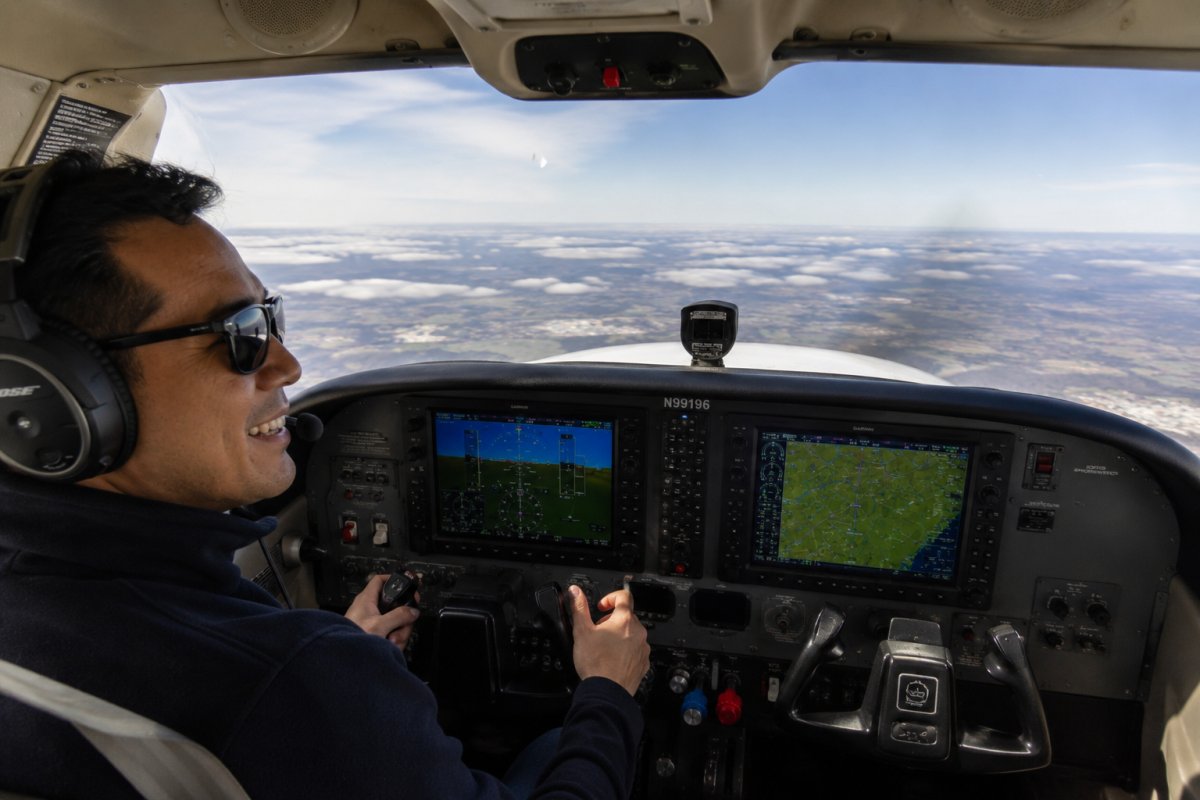
Glass Cockpit Training Cost in Arizona: 2026 Guide to Modern Avionics
Training on a "steam gauge" panel in 2026 is like learning to drive on a horse and carriage. While the initial glass cockpit training cost Arizona schools present might seem higher at first glance, this investment is actually a strategic shortcut to the flight deck of a major airline. You're likely feeling the pressure of choosing between lower rental rates and the advanced technology you'll actually use in your professional career. It's a common frustration to navigate confusing pricing structures when you just want to ensure your training hours are building relevant, modern skills.
This guide clarifies the real-world expenses of modern avionics training in the Phoenix area, covering everything from hourly instruction to specialized multi-engine time building. We'll explore how high-performance platforms like the G3X and Garmin Glass suites bridge the gap to professional cockpits while keeping your progression focused and efficient. You'll gain a clear roadmap for your budget and the confidence to select a training environment that prepares you for the high-tech reality of today's aviation industry.
Key Takeaways
- Learn to distinguish between "wet" and "dry" rental rates to accurately calculate your total glass cockpit training cost Arizona investment for 2026.
- Compare the intuitive touch-screen interface of the Garmin G3X with the G1000 to determine which platform accelerates your proficiency.
- Understand how training in high-performance aircraft like the 180HP Cessna 172P provides a critical performance edge during the Arizona summer.
- Discover practical strategies to maximize your training budget by leveraging advanced autopilot systems and focused "chair flying" techniques.
- Identify why modern multi-engine training in a Garmin Glass-equipped Twin Comanche is the definitive bridge to a professional airline career.
The Shift to Modern Glass Cockpits in Arizona Flight Schools
Arizona has solidified its position as the global epicenter for advanced flight training in 2026. The clear skies and complex airspace demand tools that match the pace of modern aviation. The Shift to Modern Glass Cockpits represents a fundamental evolution from traditional analog dials to integrated Primary Flight Displays (PFD) and Multi-Function Displays (MFD). This digital integration provides a comprehensive view of aircraft performance and environmental data on high-resolution screens. While some students worry about the initial glass cockpit training cost Arizona schools present, the long-term value of training on current technology far outweighs the perceived savings of older airframes.
The 2026 Standard: Why Steam is Fading
Analog "steam gauges" rely on delicate mechanical gyros and vacuum systems that are increasingly expensive to maintain and prone to failure. In contrast, solid-state digital systems offer superior reliability and precision. Insurance providers now often favor training fleets equipped with modern avionics, recognizing the safety benefits of built-in redundancies. If you're a beginner, don't let the complexity of screens intimidate you. Check out the myth-busting truth about learning on glass to see why starting digital is often more intuitive than mastering outdated panels. Training on obsolete technology can actually increase your total costs by requiring additional transition time later in your career.
Situational Awareness and Safety in the Valley
Navigating the Phoenix Class B airspace requires constant vigilance. Glass panels like the Garmin G3X or G1000 transform this experience by integrating moving maps, real-time traffic alerts, and weather overlays directly into your primary field of view. This integration significantly reduces workload. It allows you to focus on high-level decision making rather than manual chart plotting. In the intense Arizona heat, having a high-performance 180HP engine paired with a G3X suite ensures you have the power and the data to fly safely year-round. Synthetic vision technology adds another layer of safety by providing a virtual 3D rendering of the terrain. This is a game-changer for IFR training in the Arizona desert, where maintaining spatial orientation is critical during night operations. By choosing a platform that mirrors what you'll find in a professional jet, you're preparing for a career. Understanding the total glass cockpit training cost Arizona pilots face means looking at the efficiency of the hours spent in the air, not just the hourly rate.
Breaking Down Glass Cockpit Training Costs: Rental vs. Instruction
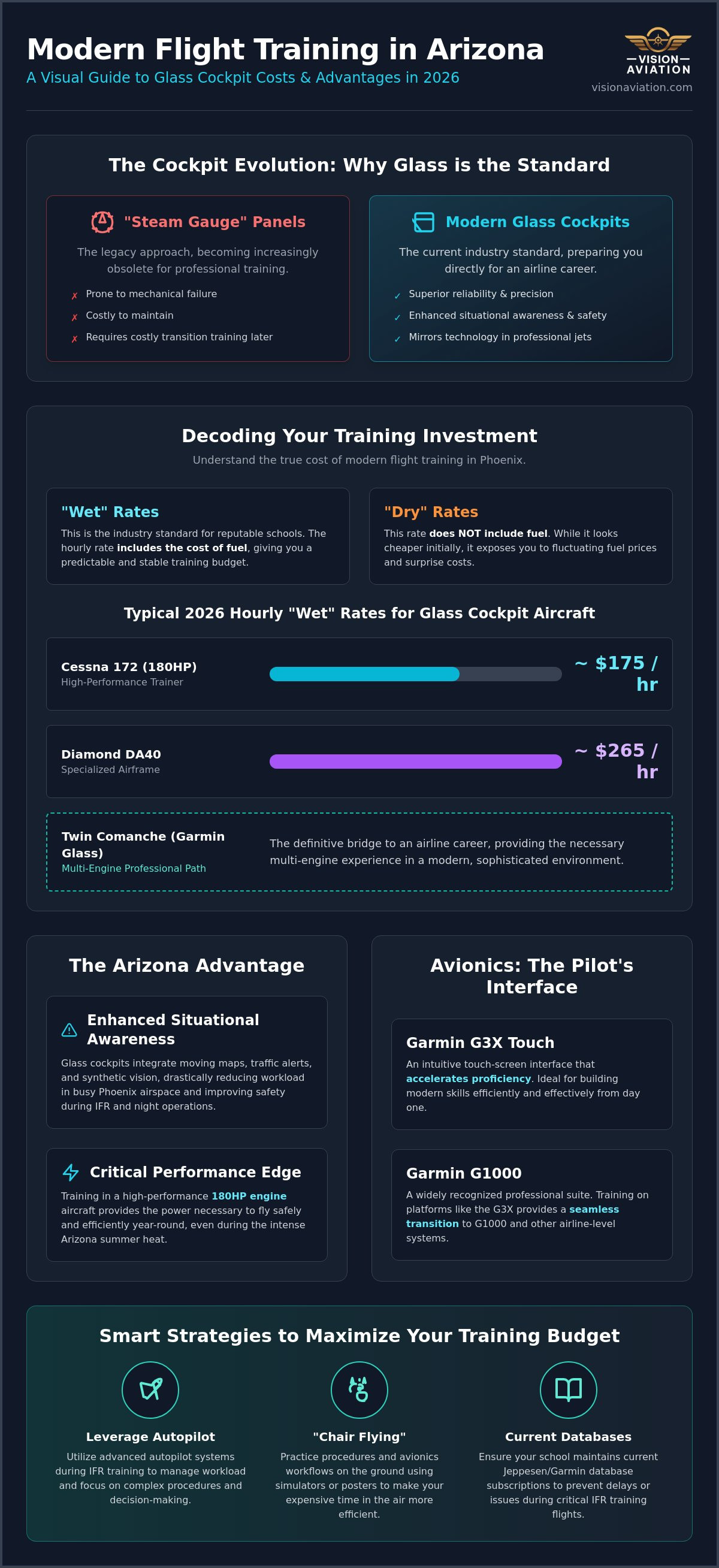
Calculating the total glass cockpit training cost Arizona flight schools quote requires looking beneath the hourly rental rate. Precision has a price, but that price is often offset by the efficiency gained during complex IFR procedures. In the Phoenix market, "wet" rates are the standard for most reputable schools. These rates include the cost of fuel, which is a critical consideration when operating high-performance 180HP engines in the intense desert heat. Dry rates might look appealing on a flyer, but they leave you vulnerable to fluctuating fuel surcharges that can disrupt your training budget mid-program.
Mastering advanced avionics involves more than just airtime. Schools must maintain active Jeppesen or Garmin database subscriptions to ensure your navigation data is current for IFR flight. While these costs are typically bundled into the rental, some facilities might add a technology fee to the invoice. Additionally, you should account for an insurance checkout. Most providers require five to ten hours of dual instruction to prove proficiency with a specific glass suite before allowing solo rentals. If you are ready to see how modern tech streamlines your path, explore the specialized training programs available in the heart of Phoenix.
Hourly Rates for Single and Multi-Engine Glass
As of 2026, single-engine glass rentals in the Valley generally range from $145 to $265 per hour. For example, a glass-equipped Cessna 172 typically rents for approximately $175 per hour for standard checkouts. If you choose a more specialized airframe like the Diamond DA40, costs can climb to $265 per hour. Stepping up to multi-engine training in a Garmin Glass-equipped Twin Comanche provides the sophisticated environment necessary for airline applications. While the hourly rate for a twin is naturally higher, the 180HP upgrades found in modern trainers allow for better climb gradients and shorter flight times to training areas, maximizing every dollar spent.
Instruction and Ground Training Fees
Specialist instruction is where your investment truly pays off. A CFI who understands the nuances of the Garmin G3X Touch or G1000 isn't just teaching you how to fly; they're teaching you how to manage a complex flight management system. Current rates for these specialized instructors in Arizona typically range from $65 to $100 per hour. This premium is essential for mastering autopilot logic and electronic flight instrument systems (EFIS). You should also budget for dedicated ground instruction. Expect to spend significant time on the ground learning to program flight plans and interpret system warnings before you ever turn a propeller. This methodical approach ensures that your time in the cockpit is spent flying, not troubleshooting software.
Comparing Avionics Platforms: Garmin G1000 vs. G3X Touch
The choice between avionics platforms often dictates the pace of your progression. While the Garmin G1000 has long been the industry standard, the G3X Touch has emerged as a superior training tool for the modern pilot. The G1000 relies heavily on a knobs and buttons philosophy. It's robust, but it can be cumbersome during high-workload phases of flight. Conversely, the G3X Touch utilizes an intuitive interface that mirrors the logic of the smartphones and tablets you already use. This reduces the button-mashing frustration often associated with older digital panels.
When evaluating the glass cockpit training cost Arizona students face, training efficiency is a vital metric. The G3X Touch allows for significantly faster data entry. Programming a complex IFR flight plan or adjusting a radio frequency takes seconds, not minutes. This efficiency means you spend less time head-down in the cockpit and more time developing the eyes-outside situational awareness that defines a safe pilot. Every minute saved on the ground or in low-level tasks is a minute you can spend mastering actual flight maneuvers.
The G3X Touch Advantage for Private and IFR Pilots
For those pursuing a Private Pilot Certificate or an Instrument Rating, the G3X offers unparalleled customization. You can split the screen to show your PFD alongside a moving map, approach plates, or engine data simultaneously. It integrates seamlessly with ForeFlight via Bluetooth, allowing you to transfer flight plans from your iPad directly to the panel. This connectivity is why many high-performance pilots prefer the G3X for cross-country missions. It bridges the gap between personal electronics and certified avionics, creating a cohesive flight deck environment that feels natural to the 2026 student.
Garmin Glass in Multi-Engine Training
Transitioning to a multi-engine aircraft like the Twin Comanche requires a heightened focus on systems management. The Garmin Glass suite includes an Engine Information System (EIS) that provides digital precision for fuel flow, EGT, and CHT monitoring. In an emergency, such as an engine failure, having clear, color-coded alerts on a digital display allows for faster identification and troubleshooting. Building multi-engine IFR experience with a modern flight director and the GFC 500 autopilot prepares you for the automated environments of corporate jets and airliners. Many modern business jets, such as the Cirrus Vision Jet, utilize touch-screen logic similar to the G3X. By training on these platforms now, you aren't just learning to fly; you're mastering the interface of your future career.
How to Maximize Your Training Budget in a Modern Phoenix Cockpit
Controlling your glass cockpit training cost Arizona investment requires a shift in perspective. You aren't just paying for an hour of tach time; you're paying for a specific proficiency outcome. High-tech training often carries a higher hourly rate, but the precision of these systems allows you to master complex concepts in fewer total flight hours. Success in the Phoenix flight training environment depends on your ability to move the learning process from the expensive cockpit to the cost-effective ground environment. By the time you strap into the seat, your hands should already know exactly where every touch-screen menu is located.
Chair flying remains the most effective budget hack available to modern students. Utilizing PC-based trainers and tablet apps that mirror the G3X or G1000 interface allows you to build muscle memory without burning a drop of 100LL. If you can program a complicated IFR departure and arrival on your laptop, you won't waste valuable airtime fumbling with the screen while the Hobbs meter is running. If you're ready to start your journey with a team that values your time and budget, book your first high-performance training session today.
Efficiency Through Technology
The aircraft you choose significantly impacts your bottom line. In the intense Arizona heat, performance is directly tied to efficiency. Training in a 180HP Cessna 172P provides a critical advantage; the extra power reduces your time to climb to cooler, more productive training altitudes. This means less time spent wallowing in the summer thermals and more time focused on your maneuvers. Digital flight logs also play a role in cost control. These tools allow you and your instructor to track progress with granular detail, identifying specific weaknesses instantly so that every subsequent lesson is targeted and purposeful.
Strategic Time Building in Arizona
Strategic planning is essential for those pursuing multi-engine ratings or commercial time building. Arizona offers a unique advantage with its diverse terrain and predictable weather, allowing for consistent scheduling. To maximize your budget, look for multi-engine time building packages that offer block rate discounts. Planning cross-country IFR routes that utilize diverse approaches across the Valley will build your experience faster than repetitive local patterns. Additionally, consider your base of operations. Choosing an airport that avoids the long taxi delays found at major commercial terminals ensures that your glass cockpit training cost Arizona budget is spent in the air, not idling on a 110-degree taxiway.
Vision Aviation: Advanced G3X and Multi-Engine Training in Phoenix
Vision Aviation stands as the premier choice for pilots who refuse to compromise on technology. We bridge the gap between traditional flight instruction and the high-tech requirements of the modern airline industry. While many facilities focus solely on the lowest possible hourly rate, we prioritize the quality and relevance of your flight hours. Understanding the total glass cockpit training cost Arizona pilots encounter means looking beyond the base rental fee to the actual value of the equipment you're mastering. We provide a sophisticated environment where you can build the skills that today's recruiters actually demand.
Our training philosophy centers on high-tech mentorship. We don't just teach you how to fly; we teach you how to manage the complex systems that define 21st-century aviation. Whether you're a recreational flyer looking for the safety of synthetic vision or a career-track student aiming for the flight deck of a jet, our programs are built to accelerate your proficiency. You'll train in a professional, safety-conscious environment that mirrors the standards of the world's most elite flight departments.
Our High-Performance Fleet
Our fleet is specifically curated for the unique demands of the Arizona desert. Experience the Cessna 172P 180HP w/ G3X Avionics Suite to see how extra horsepower transforms your training. Standard 160HP trainers often struggle in the summer heat, leading to sluggish climbs and wasted time. Our 180HP upgrade ensures you reach your training altitude quickly, maximizing every minute of your lesson. For those advancing to complex operations, our Twin Comanche w/ Garmin Glass Avionics Suite AP offers a professional-grade platform for multi-engine time building and IFR cross-country experience. We maintain our modern avionics to the highest industry standards, ensuring that your tech stack is as reliable as it is advanced.
Your Path to Proficiency
We provide customized training plans that respect your time and your career goals. Our expert CFIs specialize in Garmin Glass and GFC 500 autopilot systems, ensuring you receive specialized instruction that older "steam gauge" schools simply can't offer. From Private Pilot Training to specialized Multi-Engine cross country IFR experience, we guide you through every milestone with precision. You aren't just a student here; you're part of a community of modern aviators in the heart of Arizona. Take the next step in your journey with a partner who stays ahead of industry trends. The skies over Phoenix are your classroom, and we provide the tools to master them with confidence.
Elevate Your Career with Modern Avionics
Investing in your flight education is about more than just logging hours. It's about building a technical foundation that carries you through the highest levels of professional aviation. We've explored how a strategic approach to your training, from mastering the intuitive G3X Touch interface to utilizing high-performance 180HP engines, allows you to maximize every dollar spent. While the initial glass cockpit training cost Arizona pilots face may seem complex, the long-term career advantages and safety benefits of training on a modern Garmin Glass suite are undeniable.
Whether you're building multi-engine time in our Twin Comanche or mastering IFR procedures, your journey deserves equipment that matches your ambition. Don't settle for obsolete panels when the future of the skies is already here. Take the controls and feel the precision of a digital flight deck designed for the 2026 standard. Our team is ready to help you transition from a student to a professional aviator with confidence and skill. Take the next step: Book Your Modern Glass Cockpit Discovery Flight in Phoenix and experience a higher standard of mentorship. The sky is waiting for you.
Frequently Asked Questions
Is glass cockpit training more expensive than steam gauges in Arizona?
Hourly rental rates for glass cockpits are typically higher than analog panels, yet the total glass cockpit training cost Arizona students experience is often comparable. Modern avionics increase training efficiency by streamlining complex navigation and situational awareness tasks. This precision frequently allows students to reach proficiency in fewer flight hours, potentially offsetting the higher hourly rental price over the course of a full rating.
Can I do my Private Pilot training in a glass cockpit Cessna 172?
You can absolutely complete your entire Private Pilot Certificate in a glass-equipped Cessna 172. Starting your journey with digital displays builds a strong foundation in modern systems management from day one. This proactive approach ensures you're ready for the high-tech environments of professional aviation without needing a separate transition course after you earn your license.
What is the difference between G1000 and G3X training?
The primary difference lies in the interface logic, as the G1000 uses traditional knobs and buttons while the G3X features an intuitive touch-screen display. Training on a G3X Touch often feels more natural to students who are accustomed to modern tablets and smartphones. It allows for significantly faster data entry and simpler menu navigation during high-workload phases of flight, such as an IFR approach.
How much does it cost to rent a multi-engine aircraft with glass in Phoenix?
Multi-engine rental rates vary depending on the specific airframe and the complexity of the avionics suite. High-performance twins like the Twin Comanche provide a sophisticated environment for building professional-grade IFR experience. These aircraft represent a significant investment in your career, offering the digital precision and engine monitoring systems required to safely master multi-engine operations in the Arizona heat.
Do I need a special endorsement to fly a glass cockpit aircraft?
No specific FAA endorsement exists for glass cockpits, but a comprehensive checkout is required by flight schools and insurance providers. You'll work through a transition syllabus that covers the specific logic, failure modes, and emergency procedures of the digital flight deck. Mastering these systems on the ground first ensures you can safely manage the increased information flow provided by modern displays.
Why is Arizona a good place for IFR training with modern avionics?
Arizona offers a unique combination of complex Class B airspace and predictable weather that allows for consistent, year-round training schedules. Modern avionics like the G3X help you navigate the busy Phoenix corridor with integrated traffic and terrain alerts. This high-density environment provides the perfect real-world classroom for mastering the advanced automation and decision-making skills required for a professional pilot career.
Does glass cockpit training count toward commercial pilot requirements?
All hours logged in a glass cockpit aircraft count directly toward the total time requirements for your Commercial Pilot Certificate. Many modern glass-equipped aircraft also meet the FAA requirements for a Technically Advanced Aircraft (TAA). This allows you to fulfill specific commercial training maneuvers and experience requirements in a modern airframe rather than searching for an older complex aircraft with retractable gear.
How can I save money on glass cockpit flight instruction?
You can effectively lower your glass cockpit training cost Arizona expenses by using PC-based trainers and tablet apps to master the avionics logic at home. Learning the menu structures and button sequences on the ground prevents you from wasting expensive airtime on basic software navigation. Arriving prepared for every lesson allows your instructor to focus on advanced flight techniques rather than troubleshooting your flight plan entry.
