Multi-Engine Block Time Rates: A Pilot’s Guide to Efficient Hour Building
Why settle for logging hours in a legacy aircraft with unreliable steam gauges when your career depends on mastering modern flight decks? The race to hit the 1,500-hour mark often leads pilots to hunt for the lowest multi engine block time rates they can find, even if it means sacrificing safety or technical relevance. You likely agree that those 50 mandatory multi-engine hours required by the FAA are more than just a box to check. They are a critical stepping stone toward your professional transition. It's frustrating to face skyrocketing wet rates while training on equipment that won't prepare you for a regional jet.
This guide shows you how to secure competitive multi-engine block rates while gaining high-quality IFR experience in modern, glass-cockpit aircraft. We will explore how to maximize your investment through bulk purchasing and the career-ready benefits of training with Garmin Glass and the GFC 500 autopilot. We also examine why Phoenix remains the premier hub for efficient, year-round hour building. You'll discover a path to reach your goals that balances cost-efficiency with the elite standards required by today's airlines.
Key Takeaways
- Identify the specific flight hour milestones required for airline placement and how strategic hour building accelerates your professional timeline.
- Learn why modern airlines prioritize candidates with glass-cockpit experience and how mastering the G3X suite enhances your technical marketability.
- Evaluate the most cost-effective multi engine block time rates by comparing wet and dry rental structures for your long-distance cross-country missions.
- Leverage the consistent flying weather in Phoenix to build real-world IFR confidence within complex, high-traffic Class B airspace environments.
- Maximize your training safety and efficiency by utilizing high-performance Twin Comanche aircraft equipped with the Garmin GFC 500 digital autopilot.
Understanding Multi-Engine Block Time and Career ROI
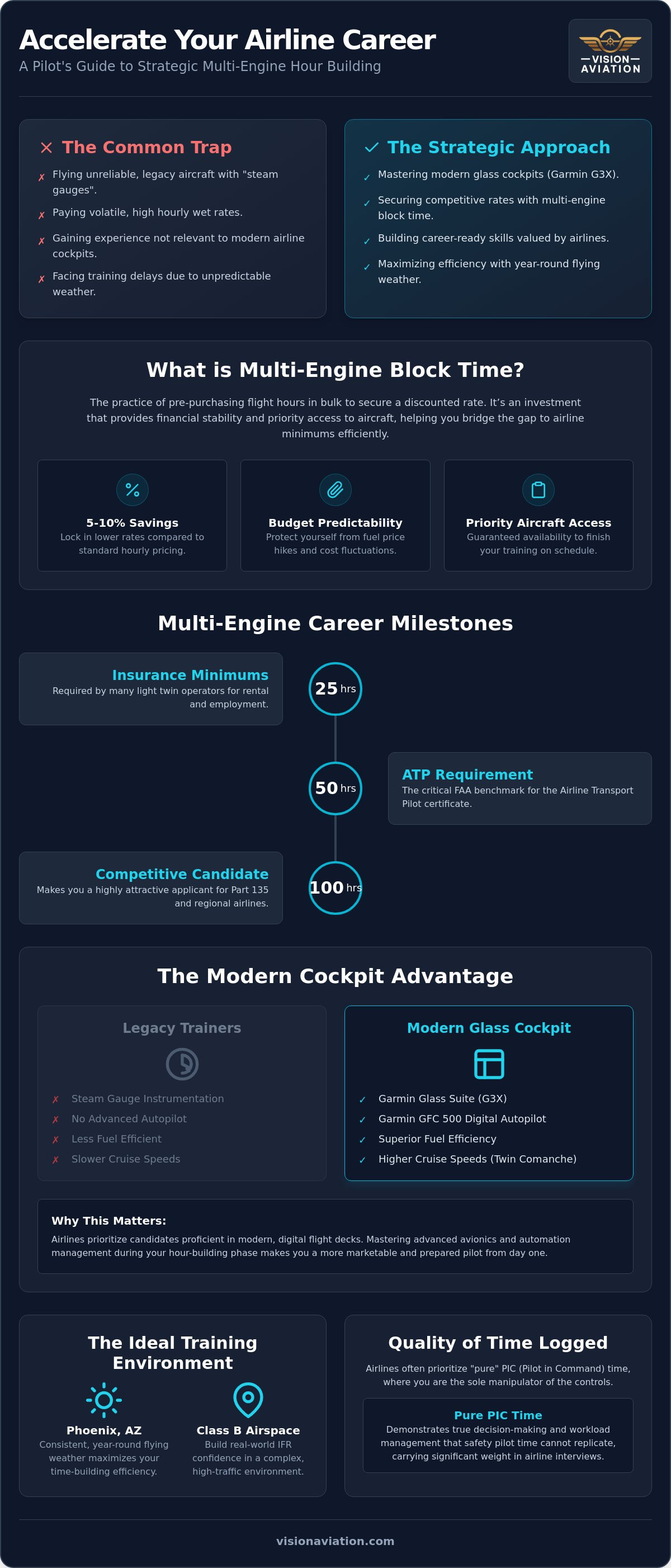
Building a career in the flight deck requires more than just skill. It requires a strategic financial plan. Multi-engine block time is the practice of pre-purchasing flight hours in bulk to secure a discounted rate. This approach allows you to lock in multi engine block time rates before fuel prices or maintenance costs fluctuate. It's the industry standard for professional-track pilots who need to bridge the gap between their initial rating and airline hiring minimums. By treating your hour building as a bulk investment, you gain both budget predictability and priority access to the aircraft.
Quality of time is just as important as the quantity logged. While safety pilot arrangements allow two pilots to log time simultaneously and split costs, airlines often prioritize "pure" PIC time. This is where you are the sole manipulator of the controls and the final authority. Logging primary PIC time in a high-performance twin proves you can handle the aircraft's systems and emergencies without a safety net. It demonstrates a level of decision-making and workload management that safety pilot time simply can't replicate. When you're sitting in a regional airline interview, being able to discuss your solo cross-country IFR experiences carries significant weight.
The Career Milestones for Multi-Engine Pilots
Hitting specific hour targets is essential for your progression. The first major hurdle is the 25-hour mark, which many light twin operators require for insurance coverage. However, the most critical benchmark is the 50-hour requirement for the Airline Transport Pilot (ATP) certificate. Under the regulations for pilot certification in the United States, those 50 hours must be in the class of airplane sought. Reaching 100 hours of multi-engine time often makes you a much more competitive candidate for Part 135 and regional operations.
Financial Benefits of Block Purchasing
Flying twins is a significant investment, and hourly rates can be volatile. Block purchasing provides the stability you need to finish your training without financial surprises. By committing to a 20 or 50-hour block, you often see savings of 5% to 10% compared to standard hourly rates. A block rate agreement functions as a fixed-price contract that guarantees your access to the aircraft while protecting you against sudden fuel surcharge increases. Instead of worrying about the meter running, you can focus on mastering the Garmin Glass suite and perfecting your IFR procedures.
The Modern Advantage: Glass Cockpits vs. Legacy Trainers
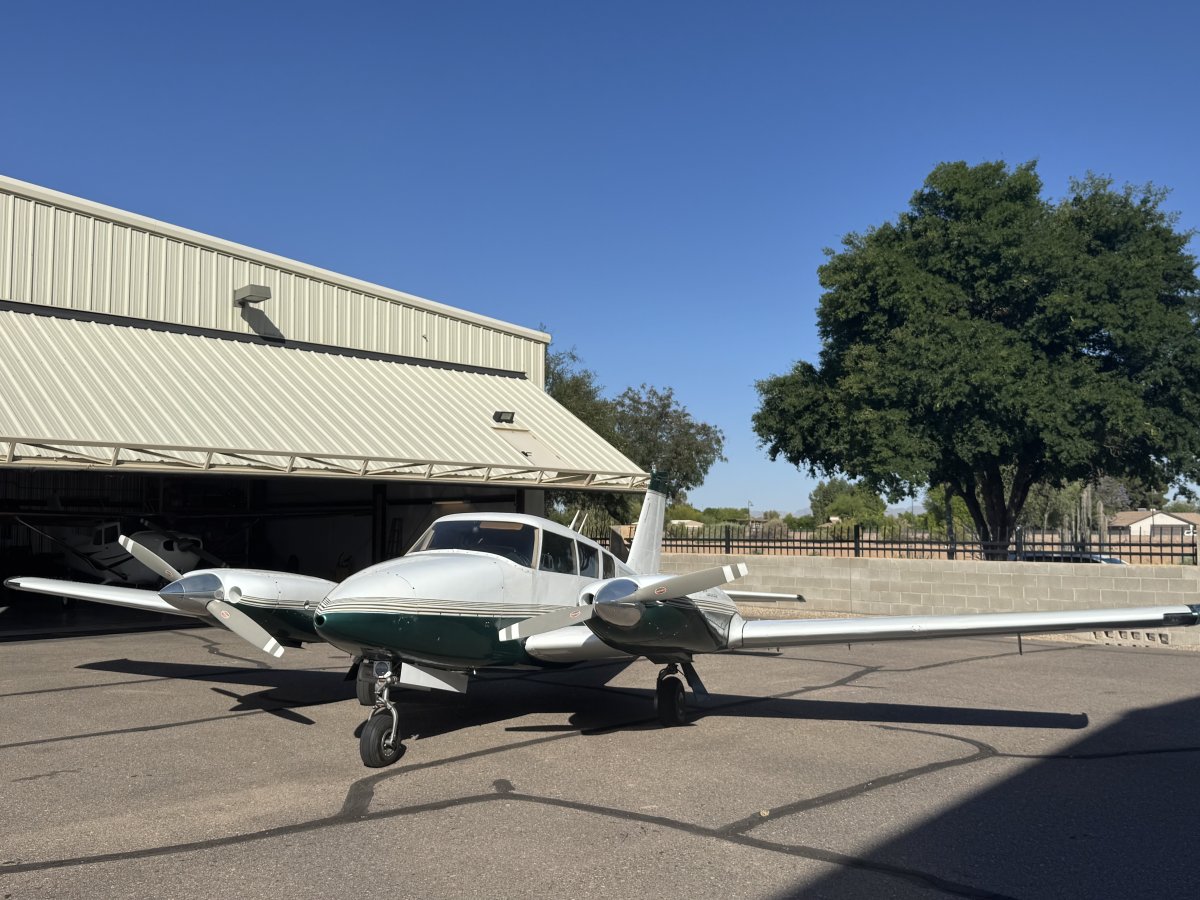
The era of the "steam gauge" twin is fading. While many flight schools still rely on the aging Piper Seminole, modern airlines look for candidates who are already proficient in digital environments. Choosing the right platform for your hour building isn't just about finding the lowest multi engine block time rates; it's about the technical value of every hour logged. The Twin Comanche offers a distinct advantage here. It provides superior fuel efficiency and higher cruise speeds compared to legacy trainers. This ensures your cross-country hours are spent covering real distance, not just burning holes in the sky. If you want to maximize your training, consider how Vision Aviation prioritizes high-tech equipment in every block package.
Safety remains the primary concern in multi-engine operations. Integrating the Garmin GFC 500 autopilot into a time-building program significantly reduces pilot workload during high-stress IFR scenarios. This allows you to focus on the bigger picture of situational awareness and system monitoring. Following the FAA training requirements ensures you meet the legal standards, but mastering modern automation prepares you for the real-world demands of a commercial cockpit. You're not just logging time. You're building a professional habit of automation management.
Mastering Advanced Avionics in a Twin
Transitioning from traditional instruments to Garmin Glass is a pivotal moment for any pilot. This shift matters for your next checkride and your career beyond. Synthetic vision and digital engine monitoring provide a level of situational awareness that legacy panels simply cannot match. You can track performance metrics and terrain with a glance, allowing for more precise decision-making. To understand which system fits your goals, explore our guide on Garmin G3X vs G1000 for Flight Training. Mastering these tools early makes you an asset to any flight department.
Autopilot Proficiency for Commercial Ops
Learning the GFC 500 system prepares you for professional crew environments where automation is the standard. It isn't about letting the plane fly itself. It's about becoming a proficient systems manager. Effective automation management is a core skill in multi-engine IFR operations, especially during single-pilot or high-density missions. Vision Aviation integrates comprehensive autopilot training into every time-building package to ensure you are comfortable with coupled approaches and vertical navigation. This experience translates directly to the flight decks of regional jets and corporate twins alike.
Evaluating Multi-Engine Block Time Rates and Savings
Understanding the financial logistics of your training is as vital as mastering your V-speeds. When you analyze multi engine block time rates, you're looking at a bundled price that typically accounts for fuel, insurance, and the high maintenance costs associated with twin-engine aircraft. Most flight schools structure these packages in tiers, such as 10, 25, or 50-hour blocks, to reward pilots who commit to a longer training syllabus. This upfront commitment provides the school with predictable scheduling and gives you a significant discount over the standard "pay-as-you-go" hourly rate.
One of the biggest decisions you'll make is choosing between "wet" and "dry" rates. A wet rate includes all fuel costs, which is often the safer bet for long-distance cross-country missions where fuel prices vary significantly between airports. Dry rates might look cheaper on paper, but they leave you vulnerable to the fluctuating costs of 100LL at different FBOs. Beyond the hourly rate, keep an eye out for hidden expenses. Membership dues, overnight fees for multi-day trips, and landing taxes at major hubs can quickly erode your savings if you haven't planned for them in your initial budget.
The Math Behind the Discount
Prepaying for your hours isn't just about convenience; it's about maximizing your ROI. Industry data suggests that pilots can save between 5% and 15% by choosing block prepayments over standard hourly billing. While larger aircraft like the Seneca or Aztec offer more cabin space, they also come with significantly higher fuel burns and maintenance requirements. The Twin Comanche remains the sweet spot for efficiency, offering a lower cost per mile without sacrificing the multi-engine experience you need. For those still building their foundation, comparing these figures to a Cessna 172P 180HP rental cost comparison can help you decide when to transition into more complex airframes.
Key Questions for Your Flight School
Before you sign a contract or wire funds, you need to verify the fine print. According to the AOPA multi-engine rating guide, understanding the specific terms of your training agreement is crucial for long-term success. Ask your provider these essential questions:
- Is the block rate refundable if I reach my hour goals earlier than expected?
- Are there daily flight hour minimums for multi-day cross-country trips?
- What is the policy for mechanical cancellations or weather delays during a scheduled time-building trip?
Establishing these expectations early ensures your focus remains on the flight deck rather than the billing office. Clear communication regarding these policies protects your investment and keeps your training timeline on track.
Maximising Your Multi-Engine Time Building in Phoenix
Phoenix, Arizona stands as a premier destination for pilots who want to finish their hour building without the frustration of seasonal delays. When you commit to multi engine block time rates in the Southwest, you're leveraging over 300 days of flyable weather each year. This consistency allows for an accelerated pace that simply isn't possible in regions plagued by winter storms or persistent coastal fog. You can schedule your 50-hour block with the confidence that you'll actually spend those days in the cockpit rather than the pilot lounge.
Training in this environment offers more than just clear skies. Navigating the complex Class B airspace surrounding Phoenix Sky Harbor builds a level of IFR confidence that prepares you for any major metropolitan hub. You'll manage high-density traffic, follow intricate departure procedures, and maintain constant communication with some of the busiest controllers in the country. This real-world experience is what differentiates a pilot who merely has the hours from one who has truly mastered the environment. It's about building a professional resume through exposure to high-workload scenarios.
Multi-Engine Cross-Country IFR Strategies
Strategic route planning is essential for maximizing the value of your cross-country hours. Common routes from Phoenix to Las Vegas, San Diego, or Albuquerque provide exposure to diverse terrain and varying density altitudes. While the Southwest often provides VFR conditions, these long legs are perfect for logging simulated instrument time under the hood. You'll use the Garmin Glass suite to manage long-range navigation and monitor weather patterns in real time, ensuring you're always ahead of the aircraft's position. This approach turns every hour of your multi engine block time rates into a lesson in professional flight management.
The Advantage of 180HP Performance
Managing engine performance in the intense Arizona heat requires a specialized understanding of your aircraft's limitations. The Twin Comanche is legendary for its speed and efficiency, making it the ideal platform for long-distance missions across the desert. Vision Aviation’s fleet utilizes 180HP engines to provide a critical performance margin during high-density altitude takeoffs and climbs. This extra power ensures safety and reliability when navigating mountainous terrain or operating in peak summer temperatures. If you're ready to start your journey, explore our multi-engine time building packages to secure your schedule in the Arizona sun.
Vision Aviation’s Multi-Engine Packages: Precision and Performance
Choosing where to build your multi-engine time is one of the most significant decisions in your professional pilot journey. At Vision Aviation, we believe that every hour in the logbook should represent a leap forward in technical proficiency. Our Twin Comanche isn't just a trainer; it's a sophisticated platform equipped with a Garmin Glass Avionics Suite and the GFC 500 digital autopilot. This combination provides a high-performance environment that mirrors the flight decks of modern commercial aircraft. By training with us, you're not just "logging time." You're mastering the systems and automation management skills that airline recruiters prioritize during the hiring process.
We position ourselves as your high-tech mentor in the Phoenix area. Our team understands that the transition from single-engine operations to complex twins can be demanding. We provide a supportive, professional environment where safety and precision are the standard. Because we operate in the clear skies of Arizona, we can offer consistent aircraft availability that keeps your training on a tight, predictable schedule. You won't find the same level of commitment to modern equipment and maintenance standards at schools relying on legacy airframes with outdated instrumentation.
Tailored Packages for Every Milestone
Our training programs are structured to meet you exactly where you are in your career. We offer 25-hour "Insurance Bridge" packages designed for pilots who need to meet the initial requirements for light twin operations. For those focused on the airline track, our 50-hour "Professional Prep" blocks provide the comprehensive multi-engine PIC time required for the ATP certificate. We also specialize in customized cross-country IFR experience programs. These allow you to take the Twin Comanche on long-range missions, building real-world confidence in diverse environments while maximizing your investment.
The Vision Aviation Difference
The Vision Aviation difference lies in our focus on avionics proficiency. We don't just teach you how to fly a twin; we teach you how to manage a modern flight deck. This elite approach ensures you're ready for the high-workload environment of a regional or corporate cockpit. We maintain our fleet to the highest standards to ensure that when you're ready to fly, the aircraft is ready for you. If you're looking for the most competitive multi-engine block time rates in the Phoenix market, contact us today to discuss our current availability and package options. Your path to the airlines begins with a checkout in a cockpit that actually prepares you for the future.
Starting your block is a straightforward process. Once you schedule an initial checkout with our instructors, we'll help you plan your hours to ensure you meet your specific career goals. Whether you're aiming for a 25-hour milestone or a full 50-hour professional block, we provide the tools and mentorship you need to succeed. Reach out today to secure your slot and experience the precision of the Vision Aviation fleet.
Take Command of Your Professional Timeline
Every hour spent in the cockpit is a direct investment in your future at the airlines. Precision matters. So does your timeline. By choosing a training environment that prioritizes modern Garmin Glass avionics and GFC 500 autopilot precision, you ensure that your time building translates into genuine career readiness. You've explored the technical advantages of the Twin Comanche and the strategic benefits of the Phoenix airspace. Now, it's time to lock in your progress and elevate your skills.
Securing competitive multi engine block time rates allows you to focus on mastering complex IFR cross-country missions rather than worrying about fluctuating hourly costs. You aren't just logging hours; you're building the situational awareness and automation management proficiency required by today’s regional and major carriers. With over 300 days of flyable weather, your professional goals are closer than ever. Stop waiting for the perfect conditions and start building the high-quality experience that top-tier carriers demand. Your journey to the flight deck deserves a platform that matches your ambition.
View Our Multi-Engine Block Rates and Packages
Frequently Asked Questions
What is the difference between wet and dry multi-engine block rates?
A wet rate includes all fuel and oil costs in the hourly price, while a dry rate requires you to pay for fuel separately at the pump. Choosing wet multi engine block time rates provides better budget certainty during long cross-country flights where fuel prices at away airports can be unpredictable. It simplifies your accounting and protects you from sudden spikes in 100LL costs at unfamiliar FBOs.
Can I build multi-engine time with a safety pilot to share costs?
You can build time with a safety pilot to share expenses, but many airlines prioritize "pure" PIC time where you're the sole manipulator of the controls. While sharing the aircraft helps your budget, logging solo PIC time in a glass-cockpit twin demonstrates a higher level of command authority. It's often better to balance shared hours with dedicated solo missions to build real-world confidence in the flight deck.
Does Vision Aviation offer discounted rates for 50-hour blocks?
Vision Aviation structures multi-engine time building packages to reward pilots committing to larger hour milestones. These 50-hour blocks are specifically designed for airline-bound professionals who need to meet the FAA's ATP requirements efficiently. By pre-purchasing your hours, you secure a more competitive rate per hour while ensuring priority access to our modern Twin Comanche fleet.
Is the Twin Comanche a good aircraft for initial multi-engine time building?
The Twin Comanche is an exceptional platform for initial time building because it's faster and more fuel-efficient than legacy trainers like the Piper Seminole. It allows you to cover more distance during your cross-country requirements while mastering a high-performance airframe. Its reputation for efficiency makes it the premier choice for pilots who want to maximize their training ROI without sacrificing speed.
Are there any daily hour minimums for multi-engine rentals in Phoenix?
Daily flight hour minimums typically apply when you take the aircraft on multi-day cross-country trips away from our Phoenix base. These minimums ensure the aircraft remains productive while it's away from other students. You should discuss your specific itinerary with our team during the planning phase to ensure your block hours are utilized effectively without incurring unexpected daily fees.
What avionics are included in your Twin Comanche rental?
Our Twin Comanche features a modern Garmin Glass Avionics Suite integrated with a GFC 500 digital autopilot. This setup includes high-resolution displays for primary flight data, synthetic vision, and comprehensive digital engine monitoring. Training with this advanced technology prepares you for the digital environments found in regional jets and corporate flight departments, giving you a distinct edge in the hiring pool.
How quickly can I complete a 25-hour multi-engine block in Arizona?
You can often complete a 25-hour block in as little as one to two weeks thanks to the 300+ days of flyable weather in Arizona. Our consistent Phoenix-based operations allow for an accelerated schedule that isn't possible in cloudier or more volatile regions. This predictability helps you reach your insurance or hiring milestones much faster than training in the Midwest or coastal areas.
Do I need a checkout before I can start building time in the Twin Comanche?
A standard instructor checkout is required before you can begin solo time building in our Twin Comanche. This process ensures you're comfortable with the aircraft's specific systems, the Garmin Glass suite, and our safety procedures. It's a critical step for insurance compliance and ensures you can operate the high-performance twin with total confidence during your cross-country missions.
