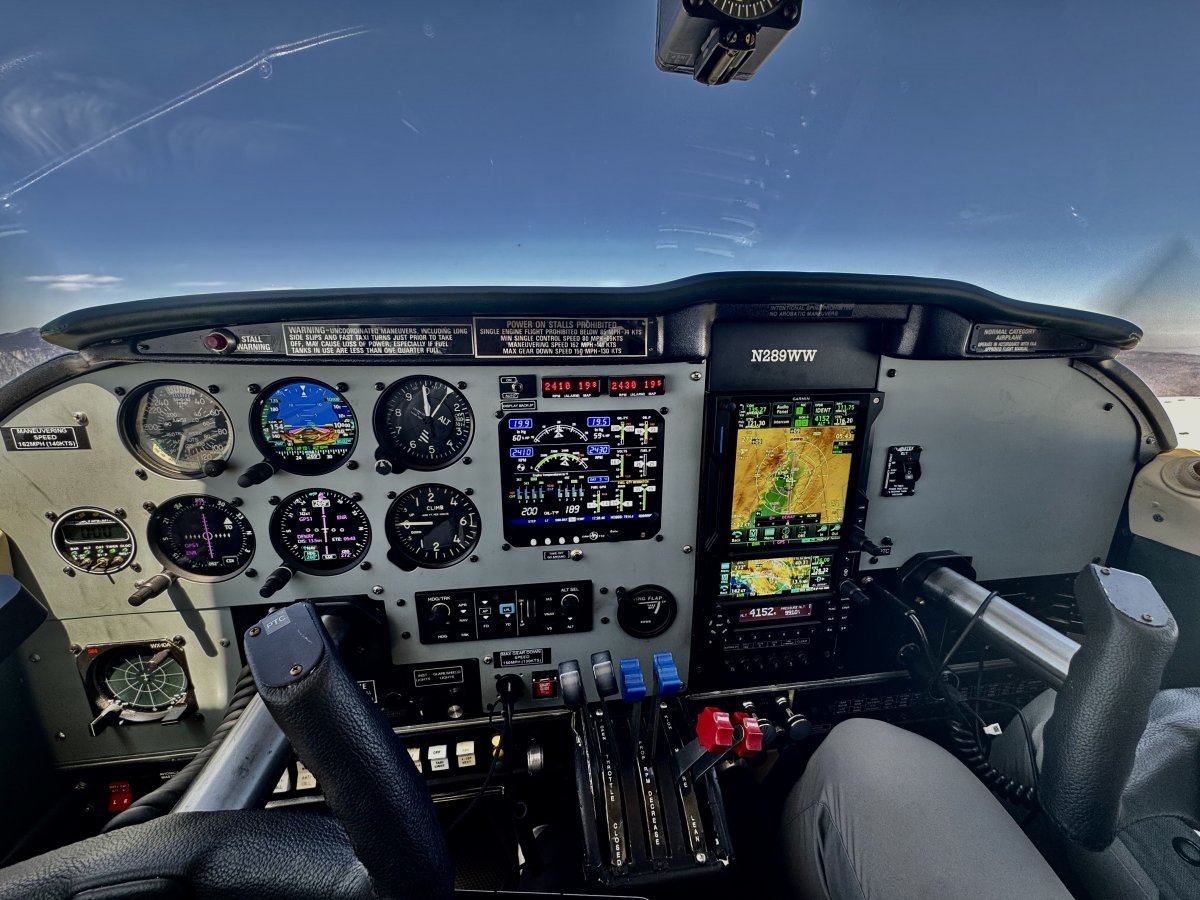
Twin Comanche Rental in Arizona: Modern Multi-Engine Time Building
For aspiring commercial pilots in Arizona, building multi-engine time is a critical, non-negotiable step on the path to an airline career. However, not all multi-engine hours are created equal. The choice of aircraft and its avionics suite can dramatically impact the quality of your training, your proficiency with modern systems, and your overall readiness for a professional cockpit. The goal isn't just to log hours; it's to build career-defining skills.
This is where the Piper Twin Comanche, specifically one retrofitted with a modern glass cockpit, stands apart. It offers a unique combination of performance, efficiency, and advanced technology that makes it the premier platform for serious multi-engine time building in the Phoenix area. By choosing the right aircraft, you can transform your time building from a simple logging exercise into a strategic career investment, mastering the systems that will define your future in aviation.
The Advantage of Twin Comanche Rental for Arizona Pilots
The Piper PA-30/39 Twin Comanche has earned a legendary reputation as the ultimate “efficiency twin.” It was designed from the ground up to deliver impressive speed and handling on minimal fuel burn, a combination that remains highly sought-after today. For pilots focused on building hours, this efficiency translates directly into more time in the air for every dollar spent—a crucial factor in managing training budgets.
But the airframe's performance is only half the story. When paired with Arizona’s famously consistent weather, which offers over 300 flyable VFR and IFR days per year, the Twin Comanche becomes an unparalleled time-building machine. Vision Aviation elevates this advantage by offering a fleet equipped not with outdated "steam gauges," but with modern glass cockpit technology, positioning our aircraft as the definitive choice for career-track pilots in Phoenix.
- The Premier "Efficiency Twin": The Twin Comanche is celebrated for its ability to cruise at high speeds while consuming significantly less fuel than its contemporaries, making it the most cost-effective multi-engine time builder on the market.
- Performance Meets Economy: Experience the thrill of a high-performance, retractable-gear twin without the prohibitive hourly costs associated with larger, thirstier aircraft like the Piper Seneca or Beechcraft Baron.
- Arizona's Ideal Flying Climate: Leverage the clear skies and predictable weather of the Sonoran Desert to build hours consistently, year-round, without the delays and cancellations common in other regions.
- Vision Aviation's Modern Fleet: We are the Phoenix leader in providing meticulously maintained, technologically advanced rental aircraft, ensuring your training environment mirrors the professional cockpits you're aspiring to join.
Why Multi-Engine Time Building Matters
Multi-engine time is a foundational requirement for nearly every professional piloting career, particularly for those aiming for the airlines. The FAA and airline hiring departments view these hours as a direct measure of a pilot’s ability to manage more complex aircraft and handle critical emergency scenarios. Building this time effectively is about more than just meeting a number in a logbook; it's about developing the core competencies of a professional aviator.
- Meeting Airline Requirements: Most regional and major airlines require a minimum of 25 to 50 hours of multi-engine time for First Officer candidates. Building these hours efficiently is a key step toward eligibility.
- Developing Engine-Out Proficiency: The Twin Comanche's responsive handling makes it an excellent platform for mastering engine-out procedures (Vmc demonstrations, engine securing, and single-engine approaches), building critical skills in a controlled environment.
- Bridging the Training Gap: The complexity of a twin—with its retractable gear, constant-speed props, and advanced systems—serves as the perfect bridge between a simple single-engine trainer and the sophisticated flight decks of regional jets.
The PA-30/39: The Professional Choice
Among multi-engine trainers, the Twin Comanche stands out as a "pilot's airplane." While other aircraft like the Piper Seminole are known for being docile, the Twin Comanche is renowned for its rewarding handling, speed, and cross-country capability. Pilots who build time in a PA-30/39 don't just log hours; they refine their stick-and-rudder skills and deepen their understanding of aircraft performance and energy management.
- A Reputation for Speed and Handling: With a cruise speed that often exceeds 160 knots, the Twin Comanche allows you to complete long cross-country flights faster, making your time-building blocks more productive.
- The Cross-Country Advantage: Compared to a Piper Seminole, the Twin Comanche’s superior speed and fuel efficiency make it the preferred choice for pilots planning long-distance IFR flights, enabling more ambitious routes and diverse experiences.
- Mastering Complexity: Logging significant time in a complex, retractable-gear aircraft is highly valued by employers. It demonstrates a pilot's ability to manage higher workloads and operate advanced aircraft systems proficiently.
Modern Cockpit Tech: Dual Garmin GI 275s & GFC 500 Autopilot
The single greatest differentiator in modern flight training is the avionics suite. While many flight schools offer legacy aircraft with outdated analog instruments, Vision Aviation has invested in upgrading our Twin Comanche with a state-of-the-art glass cockpit centered around dual Garmin GI 275 electronic flight instruments and the powerful GFC 500 autopilot. This isn't just an upgrade; it's a fundamental shift in how you build multi-engine time.
This advanced setup moves beyond the limitations of traditional "steam gauges," providing you with the digital precision, situational awareness, and system redundancy found in modern airliners. Training in this environment ensures the skills you develop are directly transferable to your professional career, giving you a distinct advantage in a competitive industry.
- Dual Garmin GI 275 Glass Suite: Our Twin Comanche features a modern glass panel with two independent Garmin GI 275 units. These can be configured as a Primary Flight Display (PFD), a Horizontal Situation Indicator (HSI) with mapping, or an Engine Indication System (EIS), offering incredible flexibility and redundancy.
- Workload Reduction with GFC 500: The integrated Garmin GFC 500 digital autopilot is a game-changer for IFR time building. It provides advanced features like coupled approaches, altitude pre-select, and VNAV, dramatically reducing pilot workload on long flights and allowing you to focus on high-level flight management.
- Enhanced Safety and Awareness: Gain unparalleled situational awareness with features like synthetic vision technology (SVT), which displays a 3D virtual reality view of terrain and obstacles. Digital engine monitoring provides precise, real-time data, allowing for proactive engine management.
- The Modern Training Advantage: Contrast this experience with older rentals that rely on a scattered "six-pack" and a basic GPS. By building time in our Twin Comanche, you are not just learning to fly multi-engine; you are learning to operate the integrated flight deck systems that are standard in the industry today. For more on this, see our pilot's guide to mastering Garmin Glass.
Mastering the Garmin Glass Suite
The transition from analog gauges to a glass cockpit is one of the most important steps a modern pilot can take. The Garmin GI 275 suite in our Twin Comanche provides the perfect environment for this transition. These powerful instruments consolidate all critical flight, navigation, and engine data into a clear, intuitive digital format, significantly enhancing your understanding of the aircraft's state and environment.
- Improved Situational Awareness: With dual GI 275s, you can have a full PFD on one screen and a detailed moving map or engine data on the other. This integration is crucial for navigating complex airspace like the Phoenix Class B, where awareness is paramount.
- Intuitive Transition from Analog: The GI 275s fit into the standard 3.125-inch instrument cutouts, offering a "best of both worlds" approach. They provide the full power of a Primary Flight Display (PFD) in a familiar layout, making the transition from traditional instruments feel natural and logical.
- Preparing for the Airline Cockpit: Proficiency with digital flight decks, or "glass," is no longer a bonus—it's an expectation. The time you spend with the Garmin suite is direct preparation for your regional jet type rating and career.
IFR Precision with the GFC 500
For pilots building instrument experience, the GFC 500 autopilot is an indispensable tool. It goes far beyond simple "wing leveling" capabilities, functioning as a true flight management partner. Its tight integration with the Garmin navigators and GI 275s allows for a level of precision and automation that was once reserved for transport-category aircraft.
- Fly Coupled Approaches with Confidence: The GFC 500 can fly ILS, LPV, and other instrument approaches with incredible accuracy, allowing you to monitor the procedure and manage the aircraft rather than being consumed by hand-flying.
- Reduce Fatigue on Long Cross-Countries: On 250nm+ IFR legs, pilot fatigue can become a significant factor. The autopilot's ability to hold altitude, track courses, and fly vertical profiles allows you to stay fresh, focused, and ahead of the airplane.
- A Core Skill for Professional Pilots: Modern commercial aviation relies heavily on autopilot and flight management systems. Developing a deep understanding of how to properly use, monitor, and manage a sophisticated autopilot like the GFC 500 is a core competency for any airline pilot.

Twin Comanche vs. Seminole: Cost-Effective Hour Building
When selecting a multi-engine trainer, the Piper Seminole is often presented as the "standard" choice. However, for the discerning pilot focused on maximizing efficiency and experience, the Twin Comanche presents a far more compelling case. While the Seminole is a capable trainer, it is outmatched by the Twin Comanche in nearly every key performance metric relevant to time building.
The primary differences lie in speed and fuel consumption. The Twin Comanche’s sleek, aerodynamic design and efficient Lycoming engines allow it to fly faster on less fuel, a critical combination for pilots funding their own training. This means you can cover more ground, fly more ambitious routes, and ultimately get more valuable cross-country experience for your investment.
| Metric | Piper Twin Comanche (PA-30) | Piper Seminole (PA-44) |
|---|---|---|
| Typical Cruise Speed | ~160-165 KTAS | ~150-155 KTAS |
| Typical Fuel Burn | ~15-16 GPH | ~20-22 GPH |
| Handling Characteristics | Responsive, "Pilot's Airplane" | Docile, Forgiving Trainer |
| Time Building Efficiency | Higher. Faster speed on less fuel. | Lower. Slower speed on more fuel. |
Efficiency in the Air
The numbers speak for themselves. The Twin Comanche achieves higher cruise speeds while burning roughly 25% less fuel than a Seminole. Over the course of a 50-hour time-building block, this efficiency adds up to significant savings and more productive flying. You can complete a 250nm cross-country leg faster, giving you more time to practice approaches at your destination or simply return home sooner.
- Higher Speeds, Lower Consumption: The Twin Comanche's aerodynamic efficiency is its greatest asset. You are simply getting more performance and more miles per gallon.
- Maximize Your IFR Experience: The aircraft's speed and range open up a wider array of cross-country destinations, allowing you to gain experience in different weather systems, airspace environments, and approach types.
- The Real Value of Time Building: True value isn't just the hourly rental rate; it's the experience gained per hour. The Twin Comanche allows you to pack more learning and more miles into every block of time.
Handling and Complexity
The Twin Comanche is known for rewarding precision and good airmanship. Its handling is crisper and more responsive than many other trainers, making it an ideal platform for pilots who want to truly master multi-engine flying. Learning to manage its systems and performance builds a foundation of skill that will serve you throughout your career.
- A Rewarding "Pilot's Airplane": The Twin Comanche requires and rewards a higher level of precision in flying and engine management, which ultimately makes you a better, more proficient pilot.
- Long-Term Skill Growth: The skills required to fly a Twin Comanche well—like precise power settings, energy management, and smooth control inputs—are directly applicable to flying high-performance jets.
- The Perfect Step-Up: For pilots transitioning from our Cessna 172P G3X rental, the Twin Comanche is the logical next step. It introduces the complexities of multi-engine operations, retractable gear, and constant-speed props in a manageable, high-performance package.
Planning Your Multi-Engine Cross-Country from Phoenix
One of the greatest advantages of training in Arizona is the ability to plan and execute high-utility cross-country flights. With the Twin Comanche’s speed and range, you can reach a diverse set of destinations that offer unique training challenges and valuable real-world experience. Here’s a step-by-step approach to planning your flights from the Phoenix area.
- Define Your Mission Objective: Are you aiming for a long 250nm+ IFR leg to meet commercial requirements? Or do you want to practice mountain flying and high-density-altitude operations? Your objective will determine your destination.
- Select a Suitable Route: Choose from popular destinations like Las Vegas, San Diego, or Sedona. Each offers different challenges, from busy IFR corridors to high-altitude airports.
- Analyze Weather and Performance: Pay close attention to density altitude, especially during Arizona's hot summer months. Calculate your takeoff, climb, and landing performance meticulously. Use the digital engine monitoring on the GI 275 to ensure you are operating within all parameters.
- Navigate Phoenix Class B Airspace: Plan your departure and arrival routes to effectively navigate the busy Phoenix Class B airspace. Practice clear, concise communication with ATC and use the GFC 500 autopilot to manage heading and altitude assignments while you focus on traffic and clearances.
- File and Fly: File your IFR flight plan and take advantage of the modern Garmin avionics to load and fly the route with precision. Use the flight to practice IFR procedures, en-route navigation, and different types of instrument approaches at your destination.
Top Multi-Engine Routes in the Southwest
Phoenix serves as an ideal hub for cross-country time building, with a variety of destinations that provide unique learning opportunities.
- Phoenix to Sedona (KSEZ): A classic Arizona flight that combines beautiful scenery with the technical challenge of a high-altitude airport situated on a mesa. It’s a perfect route for practicing density altitude planning and managing arrivals into complex terrain.
- Phoenix to Las Vegas (KVGT): This route requires navigating busy IFR corridors and interacting with multiple ATC sectors. It's excellent practice for operating in a high-traffic environment similar to what you'll encounter in an airline career.
- Phoenix to San Diego (KMYF): A longer cross-country flight that involves transitioning from a desert environment to a coastal one. This trip is ideal for long-range fuel planning, managing different weather systems, and flying approaches in a marine layer.
IFR Proficiency in the Desert
While Arizona is known for its VFR weather, it's also a fantastic place to build "real-world" IFR experience. The ability to fly IFR routes and approaches in VFR conditions allows you to hone your skills with a safety margin, building a strong foundation before you encounter actual instrument meteorological conditions (IMC).
- Managing Summer Performance: Learn to manage engine temperatures and aircraft performance during hot summer departures. The precise digital readouts from the GI 275's EIS page are invaluable for this.
- Precision Arrivals with Autopilot: Use the GFC 500 to fly complex RNAV and ILS approaches into Phoenix Sky Harbor (KPHX) or Mesa Gateway (KIWA) with exceptional accuracy, building your confidence in the IFR system.
- Building Real-World Experience: Even on a clear day, filing IFR allows you to practice ATC communication, clearance copying, and instrument procedures, ensuring you are sharp and proficient when the weather turns.
Start Your Multi-Engine Journey with Vision Aviation
Your journey to becoming a professional pilot deserves the best equipment, the best instruction, and the best training environment. At Vision Aviation, we provide all three. Our modern, glass-equipped Twin Comanche is the ideal platform for building high-quality multi-engine time that will prepare you for the next stage of your career. We are committed to providing a safe, efficient, and technologically advanced path to help you achieve your aviation goals.
The rental process is straightforward and designed to ensure you are fully proficient and comfortable with the aircraft before you begin building time solo. Our experienced multi-engine instructors will guide you through a comprehensive checkout process, tailored to your experience level.
Rental Requirements and Checkout
Safety and proficiency are our top priorities. To rent our Twin Comanche, pilots must meet specific experience requirements and complete a thorough checkout with one of our certified flight instructors. This ensures you are fully prepared to handle the performance and complexity of the aircraft.
- Minimum Experience: Pilots will need a multi-engine rating and a minimum number of multi-engine hours to be eligible for solo rental. Please contact us for the most current hour requirements.
- Comprehensive Checkout: The checkout process includes ground instruction on the aircraft's systems, performance, and the Garmin avionics suite, followed by flight training covering normal, abnormal, and emergency procedures.
- Insurance Requirements: All renters must meet the criteria outlined in our insurance policy. We will review these requirements with you in detail before you begin your training.
Why Choose Vision Aviation?
Choosing a flight school for your time building is a significant decision. Vision Aviation stands apart by focusing on the factors that matter most to career-track pilots: modern technology, meticulous maintenance, and a commitment to excellence.
- Commitment to Modern Avionics: We believe that training in a technologically advanced environment is essential. Our investment in Garmin glass cockpits and digital autopilots ensures your skills remain relevant and valuable.
- Impeccably Maintained Aircraft: Our fleet is maintained to the highest standards of safety and reliability, giving you peace of mind on every flight.
- Tailored Training for Career Pilots: We understand the path to an airline career and have designed our programs and fleet to support that journey.
- Take the Next Step: Ready to accelerate your multi-engine time building? Contact us today to discuss your goals, learn more about our time-building packages, and schedule an orientation flight in our Twin Comanche.
Frequently Asked Questions (FAQ)
- How much multi-engine time do I need to rent the Twin Comanche?
- A multi-engine land rating is required. Specific minimum hour requirements for solo rental are determined by our insurance policy and can vary. Please contact Vision Aviation directly for the most current requirements.
- Can I use the Twin Comanche for my Multi-Engine Rating checkride?
- Absolutely. The Twin Comanche is an excellent aircraft for multi-engine training and checkrides. Its combination of performance and complexity makes it a great platform to demonstrate your proficiency to an examiner.
- What are the benefits of building time in a glass cockpit vs. steam gauges?
- Building time in a glass cockpit with instruments like the Garmin GI 275s provides superior situational awareness, reduces workload, and prepares you for the modern flight decks used by airlines. Proficiency in these systems is a major advantage in today's pilot job market.
- Is the Twin Comanche fuel efficient compared to a Piper Seminole?
- Yes, significantly. The Twin Comanche typically burns around 15-16 gallons per hour in cruise, while the Seminole burns closer to 20-22 GPH. This efficiency translates to lower operating costs and more effective time building.
- Does Vision Aviation offer multi-engine time building packages?
- Yes, we offer structured multi-engine time building packages designed to help you meet your hour requirements efficiently and affordably. Contact us to discuss a package that fits your specific needs.
- What avionics are installed in the Vision Aviation Twin Comanche?
- Our Twin Comanche is equipped with a modern glass cockpit featuring dual Garmin GI 275 electronic flight instruments, which can serve as a PFD, HSI, and engine monitor. It also includes a Garmin GFC 500 digital autopilot, Garmin navigators, and a modern audio panel for a fully integrated IFR experience.
- How does the GFC 500 autopilot assist in IFR time building?
- The GFC 500 automates many of the demanding tasks of IFR flight, such as holding altitude, tracking courses, and flying coupled approaches. This reduces fatigue and allows you to focus on higher-level tasks like flight management, ATC communication, and decision-making.
- Are there specific insurance requirements for renting a multi-engine aircraft in Arizona?
- Yes, renting any multi-engine aircraft requires meeting specific insurance minimums, which typically include a multi-engine rating, a certain number of total flight hours, and a minimum number of hours in multi-engine aircraft. We will review all requirements with you during your initial consultation.
