Advanced Flight Training for Airline Careers: The 2026 Pilot Career Progression Roadmap
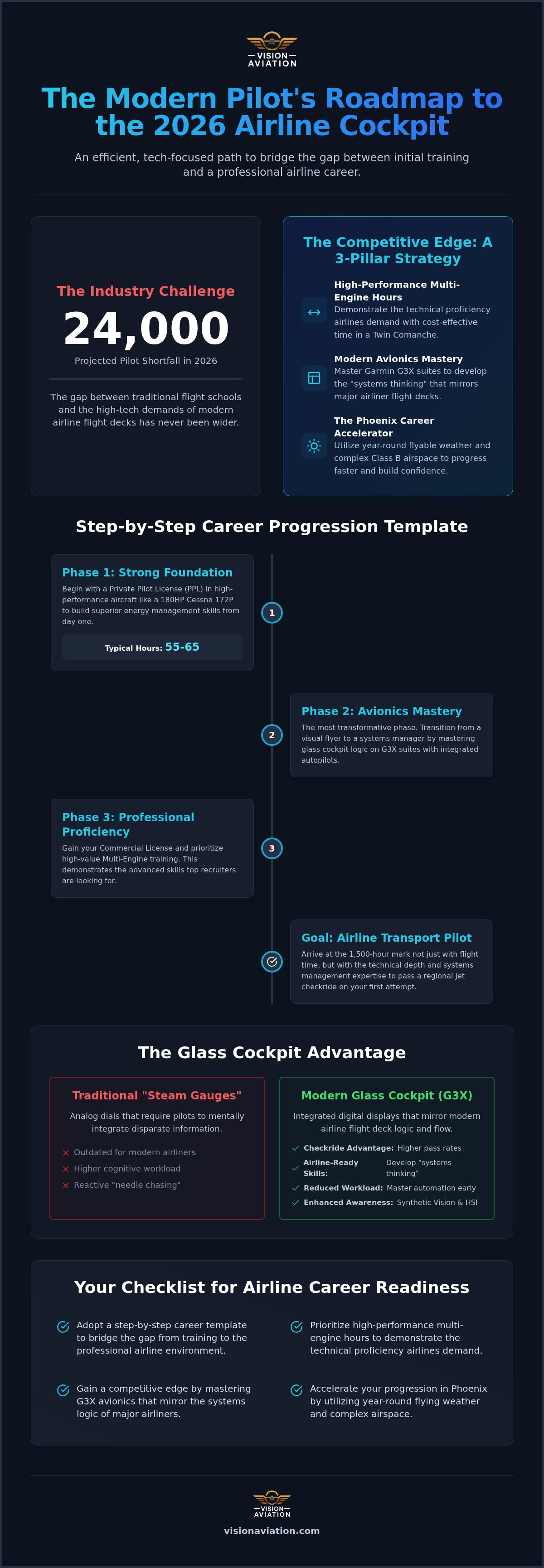
Did you know that the aviation industry faces a projected shortfall of 24,000 pilots in 2026? Despite this massive demand, the gap between a traditional flight school environment and a regional jet's flight deck has never felt wider. You might feel the pressure of the technical jump to complex systems, or perhaps you're frustrated by the high cost of building hours in outdated aircraft. Securing advanced flight training for airline career goals is no longer just an option; it's a necessity for those who want to be competitive in today's high-tech hiring market.
We understand that your goal isn't just to fly; it's to lead. This roadmap provides the most efficient technical path to an airline cockpit by focusing on multi-engine proficiency and modern Garmin glass suites. By mastering advanced avionics in the year-round training hub of Phoenix, you'll bridge the gap between training and the professional flight deck. We'll explore a clear progression from your PPL to ATP, detailing how to gain cost-effective multi-engine experience while developing the technical depth required by the industry's top recruiters in 2026.
Key Takeaways
- Master a step-by-step career template that bridges the gap between initial certification and the professional airline environment.
- Gain a competitive edge by transitioning to digital flight decks, using G3X avionics that prepare you for the systems logic of major airliners.
- Prioritize high-performance multi-engine hours in a Twin Comanche to demonstrate the technical proficiency airlines demand in 2026.
- Accelerate your progression in Phoenix by utilizing year-round flyable weather and gaining confidence in complex Class B airspace.
- Learn to evaluate training partners based on modern equipment standards to ensure your advanced flight training for airline career goals remains on track.
Navigating the Pilot Career Progression: A Step-by-Step Template
The path to a professional flight deck is a marathon, not a sprint. In 2026, major carriers like Delta and United are looking for more than just a 1,500-hour logbook; they want pilots who have mastered the technical nuances of modern aviation early in their journey. This is where advanced flight training for airline career success begins. By following a structured template, you can move through your Private, Instrument, Commercial, and Multi-Engine ratings with a clear focus on professional standards. This approach provides the flexibility to pivot between Part 61 and Part 141 training while ensuring you meet the rigorous Airline Transport Pilot License (ATPL) requirements eventually demanded by the majors.
Phase 1: Building a Strong Foundation in Phoenix
Starting your journey in Arizona provides a massive advantage due to the consistent, year-round flying weather. When researching the best flight schools in Phoenix, look for programs that prioritize high-performance equipment from day one. Learning in a 180HP Cessna 172P instead of a lower-powered trainer builds superior energy management skills. Many students ask how long to get a private pilot license in Arizona; while the FAA minimum is 40 hours, most successful 2026 candidates find that 55 to 65 hours of quality instruction creates the technical foundation needed for the jump to instrument flight.
Phase 2: The Instrument Rating and Avionics Mastery
The instrument rating is the most transformative phase of your training. This is the point where you stop being a visual flyer and start becoming a systems manager. Understanding the IFR training cost in Arizona is essential for your budget, but the real value lies in mastering glass cockpit logic. You aren't just chasing needles; you're managing a G3X suite and an integrated autopilot. This transition from basic stick-and-rudder to complex systems management is the first major technical jump in a pilot's career.
A template approach allows you to set realistic milestones for the 2026 hiring windows. By treating every hour as a professional evaluation, you build a resume that stands out. Choosing advanced flight training for airline career readiness ensures you don't just reach the 1,500-hour mark, but that you arrive there with the technical depth required to pass a regional jet checkride on your first attempt. The goal is simple: professional excellence from the very first takeoff.
The Glass Cockpit Advantage: Why G3X Mastery Matters for Airlines
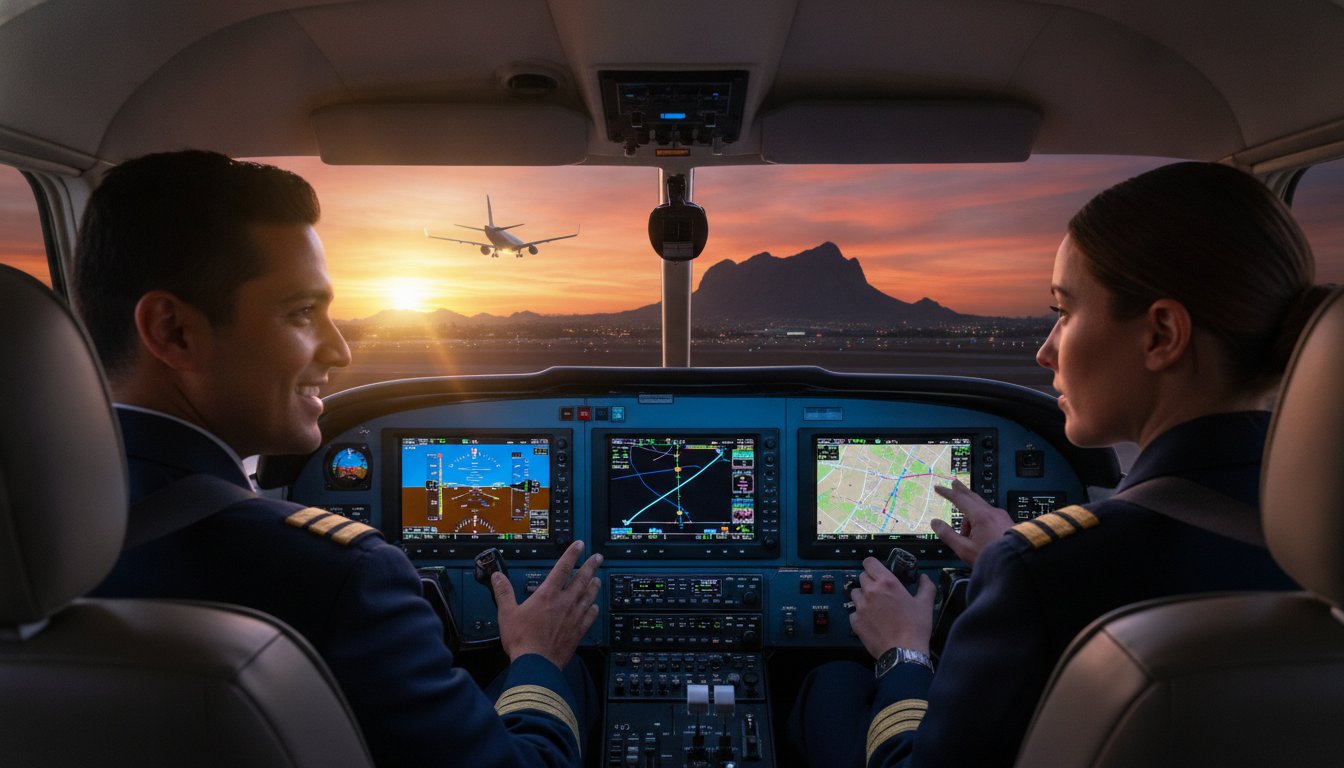
Traditional flight training often relies on mechanical "steam" gauges, the analog dials that have served pilots for decades. However, the airline industry has moved on. Modern glass cockpit training involves transitioning to integrated digital displays that consolidate flight data into a single, intuitive interface. For those pursuing advanced flight training for airline career success, mastering the Garmin G3X suite is a strategic move. This system mirrors the logic and flow of the flight decks found in modern Boeing and Airbus aircraft, allowing students to develop the "systems thinking" required at the airline level from their very first hour.
The integration of the GFC 500 autopilot further bridges the gap between light aircraft and transport-category jets. By learning to manage automation early, you significantly reduce your cognitive workload during complex maneuvers. This doesn't just make you a safer pilot; it provides a significant "Checkride Advantage." Digital situational awareness allows you to stay ahead of the airplane, leading to higher pass rates and a more professional performance during FAA evaluations. Developing these habits now ensures you aren't just reacting to the airplane, but actively managing its trajectory.
Mastering the Digital Environment Early
Synthetic Vision and the Horizontal Situation Indicator (HSI) are game-changers for IFR precision. They transform the pilot's role from someone who is simply "following the needle" to a manager of complex data streams. Preparing for a mastering the glass cockpit PPL checkride sets a high standard from the beginning of your journey. This early exposure to digital environments ensures that when you eventually reach an airline simulator, the transition feels like a natural progression rather than an overwhelming leap into the unknown.
Reducing the Regional Jet Learning Curve
The Flight Management System (FMS) logic found in the G3X is remarkably similar to the systems used in CRJ or ERJ regional jets. Understanding how to program flight plans, manage vertical navigation, and interpret moving maps is a core component of the FAA's guide to becoming a pilot in the modern era. When you prioritize advanced flight training for airline career readiness, you're investing in skills that pay dividends during initial operating experience (IOE) at a regional carrier. Glass cockpit proficiency effectively eliminates the "brain-lock" that occurs when a pilot's cognitive capacity is overwhelmed by new technology during high-stress airline transitions.
If you're ready to step into a professional environment, exploring the modern flight training fleet is the best way to ensure your skills match the standards of 2026 airline hiring.
Strategic Multi-Engine Training: Beyond the Rating
Reaching the 1,500-hour mark is a significant regulatory milestone, but the composition of those hours determines your standing with airline recruiters. In 2026, the industry is increasingly focused on proficiency-based results, mirroring the logic found in the FAA Advanced Qualification Program. Simply logging time in a basic trainer isn't enough to stand out. Your advanced flight training for airline career success depends on the quality of your multi-engine experience. Airlines prioritize candidates who have handled complex, high-performance twins in real-world IFR conditions, as this demonstrates a readiness for the technical rigors of a regional jet.
The Twin Comanche provides a distinct advantage over standard trainers like the Piper Seminole. It offers greater speed, increased systems complexity, and a "heavy" feel that more accurately simulates transport-category aircraft. Transitioning from single-engine logic to engine-out management in this platform requires a higher level of discipline. You aren't just learning to fly with two engines; you're learning to manage a high-performance machine with Garmin Glass avionics while maintaining precise control during critical phases of flight.
Multi-Engine Time Building Strategies
Block time packages are the most cost-effective way to accumulate the 50 hours of multi-engine time required for an ATP certificate. However, the true value comes from how you use those hours. Planning long-range IFR cross-countries allows you to simulate airline operations, navigating through diverse weather and complex airspace. Utilizing Garmin Glass in a multi-engine environment enhances your situational awareness, ensuring you stay ahead of the aircraft during high-workload phases. This strategic approach to time building turns a regulatory requirement into a professional development opportunity.
Complex System Management
Mastering the intricacies of constant speed propellers, retractable landing gear, and multi-engine fuel systems is essential for any aspiring commercial pilot. The Twin Comanche forces you to stay sharp, requiring active management of systems that are often simplified in entry-level trainers. Multi-engine cross-country IFR experience is the gold standard for commercial resumes because it proves you can manage sophisticated systems and high-speed navigation under the pressure of professional flight standards. By developing these habits now, you ensure a smoother transition to the flight deck of a regional or major carrier.
Maximizing Efficiency: The Phoenix Career Accelerator
Location is a tactical decision in a pilot's journey. While many flight schools offer standard curriculums, the environment where you train dictates how quickly you'll reach the flight deck. Phoenix serves as a premier training hub, offering a unique combination of complex airspace and reliable conditions. Choosing advanced flight training for airline career goals in this region means you aren't just logging hours; you're operating in one of the busiest aviation corridors in the United States. This exposure builds a level of professional comfort that simply cannot be replicated in quieter, rural training environments.
Operating in high-density altitude conditions is another critical factor. Phoenix summers challenge both the pilot and the aircraft, providing a practical education in performance calculations and engine management. Understanding how a high-performance aircraft like the 180HP Cessna 172P behaves in thin air is vital. These real-world variables ensure that your technical foundation is robust enough to handle diverse environments across the globe. By the time you reach an airline interview, you'll speak about performance and weather with the authority of someone who has managed these factors daily.
Airspace Complexity as a Classroom
Training near Phoenix Sky Harbor (KPHX) places you in the heart of Class B airspace. You'll regularly communicate with major TRACON controllers while navigating satellite airports and busy VFR corridors. This constant interaction develops "airline-ready" radio work long before you step into a regional jet. There is a significant psychological benefit to training where the big jets fly. Sharing the frequencies with Boeing 737s and Airbus A320s removes the intimidation factor often felt by new commercial pilots. It shifts your mindset from student to peer, preparing you for the professional communication standards required by major carriers.
Consistency and Momentum
Training momentum is the secret to lower costs and higher retention. Phoenix offers 300+ days of flyable weather per year, preventing the training gaps that plague pilots in the Midwest or Northeast. You can complete an accelerated IFR or multi-engine program in weeks instead of months because you don't have to worry about low ceilings or icing for half the year. 300 days of sunshine translates directly to lower overall training costs due to efficiency. This consistency allows you to maintain a steady rhythm, ensuring your skills stay sharp as you move through your ratings. Advanced flight training for airline career success depends on this continuity, allowing you to hit your 2026 milestones without weather-related delays.
Phoenix is also a massive networking hub for the industry. With a heavy presence of regional and major airline recruitment, you're positioned in a community of professionals who are actively looking for the next generation of talent. If you're ready to accelerate your journey, you can explore our high-performance training programs in Phoenix to see how our fleet matches your career ambitions.
Choosing Your Advanced Training Partner in 2026
Many large-scale academies operate on a volume-based model. While these "pilot factories" produce thousands of graduates, the individual student often feels like just another number in a high-throughput system. Choosing the right partner for your advanced flight training for airline career success means finding a school that prioritizes technical proficiency over simple enrollment numbers. In 2026, the distinction between a factory and a specialized training center is clear. It's the difference between merely meeting FAA minimums and actually being prepared for a regional jet transition on day one.
Evaluating a training partner requires a deep look at their fleet maintenance and avionics standards. Training on legacy aircraft with outdated mechanical gauges creates a technical deficit. If you want to be competitive, you need access to G3X suites and modern glass cockpits that reflect current airline standards. High-performance equipment isn't just about convenience; it's about safety and professional relevance. A partner that invests in modern technology is a partner that is invested in your long-term success as a commercial pilot.
The Vision Aviation Difference
We bridge the gap between initial certification and the airline flight deck by focusing on high-performance platforms. Our fleet includes the 180HP Cessna 172P and the Garmin Glass Twin Comanche, providing the complexity and power you need to develop professional habits. We tailor our instruction for modern cockpit proficiency, moving beyond basic maneuvers to master systems management. Whether you need flexible scheduling for IFR training or a dedicated program for multi-engine cross-country experience, our approach remains focused on your individual career track. We don't just build pilots; we mentor future first officers.
Next Steps for Your Airline Career
Transitioning from a Private Pilot to an Airline Transport Pilot requires a deliberate, tactical strategy. The first step is experiencing the difference that modern technology makes in your situational awareness and workload management. We recommend scheduling a discovery flight in one of our G3X-equipped aircraft to see how digital logic simplifies complex operations. From there, we can help you develop a custom multi-engine time building package designed to reach your 1,500-hour goal with the highest quality time possible.
Your journey to the cockpit is a significant investment in your future. By choosing a partner that values precision, modernity, and personalized mentorship, you ensure that every hour in your logbook moves you closer to your ultimate goal. Start your advanced flight training journey with Vision Aviation today.
Take Command of Your Future Flight Deck
The journey to 1,500 hours is more than a regulatory hurdle; it's an opportunity to build the technical depth that major airlines demand in 2026. By mastering modern G3X and Garmin Glass avionics early, you bridge the gap between light aircraft and the complex systems of a regional jet. Leveraging the high-performance 180HP Cessna 172P and the Twin Comanche for specialized multi-engine time building in Phoenix ensures your logbook reflects quality over mere quantity. You've seen how consistent training momentum and digital proficiency create a competitive edge that "pilot factories" often overlook.
Securing the right advanced flight training for airline career success requires a commitment to elite standards and forward-thinking equipment. Your path to the cockpit should be as sophisticated as the aircraft you intend to fly. It's time to move beyond basic training and step into a professional environment designed for your progression. Take Control of Your Career: Explore Vision Aviation’s Advanced Fleet. The horizon is clear, and your professional future is ready for takeoff.
Frequently Asked Questions
What is the fastest way to reach 1,500 hours for an airline career?
The fastest way to accumulate 1,500 hours is through a combination of flight instructing and dedicated time building in regions with reliable weather. Working as a CFI provides a steady flow of hours, while multi-engine cross-country programs allow you to log high-quality time quickly. This dual approach ensures you meet regulatory requirements while also developing the technical depth needed for a major carrier. Utilizing high-performance aircraft during this phase keeps your skills sharp for future evaluations.
Is it better to train in a glass cockpit or steam gauges for my commercial rating?
Training in a glass cockpit is significantly better for modern airline preparation because it mirrors the digital displays found in today's transport aircraft. While steam gauges teach fundamental skills, glass suites like the Garmin G3X focus on systems management and situational awareness. Developing these high-tech habits early ensures you won't be overwhelmed by the advanced avionics in a regional jet. It bridges the technical gap between light trainers and professional flight decks.
How much multi-engine time do I actually need for a regional airline job in 2026?
The FAA requires a minimum of 50 hours of multi-engine flight time to qualify for an Airline Transport Pilot (ATP) certificate. While this is the legal baseline, many regional carriers in 2026 look for candidates with 75 to 100 hours to ensure technical proficiency. Building these hours in a complex twin like the Twin Comanche demonstrates that you can handle high-performance systems under pressure. It makes your resume much more competitive during the hiring process.
Why is Phoenix considered one of the best places for advanced flight training?
Phoenix offers over 300 days of flyable weather annually, which is vital for maintaining training momentum. Beyond the sunshine, the complex Class B airspace around Sky Harbor provides a world-class classroom for radio work and situational awareness. You'll learn to navigate busy corridors alongside major airliners, building the professional confidence required for the next stage of your career. This environment ensures you're ready for the communication standards of the airline industry.
Can I build multi-engine hours while also gaining IFR cross-country experience?
Combining multi-engine time building with IFR cross-country flights is the most effective way to simulate professional airline operations. This approach forces you to manage complex systems while navigating through diverse weather and controlled airspace. It transforms a simple hour-building exercise into a rigorous training session that prepares you for the long-range navigation required at the commercial level. Airlines value this specific type of high-quality experience because it proves you can handle real-world challenges.
What are the prerequisites for starting a professional pilot career progression program?
You must hold a Private Pilot License (PPL) before moving into advanced commercial and multi-engine tracks. Most professional programs also require a current FAA medical certificate and a solid foundation in basic flight maneuvers. Once these are secured, you can begin the transition to high-performance aircraft and complex avionics. This progression ensures you have the core skills needed to handle the technical demands of the airline industry as you build your professional experience.
How does the Garmin G3X system help with airline transition training?
The G3X suite introduces you to the logic of modern Flight Management Systems (FMS) and integrated automation. Mastering this digital environment early makes advanced flight training for airline career transitions much smoother. You'll learn to manage data streams and autopilot modes, which directly prepares you for the high-workload environment of a regional jet simulator evaluation. It shifts your focus from simple flying to sophisticated systems management, just like in a professional cockpit.
Is Part 61 or Part 141 better for someone aiming for an airline career?
Part 61 is often the better choice for pilots who require a flexible, personalized schedule that moves at their own pace. It allows you to focus on specific technical goals and high-performance equipment without the rigid constraints of a university syllabus. This flexibility is essential when pursuing advanced flight training for airline career objectives, as it lets you prioritize quality multi-engine time. You can tailor your training to meet the exact standards of the airlines you're targeting.
