IFR Training Cost Arizona: 2026 Guide to Instrument Rating Expenses
What if the lowest hourly rate on a flight school quote is actually a trap that leads to a much higher total bill? Many pilots begin their instrument journey focused solely on the sticker price, only to find themselves stalled by outdated steam gauges or an aircraft that simply can't handle the Phoenix summer. Calculating the IFR training cost Arizona requires looking beyond the base rental fee to account for efficiency, technology, and local environmental factors.
It's frustrating to feel like your budget is evaporating while you struggle with unreliable avionics or wait for a low-powered trainer to climb in high density altitude. We understand that you want a clear, honest path to proficiency without the hidden surcharges. This 2026 guide promises a transparent breakdown of every expense involved in your rating, from instructor fees to DPE costs. You'll discover how investing in a 180HP Cessna equipped with a Garmin G3X suite actually reduces your total training time by accelerating situational awareness. We will explore the specific ROI of modern tech and provide a line-item budget to help you plan your journey into the clouds with confidence.
Key Takeaways
- Calculate a realistic IFR training cost Arizona by evaluating the full spectrum of expenses, from modern glass-panel rental rates to current DPE fees.
- Identify how the 180HP engine upgrade in a Cessna 172P overcomes density altitude challenges to maintain consistent training schedules during Phoenix summers.
- Evaluate the "efficiency dividend" of modern Garmin G3X glass cockpits, which streamline situational awareness and can reduce the total hours needed for proficiency.
- Compare Part 61 and Part 141 pathways to determine which regulatory framework offers the most cost-effective route for your specific timeline and professional goals.
- Master proactive cost-management techniques like chair flying and simulator-based procedure training to ensure every flight hour is focused on advanced mastery.
Navigating the 2026 IFR Training Landscape in Arizona
Arizona stands as the premier hub for instrument training in the United States. While other regions face frequent "no-go" days due to low ceilings and icing, the Southwest offers a consistent environment that favors the student. Calculating the IFR training cost Arizona involves more than just looking at a flight school's price sheet; it requires understanding how the local environment accelerates your learning timeline. In the Phoenix area, the complexity of the airspace serves as a high-stakes classroom. Navigating the transitions between Class Bravo and busy satellite airports prepares you for the professional-grade communication required in commercial aviation. It is a rigorous environment that builds proficiency faster than quiet, uncontrolled fields in less congested states.
The Arizona Weather Advantage for IFR
The "Efficiency Dividend" in Arizona is a real financial benefit. With over 300 flying days per year, you avoid the costly training interruptions common in other parts of the country. When a student in the Northeast is grounded for a week by a passing front, an Arizona student is logging hours. Consistent VFR-on-top conditions allow for more productive "under the hood" time, ensuring you can focus on procedural mastery without fighting actual icing or severe turbulence. To maximize your budget, plan for morning blocks during the summer monsoon season. These early sessions allow you to complete your training before the afternoon heat and isolated storms develop, keeping your progression steady and predictable.
Defining the 2026 Cost Baseline
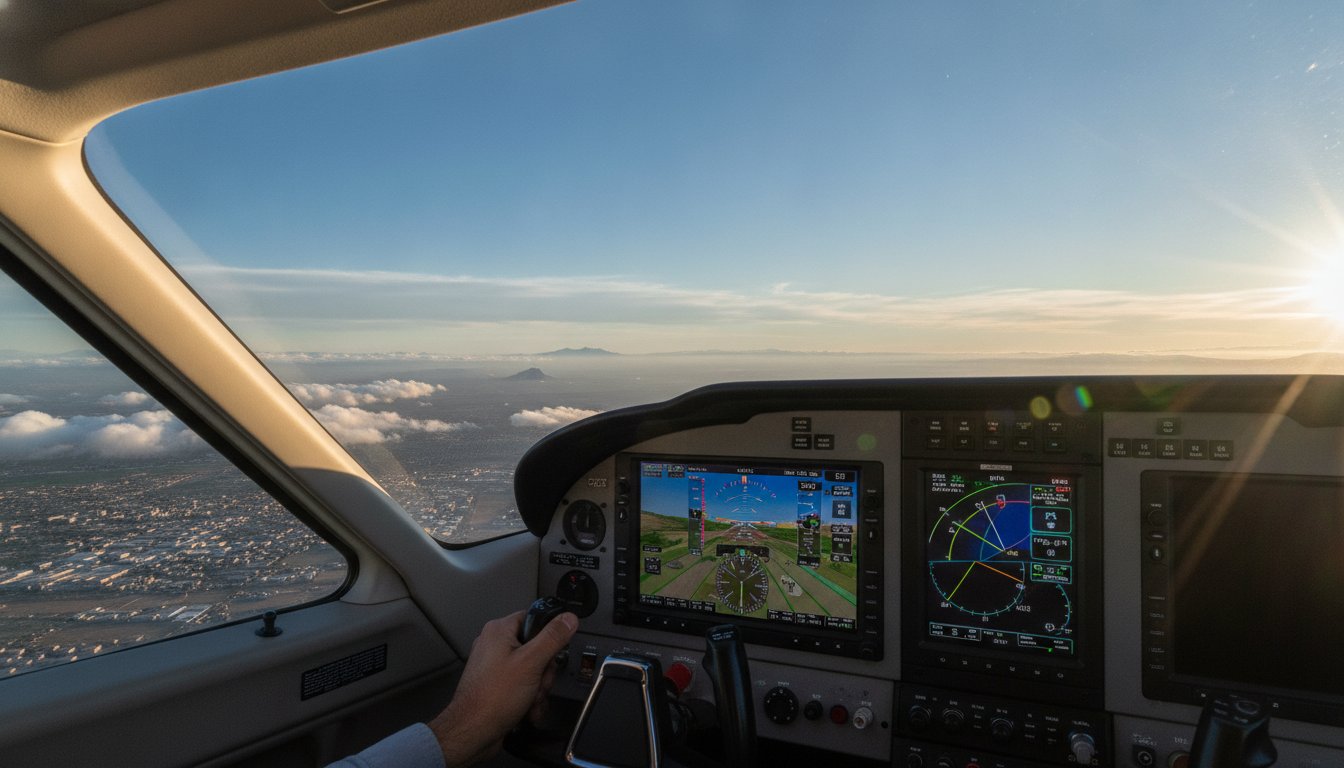
The average IFR training cost in Arizona ranges between $12,000 and $20,000 depending on aircraft tech. This spectrum reflects the reality of the 2026 market, where rising insurance premiums and fuel prices have pushed baseline rates higher across the industry. However, looking only at the hourly rental fee is often a mistake. Choosing a modern Cessna 172P 180HP rental might carry a higher price tag per hour than a 40-year-old trainer with steam gauges, but it often leads to lower total costs. The increased horsepower allows for better climb gradients in the Phoenix heat, and glass-panel avionics like the Garmin G3X streamline situational awareness. When you learn faster, you fly fewer hours to reach checkride readiness, effectively lowering your overall investment.
- 300+ Flying Days: Minimizes the need for expensive "refresher" flights after weather delays.
- High-Performance Trainers: 180HP engines ensure you aren't wasting paid time struggling to climb in high density altitude.
- Professional Airspace: Direct exposure to Phoenix terminal environments builds immediate commercial-ready skills.
Breakdown of IFR Training Cost Components
Understanding the true IFR training cost Arizona requires a granular look at where your money actually goes. It isn't just about the hour meter on the tach; it's about the quality of the instruction and the capability of the platform you choose. You'll find a wide variance in rates across the Phoenix valley, but the cheapest hourly fee often masks inefficiencies that lead to more total hours in the logbook. A professional training environment prioritizes high-performance equipment that mirrors what you'll eventually fly in a commercial career.
Hourly Rates vs. Block Time
Many flight schools offer "all-inclusive" packages that look attractive on paper. However, these often include hidden fees or rigid schedules that don't account for individual learning plateaus. We believe in transparent hourly billing that reflects the actual time spent in the air and on the ground. If you're looking to build experience toward a professional career, exploring multi-engine block time rates can significantly lower your IFR cross-country expenses. This approach allows you to pay for exactly what you use while benefiting from the economies of scale that come with larger time commitments.
The Role of Modern Avionics in Training Speed
Training in a cockpit equipped with the Garmin G3X Touch transforms the learning experience. While traditional steam gauges require an intense mental load to build a mental picture, digital glass displays provide immediate situational awareness. This doesn't just make flying safer; it makes it more efficient. Mastering the GFC 500 autopilot early in your training prevents the costly mistakes often made during high-workload phases of flight, such as the transition from the enroute environment to a busy approach. Digital charts and integrated flight decks save hours of "lost" training time that would otherwise be spent fumbling with paper or outdated GPS units.
- Instruction Fees: Budget for both flight time and pre-flight ground briefings. Professional IFR mentors often command a higher rate but save you money by preventing repetitive lessons through superior teaching methods.
- Simulator Utilization: Modern Advanced Aviation Training Devices (AATDs) are essential for mastering procedures. You can pause the "flight" to discuss a mistake, something that's impossible at 4,000 feet.
- Ground School and Materials: Digital apps like ForeFlight have largely replaced traditional classroom settings. These tools offer real-time updates and more flexibility for your schedule.
- Administrative and Insurance Fees: Always check the fine print for fuel surcharges or mandatory insurance buy-downs that aren't included in the advertised rental rate.
By choosing a high-performance trainer like our 180HP Cessna, you ensure that every minute of your IFR training cost Arizona is spent learning, not just waiting for the aircraft to perform. If you're ready to see how modern tech changes the budget, you can explore our high-performance IFR fleet to see the difference for yourself.
Part 61 vs. Part 141: Choosing the Cost-Effective Path
Deciding between a Part 61 and a Part 141 program is a pivotal choice that directly impacts your total IFR training cost Arizona. While the FAA sets the baseline requirements for both, the way you reach those milestones differs significantly. In 2026, the choice isn't just about the number of hours in the air. It's about finding the regulatory framework that aligns with your current experience level and your long-term aviation goals. One path offers a rigid, academic structure, while the other provides the flexibility to tailor training to your personal schedule.
When Part 141 Makes Financial Sense
Part 141 flight schools operate under a strict, FAA-approved syllabus that leaves little room for deviation. This structure is ideal for career-track students who can commit to a full-time training schedule. The primary financial incentive is the reduced hour requirement; you can qualify for your instrument rating in as few as 35 hours of flight training. For students starting with very little cross-country time, this "accelerated" path can be the most efficient route. However, you must follow the lessons in a specific order. If you struggle with a certain module, you can't simply move on to something else to save time, which can occasionally lead to unexpected review costs.
The Case for Part 61 Flexibility
For working professionals or pilots with irregular availability, Part 61 is often the superior choice. You aren't bound by a rigid curriculum, allowing you and your instructor to focus on the specific skills that need the most attention. This flexibility is perfect for integrating real-world scenarios, such as IFR cross-country training in Arizona, directly into your learning process. While Part 61 requires 40 hours of actual or simulated instrument time and 50 hours of cross-country PIC time, many pilots have already accrued a significant portion of these hours during their private pilot phase.
When evaluating your IFR training cost Arizona, consider these key regulatory factors:
- Cross-Country Requirements: If you already have 30 or 40 hours of PIC cross-country time, the Part 61 path is likely more cost-effective because you won't be forced into a 141 syllabus that ignores your prior experience.
- Training Consistency: Part 141 requires a high level of consistency. If your schedule only allows for one flight a week, the rigid nature of a 141 syllabus may actually increase your costs through repetitive "warm-up" lessons.
- Checkride Readiness: Personalization under Part 61 often leads to higher proficiency because the training adapts to your learning pace rather than a calendar.
It's vital to choose a school that respects your timeline and budget. You can consult our guide on the best flight schools in Phoenix to compare how different local providers handle these two training pathways. By matching the regulation to your reality, you ensure that every dollar spent brings you closer to your rating.
Practical Strategies to Manage and Reduce IFR Training Expenses
Controlling your IFR training cost Arizona requires a proactive mindset that extends far beyond the cockpit. While aircraft rental and instructor fees are the most visible expenses, the hidden cost of "re-learning" is often what breaks a student's budget. Efficiency in instrument training is built on the ground. By mastering the theoretical and procedural aspects of flight before the engine starts, you ensure that every paid hour in the air is spent refining skills rather than introducing new concepts. This disciplined approach separates the students who finish on budget from those who face mounting costs due to lack of preparation.
One of the most effective ways to save money is passing your FAA IFR written exam early. Completing the written before your first flight lesson allows you to focus entirely on the physical and mental demands of flying without the distraction of memorizing regulations or weather theory. Additionally, prioritize instructor consistency. Every time you rotate to a new CFI, you spend valuable time proving your proficiency to a new mentor. Sticking with one professional who understands your learning style prevents this expensive cycle of repetition.
Maximizing Each Flight Hour
Briefing and debriefing are where the real learning happens. Spending 30 minutes on the ground to walk through a procedure often saves 15 minutes of aimless circling in the air. Modern technology has revolutionized this process. You can use G3X data logs to review your approaches with surgical precision, identifying exactly where a glideslope was missed or where a heading began to drift. The Garmin GFC 500 autopilot also serves as a powerful teaching tool. By automating basic flight paths, it allows you to focus on complex procedural management and situational awareness, which accelerates your mastery of the IFR environment in fewer total flight hours.
Accounting for "The Other" Costs
A realistic budget must account for the secondary expenses that round out your rating. In the Phoenix FSDO, DPE checkride fees currently range between $800 and $1,200. These are paid directly to the examiner and are not typically part of a flight school’s rental rate. You should also factor in the following:
- FAA Medical Renewals: Ensure your medical is current well before your checkride date to avoid scheduling delays.
- Chart Subscriptions: Budget for professional tools like ForeFlight or Garmin Pilot, which are essential for modern IFR navigation.
- Simulator Time: Use an AATD to practice emergency procedures and approach plate briefings at a fraction of the cost of the aircraft.
- Travel Expenses: If you are a non-local pilot training in the Southwest, remember to include lodging and transportation in your total investment calculation.
If you're ready to start your journey with a transparent, high-tech approach that respects your budget, you can book a discovery flight with Vision Aviation today to experience our 180HP IFR platforms firsthand.
The Vision Aviation Advantage: Modern Tech for Efficient Learning
The true measure of your investment isn't just the hourly rate; it's the quality of the proficiency you gain in every session. At Vision Aviation, we've structured our fleet to directly address the common pain points that inflate the IFR training cost Arizona. By providing high-performance equipment that mirrors modern commercial cockpits, we ensure that your training is an efficient stepping stone rather than a struggle against aging technology. Our commitment to transparent, value-driven mentorship means you spend your budget on mastering the skies, not on fighting the limitations of an underpowered aircraft.
The 180HP engine in our Cessna 172P provides a critical advantage in the Phoenix terminal environment. While standard 150HP or 160HP trainers often struggle to maintain climb gradients during the intense summer heat, our high-performance platform handles density altitude with ease. This efficiency ensures you reach your training altitudes faster, allowing for more repetitions of approaches and holds within a single flight hour. When you aren't wasting paid time waiting for the aircraft to perform, your total path to certification becomes significantly more cost-effective.
Why Glass Cockpit Training is Future-Proof
Learning on a Garmin G3X Touch suite prepares you for the reality of 21st-century aviation. While some schools still rely on outdated GPS units like the G430, we prioritize the tech found in modern commercial fleets. Digital situational awareness significantly reduces the mental workload during high-stress IFR phases, which inherently lowers the risk of training accidents and plateaus. If you are debating between different glass platforms, our analysis of Garmin G3X vs G1000 for flight training explains why our specific suite offers a more intuitive and responsive learning environment. This tech-forward approach ensures you are ready for the next step, whether that is a commercial multi-engine rating or a professional career.
- Professional Autopilot Management: Mastering the GFC 500 autopilot early allows you to focus on the high-level decision-making required for safe IFR operations.
- Multi-Engine Progression: Our Twin Comanche is available for pilots looking to build high-value multi-engine IFR hours in a glass-panel environment.
- Data-Driven Debriefs: Use precise flight logs to review your performance on the ground, ensuring every flight hour is optimized for maximum growth.
Ready to Start Your IFR Journey?
Achieving your instrument rating is a transformative milestone that opens up the full utility of your pilot certificate. We invite you to visit our modern Phoenix hangar for a personal tour of our fleet and a discussion about your specific goals. We will help you customize a training plan that respects your 2026 budget while ensuring you receive the highest standard of professional instruction. Don't let your IFR training cost Arizona be a source of uncertainty. Take the first step toward the flight deck and Book Your IFR Consultation at Vision Aviation today.
Master the Skies with Professional Precision
Achieving an instrument rating is more than a line item in a logbook; it's a fundamental shift in your capability and confidence as a pilot. We have explored how the IFR training cost Arizona pilots encounter is influenced by your choice of aircraft, the regulatory path you select, and your commitment to ground preparation. Investing in modern technology like the Garmin G3X and GFC 500 autopilot doesn't just simplify the learning curve. It prepares you for the high-performance reality of commercial aviation. Our Phoenix-based experts are dedicated to providing a training environment where 180HP performance meets elite, glass-cockpit instruction.
You don't have to settle for outdated equipment that slows your progress or creates uncertainty in your budget. Instead, choose a partner that values your time and your professional growth. By prioritizing efficiency and high-end equipment, you ensure that every hour spent under the hood is a meaningful step toward mastery. The freedom of the clouds is waiting for you. Take the next step in your journey with a team that understands the ROI of quality training.
Get a Custom IFR Training Quote from Vision Aviation
Frequently Asked Questions
What is the average IFR training cost in Arizona for 2026?
The average IFR training cost Arizona students should budget for in 2026 typically falls between $12,000 and $20,000. This range covers aircraft rental, professional instruction, and examiner fees. Your final investment depends heavily on the aircraft's technology and your training frequency. High-performance glass cockpits may carry a higher hourly rate, but they often lead to faster proficiency and fewer total hours.
How long does it realistically take to get an instrument rating in Phoenix?
Most pilots in Phoenix complete their instrument rating within two to four months when training consistently. If you commit to an accelerated schedule, you can finish the requirements in as little as three to six weeks. Arizona's predictable weather eliminates the long seasonal delays found in other states, which helps you maintain the "muscle memory" needed to progress quickly.
Does training in a glass cockpit like the Garmin G3X cost more?
While glass-panel aircraft often have a higher hourly rental rate, they frequently reduce the total number of hours required to reach checkride proficiency. The superior situational awareness provided by digital displays helps students master complex procedures with less frustration. This efficiency can result in a lower total bill compared to struggling with outdated steam gauges over a longer period.
Can I use a simulator to count toward my IFR rating hours?
Yes, you can log up to 20 hours of instrument time in an Advanced Aviation Training Device (AATD) under Part 61 regulations. Simulators are a highly cost-effective way to master approach plates and emergency procedures without the expense of fuel and engine time. Using a simulator allows you to pause the flight to discuss mistakes, which accelerates your learning before you ever leave the ground.
What are the hidden fees in Arizona flight training programs?
Common hidden expenses include fuel surcharges, insurance deductibles, and mandatory ground briefing fees that occur before and after the flight. You should also account for the DPE checkride fee, which currently ranges from $800 to $1,200 in the Phoenix area. Always ask for a detailed quote that includes digital chart subscriptions and any administrative processing fees to ensure your budget is realistic.
Is Arizona weather better for IFR training than other states?
Arizona is considered a premier training hub because it offers over 300 days of flyable weather each year. This consistency prevents the costly "skill fade" that happens when students are grounded for weeks by winter storms or low ceilings. The ability to fly nearly every day ensures that the IFR training cost Arizona pilots pay is maximized for efficiency and steady progression.
Do I need 50 hours of cross-country PIC before I start IFR training?
You don't need to have all 50 hours of cross-country PIC time to begin your lessons, but you must meet this requirement before your checkride under Part 61. Many pilots choose to build these hours while simultaneously receiving instrument instruction. This dual-purpose approach allows you to practice IFR procedures on long cross-country flights, making your time building more productive and career-focused.
Is Vision Aviation a Part 61 or Part 141 flight school?
Vision Aviation provides personalized IFR instruction that leverages the flexibility of Part 61 to meet the needs of modern pilots. This structure allows us to customize your training plan based on your existing experience and professional goals rather than forcing you into a rigid, one-size-fits-all syllabus. We focus on high-tech mentorship that prioritizes proficiency and prepares you for the commercial reality of modern glass-cockpit flight decks.
