Multi-Engine Time Building in Arizona: The Modern Pilot’s Resource Guide (2026)
What if the fifty hours required for your ATP certificate felt less like a regulatory hurdle and more like a high-stakes rehearsal for the airline flight deck? Many pilots seeking multi engine time building Arizona opportunities find themselves stuck in aging cockpits, logging "junk" hours that do little to prepare them for the fast-paced environment of a modern regional carrier. It's a common frustration to invest your hard-earned capital into monotonous local flights that don't challenge your IFR skills or your technical proficiency with current systems.
You can bridge the gap to your commercial career by combining efficient hour accumulation with mastery of advanced Garmin glass cockpits. This resource guide explores how to maximize your time in the air, navigate complex safety pilot logging rules, and build the sophisticated IFR cross-country experience that recruiters actually value in 2026. We'll show you how to transform a mandatory requirement into a competitive advantage for your professional journey.
Key Takeaways
- Leverage over 300 days of VFR weather and complex Class B airspace to gain real-world experience in a high-growth aviation market.
- Master modern Garmin Glass avionics and GFC 500 autopilot systems to bridge the technical gap between flight training and the regional airline flight deck.
- Evaluate the most efficient paths for multi engine time building Arizona by comparing Solo PIC rentals with strategic time-sharing opportunities.
- Build high-quality IFR cross-country hours through challenging routes like Phoenix to Flagstaff, ensuring every flight hour enhances your professional readiness.
- Align your training with industry-leading standards by choosing a high-performance platform like the Twin Comanche for your career progression.
Understanding Multi-Engine Time Building in Arizona’s Aviation Hub
Multi-engine time building is the critical bridge between earning your initial rating and securing a seat at a regional airline. It is the period where theoretical knowledge transforms into command authority. In 2026, the industry landscape has shifted. Airlines no longer just look at the total number in your logbook; they scrutinize the quality of those hours. Choosing the right environment for multi engine time building Arizona offers ensures you aren't just "boring holes in the sky" but actually preparing for the rigors of a professional flight deck.
The "Arizona Advantage" is a real phenomenon for career-track pilots. With over 300 days of VFR weather annually, your progression remains consistent and predictable. You won't face the weeks of grounding common in the Midwest or Northeast. However, the true value lies in the complexity of the environment. Navigating the busy Class B airspace around Phoenix while managing a multi-engine platform creates a high-performance habit that recruiters notice. We categorize these as "Value-Based Hours" rather than "Minimum Requirement Hours."
- Minimum Requirement Hours: Flying circles in an old trainer with outdated instruments in quiet airspace.
- Value-Based Hours: Managing complex systems, navigating high-density traffic, and mastering modern avionics in challenging terrain.
Why Phoenix is the Epicenter of Pilot Progression
The Valley of the Sun acts as a high-tech laboratory for pilot development. The density of flight training resources here is unmatched, creating a competitive yet supportive atmosphere for growth. Training in Arizona exposes you to diverse terrain and high density altitudes, forcing you to deeply understand aircraft performance and engine management. Phoenix airspace moves fast. It demands precision. By the time you reach your hour requirements, the pace of commercial operations will feel like a natural extension of your training rather than a shock to the system.
The 2026 Outlook for Multi-Engine Requirements
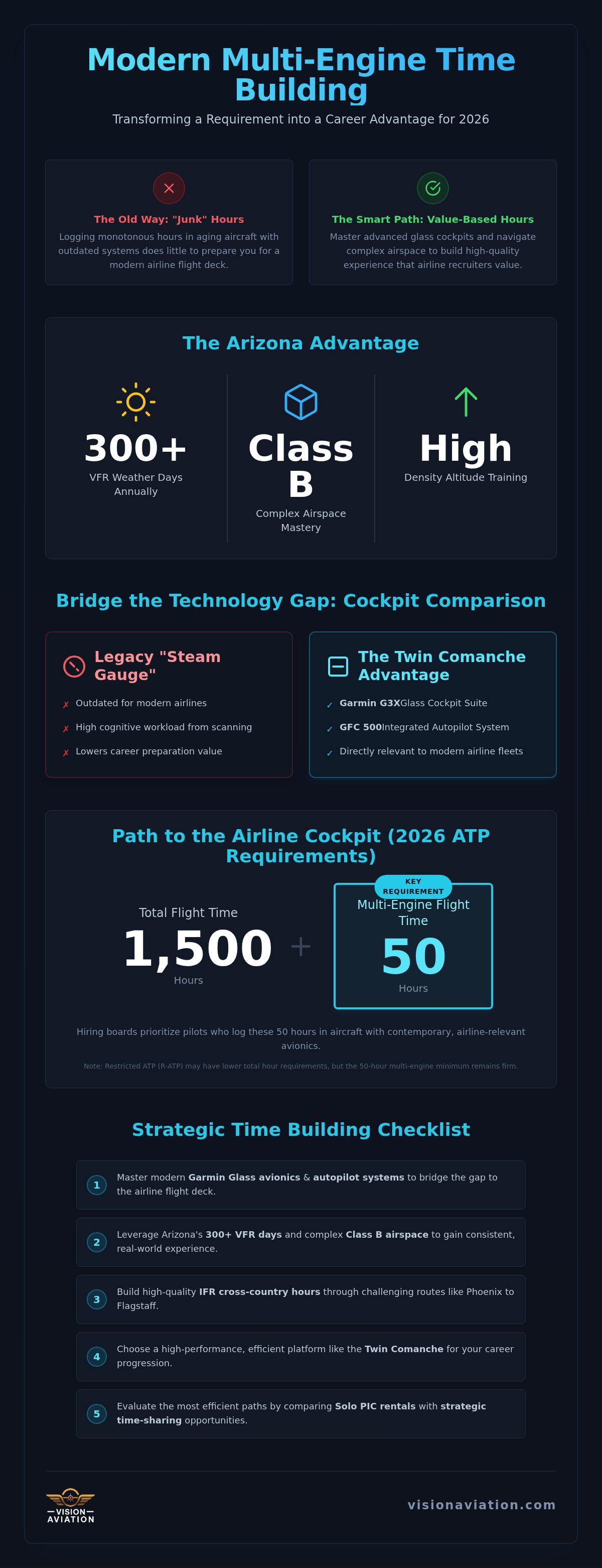
As of 2026, the path to an Airline Transport Pilot (ATP) certificate remains rigorous. As outlined in the standards for Pilot Certification in the United States, candidates generally need 1,500 total flight hours, which must include at least 50 hours of multi-engine flight time. Even for those qualifying for a Restricted ATP with fewer total hours, that 50-hour multi-engine benchmark is a firm requirement. Hiring boards now prioritize pilots who have logged this time in aircraft featuring contemporary equipment. They want to see that you can manage the workload of a Garmin Glass suite and an integrated autopilot, as these skills translate directly to the modern jets you'll eventually fly.
The Twin Comanche Advantage: Modern Glass vs. Legacy Avionics
Logging hours in a 1970s twin with flickering steam gauges might save a few dollars upfront, but it costs you in career preparation. The professional aviation world has moved beyond analog dials. Modern regional jets don't use them, and your training shouldn't either. The Twin Comanche stands out as a uniquely efficient, high-performance platform for multi engine time building Arizona candidates who want to stay ahead of the curve. It offers the perfect balance of complex systems and manageable operating costs, allowing you to focus on high-level proficiency rather than just keeping an old airframe in the air.
Transitioning from basic trainers to a twin requires a significant jump in situational awareness. Relying on the FAA's Airplane Flying Handbook for foundational multi-engine principles is essential, but applying those principles in a cockpit equipped with Garmin Glass changes the game. This technology doesn't just display data; it synthesizes it, giving you the mental bandwidth to handle emergencies and complex IFR procedures with precision.
Mastering the Modern Multi-Engine Cockpit
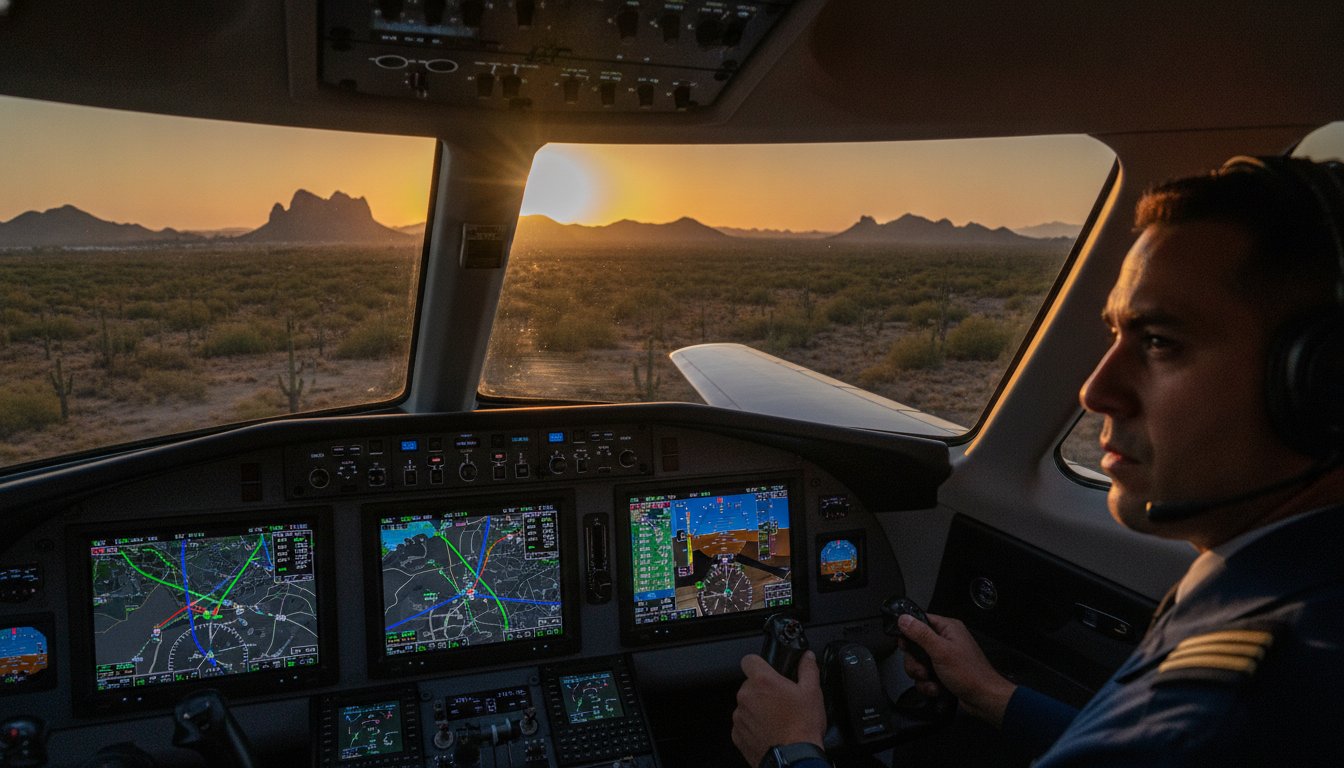
The Garmin G3X suite transforms how you interact with the aircraft. Instead of scanning six different instruments to understand your flight path, you have a unified primary flight display that provides an intuitive, synthetic vision of your environment. This is why Twin Comanche transition training is so valuable for career pilots. Digital engine monitoring also plays a critical role in safety. It provides real-time alerts on engine health, allowing you to identify potential issues long before they become emergencies during long cross-country flights.
Reducing Workload with the Garmin GFC 500
Workload management is the hallmark of a professional pilot. The Garmin GFC 500 autopilot isn't a crutch; it's a sophisticated tool that allows you to step back from the physical demands of "hand-flying" to focus on high-level decision-making. In a busy IFR environment, this automation reduces fatigue and ensures you arrive at your destination with the mental clarity needed for a complex approach. Mastering these automated systems is a core competency that regional airlines look for during the hiring process. If you're ready to elevate your skills, consider exploring our multi-engine time building options to see how modern tech accelerates your growth.
Proficiency in a glass cockpit drastically reduces your transition time once you reach the airlines. You'll already be comfortable with the logic of flight management systems and automated flight paths. This familiarity allows you to focus on learning company-specific procedures rather than struggling to understand the basic avionics suite of a multi-million dollar jet.
Evaluating Time Building Strategies: Solo PIC vs. Time Sharing
Deciding how to accumulate your hours is a pivotal choice that shapes your professional reputation. While the financial appeal of splitting costs is clear, the method you choose affects your skill retention and your attractiveness to airline recruiters. Most candidates pursuing multi engine time building Arizona programs weigh the benefits of acting as a safety pilot against the autonomy of solo rentals. In the competitive hiring market of 2026, the distinction between "logging time" and "gaining experience" has never been more critical.
Your strategy must align with the legal framework established by the FAA. To qualify for a commercial certificate with a multi-engine rating, you must meet specific FAA aeronautical experience requirements, which include at least 20 hours of flight training on the areas of operation and specific solo or PIC time. Beyond the legal minimums, insurance requirements for high-performance twins have become more stringent. Underwriters in 2026 typically look for specific make-and-model checkouts, especially for aircraft featuring advanced glass cockpits and high-performance capabilities.
The Reality of Time-Sharing and Safety Pilots
The "safety pilot" method allows two pilots to log Pilot-in-Command (PIC) time simultaneously under 14 CFR 61.51. One pilot flies under simulated instrument conditions while the other acts as a safety observer. It's a common way to reduce costs. However, many airline hiring boards now view excessive safety pilot time with skepticism. They prefer to see "pure" PIC hours where you were the sole manipulator of the controls. Being the only person responsible for the aircraft builds the decision-making muscles required for a professional career. It ensures you aren't just a passenger in the right seat but a commander in the left.
The Financial Logic of Block Time Rates
Block time is the most effective way to access premium aircraft without the prohibitive costs of standard hourly rentals. By committing to a set number of hours upfront, typically in increments of 25, 50, or 100, you secure a significantly lower rate. This approach allows you to plan a consistent training schedule, which is vital for maintaining proficiency. You can find a detailed breakdown of how these packages function in our guide to multi engine block time rates. When calculating your return on investment, consider the value of training in a modern cockpit. The time you save during your eventual airline transition often outweighs the initial cost of a high-quality multi engine time building Arizona package.
Navigating Arizona Airspace: Planning Your Multi-Engine IFR Experience
Arizona's varied geography provides an elite training environment for those pursuing multi engine time building Arizona packages. Instead of flying the same repetitive traffic patterns, use this time to master multi engine IFR transition training. This strategy ensures every hour in your logbook reflects a high level of technical proficiency. Mastering the transition to multi-engine IFR operations is what separates a student from a professional pilot ready for the airlines.
Integrating the IFR cross-country training Arizona requirements into your schedule is a strategic way to meet the 250nm requirement while building multi-engine hours. While the state is known for its clear skies, pilots should actively seek out night operations and varying density altitudes to round out their experience. This deliberate approach prepares you for the unpredictable nature of commercial flight schedules.
Executing High-Value IFR Cross-Country Flights
Planning a 250nm IFR cross-country in a Twin Comanche requires more than just checking fuel reserves. You must navigate high-density Phoenix sectors while managing complex Garmin Glass avionics. Routes from Phoenix to Flagstaff or Yuma offer distinct challenges. Flagstaff, with its high elevation and potential for mountain waves, demands precise performance calculations. Using Garmin Glass for approach plates and real-time weather overlays allows you to stay ahead of the aircraft. This level of situational awareness is vital when communicating with ATC in busy Class B airspace. It builds the confidence needed to handle the pace of commercial operations.
Building Proficiency Beyond the Minimums
Deliberate practice is the key to meaningful progression. Don't fall into the trap of passive logging. Use your multi engine time building Arizona to practice simulated engine-out procedures and emergency flows in a controlled, professional environment. Flying into unfamiliar airports with different approach types builds the adaptability required for airline operations. For example, executing an RNAV into a non-towered field followed by an ILS into a major hub creates a realistic workload. If you're ready to challenge yourself with these high-performance routes, explore our multi-engine flight options to start your journey.
Emphasizing quality over quantity means every flight should have a specific training objective. Whether it's mastering the autopilot's vertical navigation features or perfecting your single-engine approach, these skills are the foundation of your future career. Recruiters value pilots who can demonstrate they used their time building to grow, not just to wait for a number to turn in their logbook.
Strategic Career Progression: Vision Aviation’s Advanced Time Building Path
Vision Aviation serves as the bridge between your initial ratings and the professional flight deck. Choosing a path for multi engine time building Arizona offers requires more than just finding an available airframe; it demands a partner invested in your long-term success. We provide a structured environment through advanced pilot training Phoenix programs that prioritize airline readiness over simple hour accumulation. By transitioning from Private and IFR foundations into our high-performance Twin Comanche, you're not just checking a box. You're mastering the specific systems and workflows used by the world's leading carriers.
The "Vision Advantage" centers on three pillars: a modern fleet, expert mentorship, and career-focused training. Our aircraft are maintained to the highest standards, ensuring that your time building is safe, reliable, and technically relevant. We don't just rent airplanes. We guide pilots through the transition to multi-engine mastery, providing the technical depth needed to excel in regional airline interviews and initial operating experience. This seamless progression from single-engine proficiency to multi-engine command is what sets our graduates apart in a competitive hiring environment.
Why Modern Cockpits Define the Professional Pilot
Tech-literacy is the most valuable asset for a pilot in 2026. The days of transitioning to a jet with only steam-gauge experience are largely over. Vision Aviation's fleet, featuring the Garmin G3X and GFC 500 autopilot, sets the standard for modern flight instruction. A Modern Pilot is an aviator who balances precise stick-and-rudder skills with advanced automation management. This dual competency is what hiring boards look for, and it's exactly what our training environment cultivates. By training on the same logic used in modern airliners, you reduce your future training footprint and increase your professional value.
Getting Started with Your Hour Building Program
Beginning your journey is a straightforward process designed to get you in the air quickly while ensuring safety. Your progression starts with an initial aircraft checkout and a review of our rental agreement. This ensures you're comfortable with the specific avionics and performance characteristics of our Twin Comanche or our 180HP Cessna 172P. We make IFR and multi-engine instructors available for initial mentorship, helping you refine your flows before you begin your solo or block-time flights. This structured entry ensures that your multi engine time building Arizona experience is productive and professional from the very first hour.
Take the next step toward the airlines and schedule your checkout today. Join the ranks of elite pilots by building your multi-engine hours with Vision Aviation and mastering the skies with confidence.
Take Command of Your Future on the Flight Deck
The path to a professional pilot career in 2026 requires more than just meeting a number in a logbook. It demands a strategic focus on high-performance operations and technical mastery. By prioritizing quality training in a Garmin Glass and G3X equipped fleet, you ensure your multi engine time building Arizona experience translates directly to the airline flight deck. Arizona's unique combination of consistent weather and complex airspace provides the perfect laboratory for building the command authority that recruiters value.
Success in modern aviation belongs to those who balance stick-and-rudder skills with advanced automation management. Through professional IFR mentorship and deliberate cross-country planning in the Phoenix area, you can bridge the gap from student to commercial professional with confidence. Don't just log hours; build a legacy of excellence that sets you apart from the competition. Your journey to the airlines is a series of deliberate choices, and the right environment makes all the difference.
Elevate Your Career: Explore Multi-Engine Time Building Packages at Vision Aviation
The skies are waiting for your next move. Step into the cockpit and accelerate your progression today.
Frequently Asked Questions
What is the best multi-engine aircraft for time building in Arizona?
The Piper Twin Comanche is widely considered the premier choice for efficient hour accumulation. It offers a sophisticated balance of high performance and fuel efficiency, especially when equipped with modern avionics. This platform allows pilots to build complex hours without the prohibitive operating costs of larger twins, making it a strategic asset for career-track aviators focused on professional growth.
Can I log PIC time while building multi-engine hours as a safety pilot?
Yes, you can log PIC time as a safety pilot under FAA Part 61.51 if you are qualified and acting as a required crewmember while the other pilot flies under simulated instrument conditions. However, many airlines prioritize "sole manipulator" time during hiring. It is vital to understand these nuances when planning your multi engine time building Arizona schedule to ensure your logbook meets recruiter expectations.
How many multi-engine hours do I need for a regional airline job in 2026?
Most regional airlines require a minimum of 50 hours of multi-engine flight time to meet ATP or R-ATP certification standards. While the total flight time requirement is usually 1,500 hours, that 50-hour multi-engine block remains a firm benchmark. Logging high-quality time in a modern cockpit can make you significantly more competitive during the interview and hiring process.
Why is Phoenix considered a top location for multi-engine flight training?
Phoenix offers over 300 days of VFR weather annually, providing the consistency needed for rapid progression. The region also features complex Class B airspace and high density altitudes. This combination of reliable weather and a challenging operational environment prepares pilots for the fast-paced nature of commercial aviation better than quieter, less diverse regions. It is a true hub for multi engine time building Arizona opportunities.
Is it better to build time in a glass cockpit or steam gauge aircraft?
Building time in a glass cockpit is the superior choice for modern career pilots. Regional and major airlines utilize advanced digital displays and flight management systems. Familiarity with Garmin Glass or G3X suites during your time building reduces your learning curve during airline transition training, making you a more efficient and tech-literate candidate for professional flight decks.
What are the requirements to rent a Twin Comanche for solo time building?
Renting a Twin Comanche typically requires a valid multi-engine rating and a specific make-and-model checkout with an authorized instructor. Insurance underwriters in 2026 often mandate a minimum number of hours in type or a comprehensive checkout process. These standards ensure you can safely manage the high-performance characteristics and advanced avionics of the aircraft before flying solo.
How does the Garmin GFC 500 autopilot assist in multi-engine training?
The Garmin GFC 500 autopilot assists by reducing pilot workload during complex IFR operations. It allows you to focus on high-level decision-making and situational awareness rather than the physical act of hand-flying. Mastering this technology is a core competency, as it mirrors the automation management skills required in a professional airline cockpit to ensure safety and precision.
What is the difference between wet and dry rental rates for multi-engine aircraft?
A wet rental rate includes the cost of fuel, while a dry rate requires the pilot to pay for fuel separately. Wet rates provide a predictable hourly cost, which simplifies budgeting for long-distance cross-country flights. Dry rates may offer more flexibility if you have access to discounted fuel, but they require more careful financial planning to calculate the true cost of your flight hours.
