The Ultimate Guide to Pilot Time Building in 2026: Strategy, Costs, and Quality
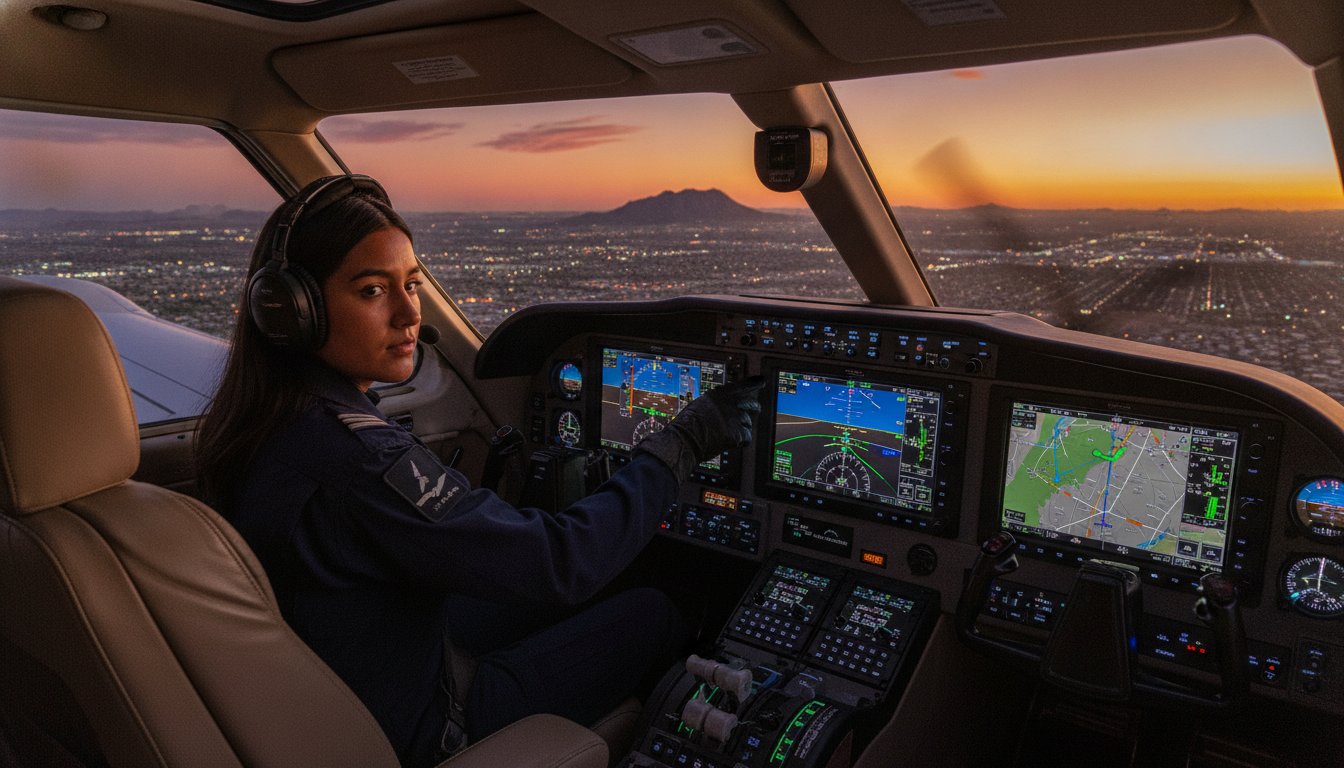
Reaching 1,500 hours shouldn't just be about boring holes in the sky while you wait for a phone call from a major carrier. In 2026, the real differentiator for airline hiring isn't just the total number in your logbook, it's the quality of the technology you've mastered along the way. Strategic time building with glass cockpit systems like the Garmin G3X or GFC 500 autopilot ensures you aren't just logging time; you're bridging the gap between legacy training and the modern flight deck of a commercial jet.
We understand the pressure you're under. Multi-engine hours are notoriously expensive, and the fear of showing up to an airline interview unprepared for advanced avionics is a valid concern for many pilots. This guide details exactly how to reach your ATP minimums efficiently by focusing on high-tech proficiency rather than just survival. You'll discover how to master Garmin glass suites, build multi-engine IFR experience in regions with 300 plus days of flying weather, and turn your time building phase into a professional career launchpad.
Key Takeaways
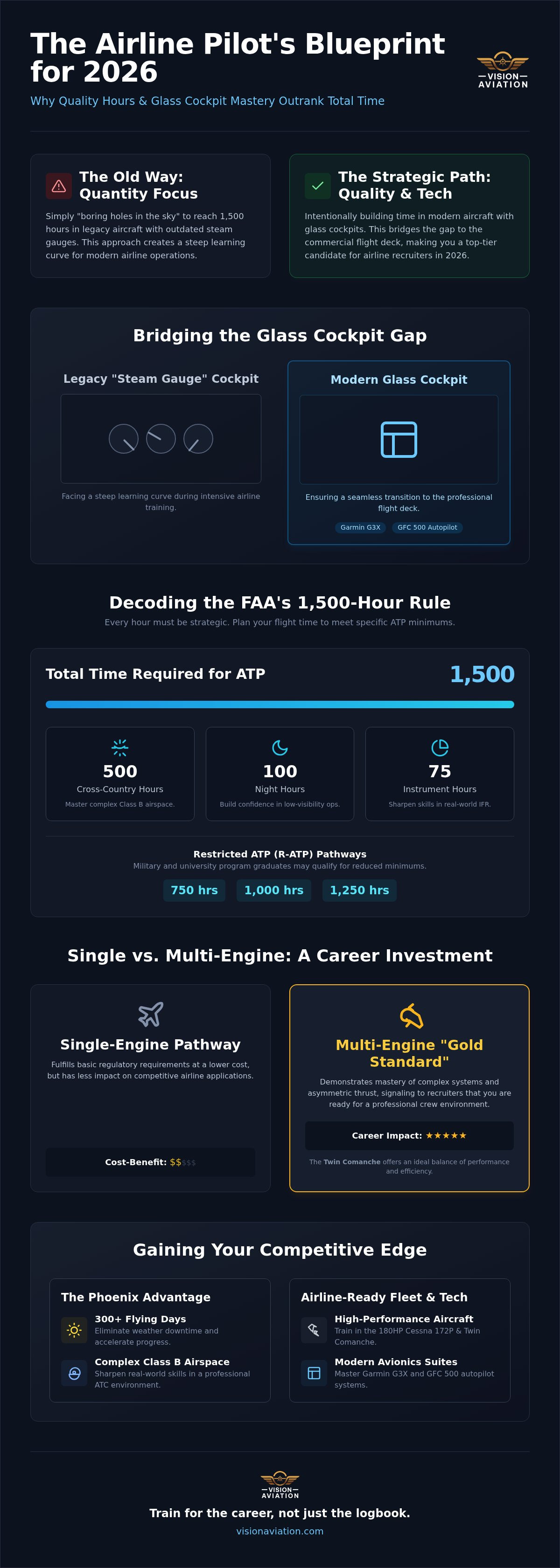
- Decode the FAA's 1,500-hour requirements. Ensure every flight hour strategically contributes toward your commercial airline career milestones.
- Evaluate the cost-benefit ratio of single-engine versus multi-engine pathways. Maximize your resume’s impact on regional airline recruiters.
- Close the technical gap. Prioritize time building with glass cockpit suites like the Garmin G3X and GFC 500 to master modern flight deck automation.
- Leverage the Phoenix advantage. Utilize 300+ days of sunshine and complex Class Bravo airspace to eliminate downtime and sharpen your real-world skills.
- Gain a competitive edge. Train in modern, high-performance aircraft like the 180HP Cessna 172P and Twin Comanche to ensure you're airline-ready.
Understanding the 1,500-Hour Rule and the Modern Pilot Career Path
The 1,500-hour rule is the ultimate gatekeeper. It's the wall standing between your commercial license and a seat in a regional jet. While some pilots view this as a hurdle to clear by any means necessary, elite candidates see it as an opportunity to master the systems they'll eventually fly for a living. By choosing time building with glass cockpit technology, you aren't just waiting; you're training for the next level. Understanding the 1,500-Hour Rule requires looking back at the 2009 Colgan Air crash, which prompted this rigorous safety standard to ensure pilots have significant real-world experience before entering the Part 121 environment.
Simply reaching the number isn't enough in 2026. Airlines prioritize technology-literate pilots who can transition seamlessly into advanced flight decks. If you've spent 1,000 hours in a 40-year-old aircraft with steam gauges, you'll face a steep learning curve during airline indoc. Strategic hour building bridges the gap between your initial Commercial License and the Airline Transport Pilot (ATP) certificate by focusing on the quality of your experience rather than just the quantity of your logbook entries.
Common Pathways to ATP Minimums
Most pilots default to the Certified Flight Instructor (CFI) route. It's a traditional path, but it can be slow and unpredictable. Buying blocks of time allows for a more focused, accelerated progression. You control the mission, the weather, and the avionics suite. Multi-engine time remains the most sought-after currency in a pilot's logbook. Recruiters look for applicants who have already mastered the complexities of asymmetrical thrust and high-performance systems. Logging these hours in a modern environment like time building with glass cockpit suites proves you're ready for the workload of a professional crew environment.
Breaking Down FAA Hour Requirements
Strategy wins the day when planning your path to 1,500 hours. You must account for specific sub-requirements that catch many pilots off guard:
- 500 Cross-Country Hours: Don't just fly the same routes; use these hours to navigate complex Class Bravo airspace.
- 100 Night Hours: Build confidence in low-visibility operations and night landings.
- 75 Instrument Hours: Meet this requirement in real-world IFR environments to sharpen your situational awareness.
It's also vital to recognize the Restricted ATP (R-ATP) pathways; military pilots or graduates from approved university aviation programs may qualify for their certificate at reduced minimums of 750, 1,000, or 1,250 total hours. Regardless of your total number, the goal is to arrive at your first airline interview with a logbook that reflects modern proficiency and technical readiness.
Strategic Hour Building: Single-Engine vs. Multi-Engine Pathways
Not all flight hours carry the same weight in an airline interview. While logging time in a light single-engine aircraft fulfills the regulatory requirement, recruiters are looking for pilots who can handle complexity. Multi-engine hours represent the gold standard of professional currency. They demonstrate your ability to manage asymmetric thrust, complex fuel systems, and the increased workload of a twin-engine platform. If you combine this with time building with glass cockpit avionics, you present yourself as a candidate who is already comfortable in a high-performance environment.
The cost is often the biggest deterrent for aspiring professionals. Multi-engine time is significantly more expensive than single-engine time. However, a proper cost-benefit analysis reveals that these hours are an investment in your career trajectory. Some pilots may qualify for exceptions to the 1,500-hour rule through specific degree programs, but regardless of your total hour target, the quality of your multi-engine time matters. Integrating IFR proficiency into your twin-engine flights ensures you're practicing high-speed approaches and complex departures that mirror airline operations.
The Twin Comanche Advantage
The Twin Comanche is a legendary platform for efficiency. It offers the performance of a true twin without the staggering fuel burn of larger models. By utilizing multi engine block time rates, you can build these critical hours without draining your savings. Transitioning into a Twin Comanche equipped with Garmin Glass and the GFC 500 autopilot allows you to master automation management long before you reach a regional jet's flight deck. It's about building the right habits in a sophisticated cockpit.
Single-Engine High-Performance Options
Not every hour needs to be in a twin. A 180HP Cessna 172P serves as an excellent tool for meeting cross-country and night requirements. These aircraft provide a stable, reliable platform for time building with glass cockpit skills while keeping costs manageable. High-performance endorsements and consistent glass cockpit experience in a Cessna 172P ensure that even your single-engine time contributes directly to your technical growth. If you want to reach your goals faster, selecting the right block time package is the smartest first step.
The Glass Cockpit Gap: Why Avionics Matter in 2026
Airlines are no longer just looking for pilots who have survived 1,500 hours in the air. They want professionals who are ready to operate a complex, automated flight deck on day one. Relying solely on legacy "steam gauge" aircraft during your training creates a technical deficit known as Steam Gauge Stagnation. While these older instruments teach foundational skills, they don't prepare you for the data-rich environment of a modern regional jet. By prioritizing time building with glass cockpit systems, you align your experience with the technology used by major carriers like Delta, United, and American.
The transition from a light trainer to a transport-category aircraft is steep. Mastering the Garmin G3X and GFC 500 autopilot during your hour-building phase significantly flattens that learning curve. These systems reduce physical workload, allowing you to shift your focus toward high-level IFR decision-making and situational awareness. When you follow the specific requirements of the 1,500-Hour Rule, doing so in a modern cockpit ensures that every hour logged is a direct investment in your future Boeing or Airbus career. You aren't just logging time; you're building a professional habit of systems management.
Mastering the Garmin G3X Touch Suite
Proficiency in Primary Flight Display (PFD) and Multi-Function Display (MFD) workflows is a non-negotiable skill for the modern aviator. The G3X suite provides a comprehensive view of flight data, traffic, and weather, which forces you to develop a sophisticated scan. Integrated engine monitoring systems also transform you into a more conscientious pilot-in-command. You learn to manage aircraft health with precision rather than guesswork. For those looking to see these systems in action, check out the technical specifications for Mastering the Cessna 172P, which features one of the most advanced G3X layouts in the Southwest.
IFR Proficiency and the GFC 500 Autopilot
Managing an advanced autopilot is a core commercial pilot skill. It's not about letting the plane fly itself; it's about understanding automation logic and knowing when to intervene. Utilizing time building with glass cockpit suites allows you to practice these interactions daily. You can execute complex IFR cross-country training in Arizona with a level of precision that legacy aircraft simply cannot match. This environment allows you to simulate airline Standard Operating Procedures (SOPs), such as programmed climbs and coupled approaches, making you a much more attractive candidate during the simulator evaluation phase of an airline interview.
Why Phoenix is the Premier Hub for Professional Time Building
Phoenix offers more than just clear skies. It provides one of the most challenging and rewarding training environments in the world. With over 300 days of sunshine annually, Arizona eliminates the scheduling anxiety that plagues pilots in other regions. You won't spend weeks grounded by low ceilings or icing. Instead, you can focus on a consistent, daily flying rhythm that keeps your skills sharp and your timeline on track. This reliability is the foundation of a successful career transition.
The complexity of the Phoenix airspace serves as a finishing school for future airline pilots. Navigating the Class Bravo surrounding Sky Harbor, combined with the high-volume traffic at satellite airports like Deer Valley and Falcon Field, builds a level of confidence that simple rural flying cannot match. Engaging in time building with glass cockpit aircraft in this environment forces you to manage high-speed arrivals and departures while maintaining perfect situational awareness. You aren't just logging hours; you're mastering the art of professional communication and split-second decision-making.
Beyond the pavement, the Arizona landscape offers diverse terrain that tests your technical knowledge. From the flat desert floor to the rugged peaks of the Mogollon Rim, you'll gain invaluable experience with mountain flying and high-density altitude operations. The local aviation infrastructure is equally robust. A high density of Designated Pilot Examiners (DPEs) and specialized mechanics ensures that checkrides are scheduled promptly and aircraft remain airworthy. This ecosystem is designed to move you toward your goals without unnecessary friction.
Cross-Country Logistics in the Southwest
Strategic cross-country flying is effortless from a Phoenix base. You have immediate access to premier destinations like Las Vegas, San Diego, and Albuquerque. These routes offer a perfect mix of coastal weather, high-altitude arrivals, and busy terminal environments. If you are looking for affordable multi engine time building Arizona options, these long-range missions allow you to maximize your training ROI. Constant ATC interaction in this busy corridor ensures you're ready for the rapid-fire instructions of a major metropolitan hub.
Preparing for the Commercial Checkride
Success on a checkride requires more than just stick-and-rudder skills. It demands a professional mindset and a high-tech training environment. Phoenix-based programs are specifically designed to help you meet commercial pilot license requirements in Arizona while surrounding you with experienced mentors. Understanding the critical impact of density altitude on aircraft performance is essential for any pilot navigating the thin, hot air of the Arizona desert during the summer months. By training here, you prove to recruiters that you can handle high-performance airframes in demanding conditions. Schedule your first block of time in Phoenix today and start building the experience airlines actually value.
Maximizing Your Time Building ROI with Vision Aviation
Vision Aviation operates with a clear philosophy: we act as modern mentors for the next generation of professional pilots. We believe that the quality of your flight hours determines the trajectory of your career. By providing a high-tech environment and expert guidance, we help you transform a regulatory requirement into a professional competitive advantage. Our team understands the airline hiring landscape of 2026 and ensures that your time building with glass cockpit systems translates directly into cockpit readiness.
Our fleet represents the pinnacle of reliability and performance in the Phoenix valley. We offer a high-performance 180HP Cessna 172P equipped with the G3X avionics suite and a Twin Comanche featuring Garmin Glass and the GFC 500 autopilot. These aren't just aircraft; they're sophisticated training platforms. We maintain our fleet to airline-standard reliability, ensuring that your training schedule is never compromised by mechanical issues or outdated equipment. This commitment to quality means you spend more time in the air and less time waiting on the ramp.
Block rate transparency is a core part of our service. We help you plan a clear, affordable path to 1,500 hours without hidden fees or surprise costs. By providing predictable structures, we allow you to focus entirely on your proficiency and progression. Our safety standards mirror the rigorous maintenance protocols found in commercial operations, giving you the confidence that every flight is supported by technical excellence.
Customized Time Building Packages
We recognize that every pilot's journey is unique. Whether you're aiming for a specific airline bridge program or need to meet flow-through requirements, we tailor your block time to fit those specific goals. Many of our pilots choose to integrate multi-engine IFR cross-country experience into a single, efficient block of time. This approach maximizes your training ROI and builds the specific types of hours that recruiters prioritize. We offer scheduling flexibility for accelerated hour building, helping you meet critical hiring windows with ease.
Take the Next Step in Your Aviation Career
Ready to elevate your logbook? Joining a community of professional pilots focused on career advancement at Vision Aviation is the smartest move you can make for your future. You can schedule a discovery flight or a checkout in our G3X-equipped aircraft to experience the difference that modern technology makes. Every hour you log with us is a step toward a professional flight deck. Don't just settle for any flight time; start building your professional hours at Vision Aviation today.
Take Command of Your Professional Trajectory
Reaching the 1,500-hour milestone is a significant achievement, but the quality of those hours defines your future as a commercial pilot. By prioritizing high-performance airframes and advanced avionics, you transform a regulatory hurdle into a strategic advantage. Time building with glass cockpit systems like the Garmin G3X Touch and GFC 500 Autopilot ensures you're technically prepared for the transition to a transport-category aircraft. You don't just want to reach the finish line; you want to arrive ready for the demands of a major airline flight deck.
Leverage the consistent weather of Phoenix and the complexity of its busy airspace to sharpen your skills without the frustration of seasonal downtime. Whether you're mastering the Twin Comanche or refining your IFR precision in our 180HP Cessna 172P, every hour should contribute to your growth as an elite aviator. We're here to provide the modern tools and expert local instruction you need to succeed. Build Your Professional Hours with Vision Aviation and start logging the experience that recruiters actually value. The sky is waiting, and your career starts now.
Frequently Asked Questions
Is it better to build time as a CFI or through block rentals in 2026?
Choosing between the CFI route and block rentals depends entirely on your professional timeline. While instructing builds foundational teaching skills, block rentals allow for an accelerated, self-directed path toward your goals. Many pilots now prefer block time because it provides total control over the airframe and avionics. You can focus specifically on time building with glass cockpit technology, ensuring every hour logged directly prepares you for the advanced flight decks of regional airlines.
Does the FAA allow time building in a flight simulator for ATP requirements?
The FAA allows a limited amount of flight simulator time to count toward ATP requirements under specific conditions outlined in 14 CFR Part 61.159. Pilots can credit a portion of time in an approved full flight simulator or flight training device if it represents the correct aircraft category. However, these hours are strictly capped. Most of your 1,500-hour total must be logged in an actual aircraft to meet the real-world experience standards recruiters demand.
Can I build multi-engine time before I have my multi-engine rating?
You cannot log multi-engine PIC time until you have officially earned your multi-engine rating. While you can fly a twin-engine aircraft with an instructor to work toward your rating, those hours count as dual instruction. Once the rating is on your certificate, you can begin strategically accumulating the multi-engine PIC hours that major carriers prioritize. This experience is vital for proving you can handle the complexities of asymmetric thrust and multi-engine systems.
What is the average cost per hour for multi-engine time building in Arizona?
Average costs for multi-engine time building in the Phoenix area typically range from $400 to $450 per hour for wet rentals. Many providers offer block discounts for 50 or 100-hour commitments to help pilots manage the investment. While prices vary based on airframe and avionics, Arizona remains one of the most competitive markets in the country. This competition ensures pilots have access to well-maintained aircraft at market-standard rates.
How many hours a day can I safely fly during an accelerated time building program?
Most pilots find that flying 5 to 7 hours per day is the sustainable limit for an accelerated program. While it's tempting to push for more, fatigue significantly impacts decision-making and situational awareness. A structured program allows for morning and evening blocks, taking advantage of cooler temperatures while ensuring you remain sharp. Staying within these limits allows you to effectively manage complex time building with glass cockpit systems without compromising safety.
Why is glass cockpit experience specifically important for regional airline interviews?
Glass cockpit proficiency is critical because it proves you can manage modern automation logic. Recruiters often use simulator evaluations to see if a candidate can navigate Primary Flight Displays and Multi-Function Displays under pressure. By prioritizing modern suites during your training, you demonstrate that you've already bridged the technical gap. This makes you a much more attractive candidate who is ready for the fast-paced training environment of a Part 121 operator.
What happens if the aircraft is grounded for maintenance during my block rental?
If an aircraft is grounded for maintenance, professional providers typically prioritize rescheduling your hours or transitioning you to a backup airframe. Reliability is a cornerstone of any quality time-building program. High-end facilities handle maintenance proactively to minimize downtime. Having a clear agreement on how mechanical delays are managed ensures your timeline to 1,500 hours stays on track despite the occasional technical issue inherent in aviation.
Are there specific time building airports in the Phoenix area you recommend?
Phoenix offers several premier hubs for time building, including Deer Valley (DVT), Falcon Field (FFZ), and Chandler Municipal (CHD). These airports provide a mix of tower-controlled environments and proximity to complex Class Bravo airspace. Training out of these busy satellite airports gives you constant exposure to high-volume traffic and professional ATC interactions. These are essential skills for developing the professional communication required for a successful commercial airline career.
