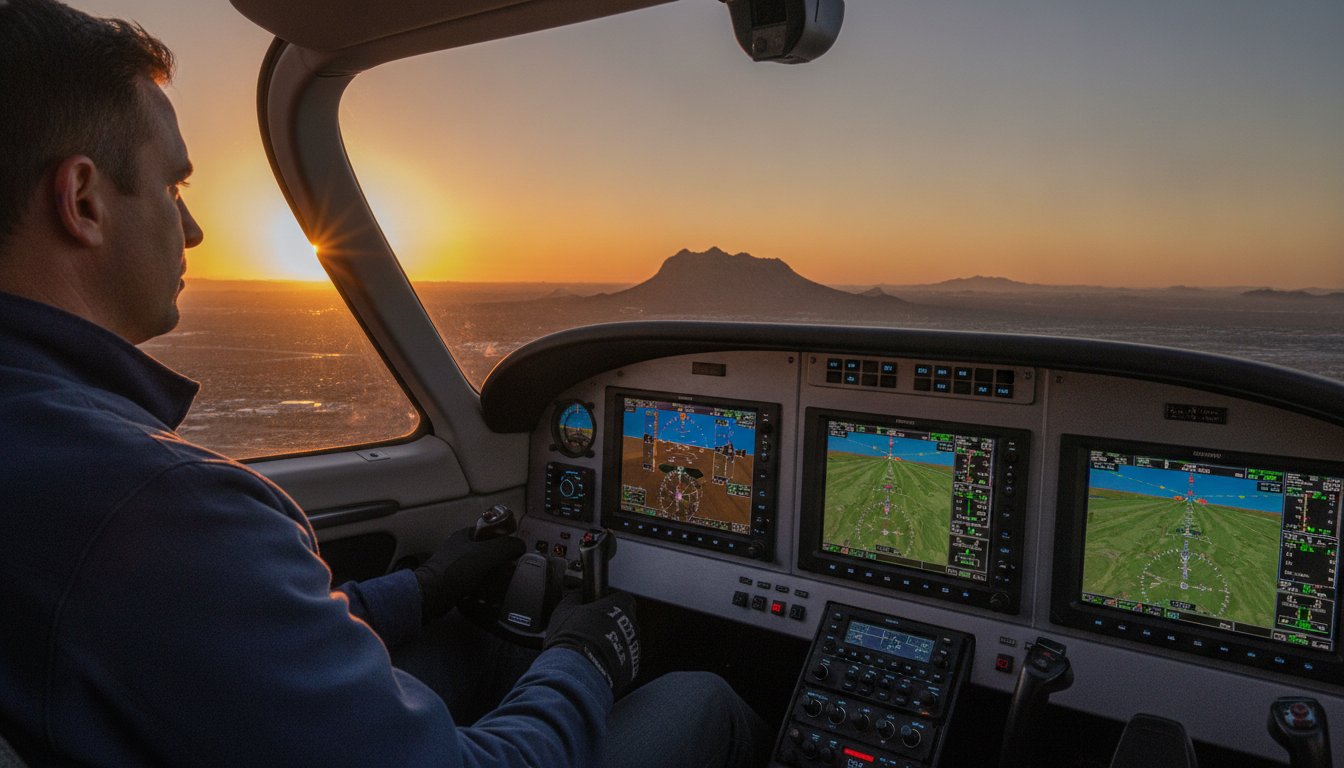
Complex Aircraft Training in Arizona: The 2026 Pilot’s Resource Guide
What if the traditional definition of a "complex aircraft" is actually holding your career back? While the FAA still focuses on retractable gear and flaps, the industry in 2026 demands a pilot who can manage a digital ecosystem at 180 knots. It is easy to feel overwhelmed by the sheer density of a G3X suite or wonder if the investment in advanced training will truly pay off. You aren't alone in wanting a training environment that matches the sophistication of a modern professional flight deck. Seeking out complex aircraft training Arizona means finding a partner that prioritizes high-tech proficiency over outdated checklists.
This guide is designed to bridge the gap between basic stick-and-rudder skills and the high-performance mastery required today. We will explore how to leverage Arizona's unique flying environment and modern fleets to maximize your training value. From understanding current FAA requirements to selecting a school with a glass-cockpit Cessna 172P or a Twin Comanche, you'll discover exactly how to elevate your ratings. We'll break down the transition to advanced avionics and show you how to turn technical complexity into your greatest competitive advantage.
Key Takeaways
- Understand how the 2026 training landscape shifts focus from basic mechanical gear to the integration of advanced digital systems and TAA standards.
- Discover why high-performance platforms like the 180HP Cessna 172P provide a superior training bridge for professional cockpit transitions.
- Learn how to master complex aircraft training Arizona by navigating unique challenges like high density altitude and busy Class Bravo airspace.
- Identify the step-by-step roadmap for achieving proficiency with modern G3X avionics and GFC 500 autopilot systems through integrated ground and simulator sessions.
- Prepare for a career in professional aviation by training in a fleet that prioritizes future-proof technology over outdated equipment.
Defining Complex Aircraft Training in the Modern Era
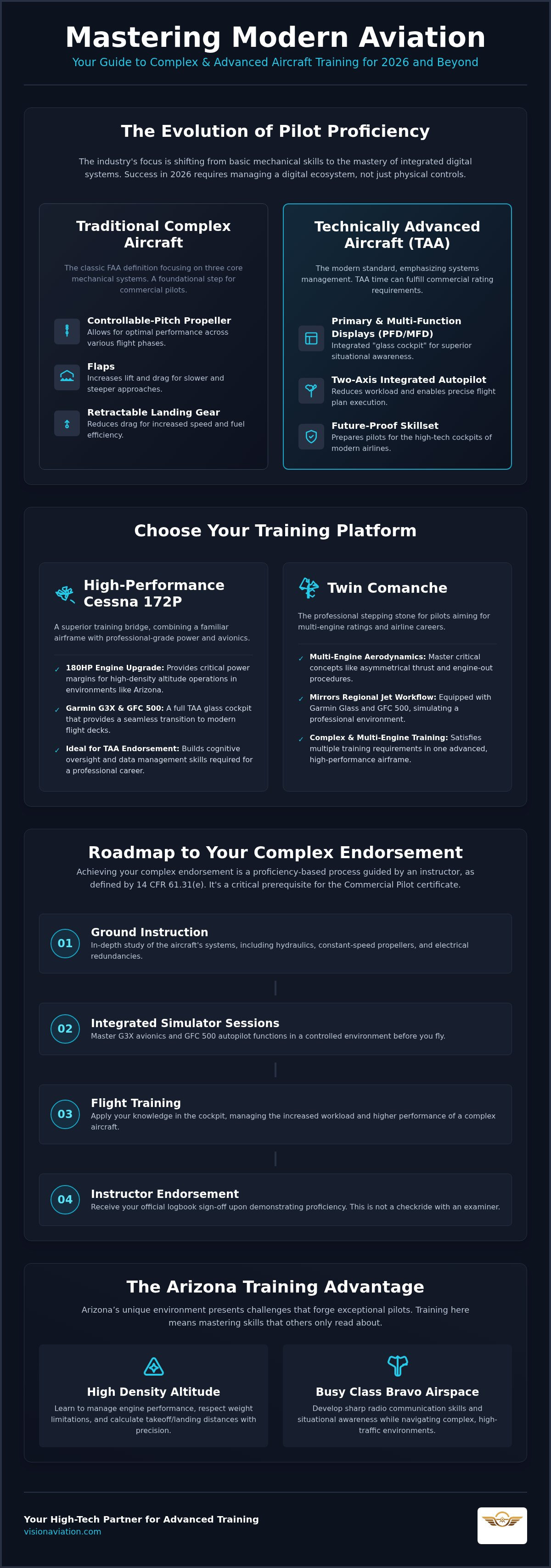
The FAA defines a complex airplane through three primary mechanical features: flaps, a controllable-pitch propeller, and retractable landing gear. For decades, this was the standard hurdle for pilots moving toward professional careers. However, as we approach 2026, the industry's focus has expanded. While you still need to understand these mechanical systems, the modern cockpit requires a deeper mastery of integrated technology. Choosing complex aircraft training Arizona provides the perfect backdrop for this transition, combining technical rigor with some of the most advanced avionics available in the Southwest.
Mastery is no longer just about moving levers. It's about data management. In a high-performance environment, the pilot acts as a systems manager. You aren't just flying; you're monitoring a Garmin G3X suite and ensuring the GFC 500 autopilot is executing the flight plan with precision. This psychological shift is critical. It moves the focus from physical inputs to cognitive oversight, a skill set that is non-negotiable for future airline or commercial careers. It is about staying ahead of the airplane, not just reacting to it.
The Legal Requirements for a Complex Endorsement
Per 14 CFR 61.31(e), a complex endorsement requires a specific logbook entry from an authorized instructor. This isn't a checkride with an examiner; it's a proficiency-based sign-off. You must receive and log ground and flight training on the systems of a complex aircraft. This endorsement serves as a vital prerequisite for the Commercial Pilot certificate. It proves you can handle the increased workload of a high-performance machine while maintaining situational awareness. Ground instruction usually covers the intricate details of hydraulic gear systems, constant-speed propellers, and electrical redundancies.
Technically Advanced Aircraft (TAA) vs. Traditional Complex
The FAA recognizes that modern technology has changed the training game. A Technically Advanced Aircraft (TAA) must include a Primary Flight Display (PFD), a Multi-Function Display (MFD), and a two-axis integrated autopilot. In many training scenarios, the FAA now allows TAA time to fulfill the requirements for a commercial rating that previously demanded a complex aircraft. This shift acknowledges that managing a digital cockpit is just as demanding as managing retractable gear. What is a Complex Airplane? remains the baseline, but TAA is the future. A TAA platform like our Cessna 172P integrates the Garmin G3X system to provide a seamless transition into the high-tech environments of professional aviation.
Choosing Your Platform: High-Performance Singles vs. Multi-Engine Twins
Selecting your training platform is a strategic decision that shapes your professional trajectory. In the context of complex aircraft training Arizona, you aren't just choosing a plane; you're choosing the systems you'll rely on when things get fast. Most pilots debate between a high-performance single-engine aircraft and a light twin. While both meet the FAA requirements for a complex endorsement, the skills you'll gain differ significantly based on the airframe's complexity and avionics suite.
The 180HP Cessna 172P: More Than a Standard Trainer
Arizona's heat is famous for robbing engines of performance. This is why the 180HP upgrade in our Cessna 172P is a game-changer. It provides the extra thrust needed to maintain safety margins during high-density altitude takeoffs. When you are evaluating Cessna 172 G3X vs traditional 172 for training, the difference is clear. The modern suite allows you to manage high-performance climbs while monitoring engine health through a digital interface. You'll learn to respect the increased power and weight, mastering pitch and power settings that a standard 160HP trainer simply can't simulate.
The Twin Comanche: A Professional Stepping Stone
If your goal is the airlines, the Twin Comanche is your best ally. It introduces you to multi-engine aerodynamics, including critical engine concepts and asymmetrical thrust. This airframe, equipped with Garmin Glass and the GFC 500 autopilot, mirrors the workflow of a regional jet. Pursuing Twin Comanche transition training forces you to manage complex systems simultaneously. You aren't just flying; you're orchestrating two engines, retractable gear, and advanced automation. It's a high-level coordination exercise that prepares you for the high-stress environment of professional cockpits.
Balance your hourly investment against career readiness. A high-performance single is cost-effective for meeting initial complex requirements. However, the multi-engine path offers a dual benefit: you earn your complex endorsement while building the multi-engine time essential for commercial hiring. Modern autopilot systems like the GFC 500 reduce physical workload but increase the need for mental proficiency. Whether you choose the 172P or the Twin Comanche, focusing on these digital systems ensures your complex aircraft training Arizona remains relevant in 2026. Explore our modern fleet options to find the right fit for your budget and goals.
Arizona’s Unique Training Environment: Why Location Matters
Arizona offers more than 320 days of clear flying weather each year, making it a premier hub for pilot development. Many students in Arizona State University's professional flight program recognize that these local conditions provide a rigorous testing ground for advanced ratings. When you pursue complex aircraft training Arizona, you're signing up for a masterclass in environmental management. It's not just about the clear skies. It's about how the intense heat affects your gear retraction cycles, engine cooling, and overall climb performance. Navigating this landscape requires more than just basic proficiency; it demands a deep understanding of how thin, hot air changes your aircraft's DNA.
Mastering Density Altitude in High-Performance Aircraft
Calculating performance for a 110-degree day in Phoenix is a sobering exercise. Your "effective" altitude can easily soar 3,000 feet above the actual runway elevation, turning a standard takeoff into a high-stakes performance event. In complex, fuel-injected engines, you'll need to master the art of leaning. Understanding lean of peak versus rich of peak operations is essential for managing cylinder head temperatures in the desert's punishing climate. We teach you that book values are a baseline, not a guarantee. You'll learn to build safety margins that respect the reality of the desert, ensuring you never run out of runway or climb performance when you need it most.
IFR Proficiency in the Valley of the Sun
The Phoenix Class Bravo is one of the busiest airspaces in the nation. Managing a complex airframe while communicating with Phoenix Approach requires high cognitive capacity. This is where IFR cross-country training Arizona becomes an invaluable asset. Utilizing the Garmin GFC 500 autopilot allows you to offload the physical flying during busy transitions, letting you focus on the "big picture" of systems management. Night flying adds another layer of complexity. Arizona's dark desert floors make the bright lights of the Valley a challenging visual environment, where mastering your aircraft's lighting and digital displays is critical for safety.
Arizona's geography offers a diverse landscape for cross-country missions. You'll move from the low desert of the Phoenix basin to the high-elevation terrain of the Mogollon Rim in minutes. This rapid transition requires a local flight school Arizona that understands mountain flying nuances and mountain wave activity. Mastering these transitions ensures you're ready for any professional environment, regardless of the terrain. By training in this unique environment, you aren't just earning an endorsement; you're building the resilience and technical skill set required for a lifelong career in the skies.
The Roadmap to Your Complex and Multi-Engine Endorsements
Transitioning into higher-performance aircraft requires a methodical approach that prioritizes system knowledge over simple muscle memory. It's a structured progression designed to turn a pilot into a proficient systems manager. When you begin your complex aircraft training Arizona, you'll follow a clear, five-step path to achieving your goals. This isn't just about checking boxes; it's about building a foundation for a professional career.
- Step 1: Ground School Systems Deep-Dive. You'll master the intricacies of high-pressure fuel systems, hydraulic gear actuators, and redundant electrical architectures.
- Step 2: Simulator Pre-Training. We use advanced simulation to help you master the G3X and GFC 500 interfaces before burning a single gallon of 100LL.
- Step 3: Flight Maneuvers. You'll take to the skies to practice gear-down flows, prop synchronization, and emergency procedures in the Arizona heat.
- Step 4: Endorsement Sign-Off. Work with a specialized instructor who evaluates your proficiency against real-world standards, not just minimum requirements.
- Step 5: Post-Endorsement Proficiency. Once you have the logbook entry, stay sharp by building hours in a Cessna 172P 180HP rental to maintain your high-performance edge.
Mastering the 'GUMP' Check and Beyond
Traditional checklists are essential, but they must evolve for the digital age. While the G3X provides incredible situational awareness, it shouldn't replace your mental triggers. Automating safety means using G3X alerts to supplement your awareness, not replace it. The 'Gear, Undercarriage, Mixture, Prop' flow serves as the definitive mental trigger for ensuring a complex aircraft is properly configured for the landing phase of flight. By integrating these manual checks with digital alerts, you create a fail-safe environment that minimizes the risk of gear-up landings or engine mismanagement.
Building Professional Multi-Engine Time
For pilots eyeing a seat in a regional jet, multi-engine time is the ultimate currency. Moving from single-engine complex platforms to a twin-engine aircraft introduces new aerodynamic challenges and increased workload. To maximize your investment, look for multi engine block time rates that allow for consistent, high-frequency flying. This approach helps you gain cross-country IFR experience, which is vital for building the decision-making skills airlines value. If you're ready to start your journey, contact us today to schedule your first session and take the next step toward the professional cockpit.
Vision Aviation: Your High-Tech Partner for Advanced Training
Vision Aviation serves as more than just a flight school. We act as a high-tech mentor for pilots transitioning into professional cockpits. Our fleet reflects this commitment to modernity. By utilizing the G3X-equipped 172P and the Twin Comanche, we provide a training platform that leads the Arizona market in technical sophistication. Our philosophy is simple: we train you for the cockpit of the future, not the past. Learning on outdated steam gauges doesn't prepare you for the glass decks of 2026. We prioritize equipment that mirrors the tools you will use at the next level of your career.
We reject the "pilot factory" model that prioritizes volume over quality. Instead, we offer personalized instruction that adapts to your unique career goals. Whether you are looking for complex aircraft training Arizona to meet commercial requirements or building multi-engine time for an airline application, our approach is tailored to you. You'll work with experts who understand the nuances of high-performance systems and modern automation. This individualized mentorship ensures you don't just pass a checkride; you become a safer, more competent pilot.
Modern Avionics as a Training Standard
Modern cockpits demand digital fluency. Evaluating Garmin G3X vs G1000 for flight training helps you choose the most efficient path to certification. The G3X suite offers a modern, touch-screen interface that mirrors the logic of current professional avionics. This technology reduces pilot workload by providing superior situational awareness at a glance. You'll master the Garmin GFC 500 autopilot, learning how to leverage automation to stay ahead of the aircraft during busy Phoenix approaches. This proficiency is exactly what regional and major airlines look for in new hires.
Join the Vision Aviation Community
Training with us connects you to a network of ambitious, career-track pilots. We maintain a relentless commitment to safety and equipment quality. Every aircraft in our fleet receives meticulous maintenance, ensuring that your training is never sidelined by preventable mechanical issues. We provide a supportive environment where you can network with other professionals and grow your career. Our instructors are friendly guides invested in your personal success. Ready to elevate your skills? Book your complex aircraft transition at Vision Aviation today! and experience the difference that modern equipment and expert mentorship can make.
Take the Next Step Toward the Professional Flight Deck
Mastering advanced systems is no longer an optional upgrade; it's a requirement for the modern career pilot. You've seen how the 2026 training landscape prioritizes digital proficiency alongside traditional airmanship. Whether you are navigating the heat of the Valley in a 180HP Cessna 172P or mastering asymmetrical thrust in a Twin Comanche, the right platform makes all the difference. Choosing complex aircraft training Arizona means placing yourself in a high-demand environment that builds real-world resilience.
Vision Aviation provides the modern G3X and Garmin Glass fleet you need to stay ahead of the curve. With our specialized multi-engine instruction and high-performance singles, you'll gain the confidence to manage any cockpit. Don't let outdated equipment hold your progression back. It's time to invest in a training partner that understands the future of aviation. Schedule Your Complex Aircraft Transition in Phoenix today and take command of your professional journey. The sky is waiting for your next achievement.
Frequently Asked Questions
What qualifies as a complex aircraft for training in 2026?
A complex aircraft must have retractable landing gear, flaps, and a controllable-pitch propeller. While this definition remains consistent under FAA regulations, modern training often integrates these mechanical features with advanced digital systems. Pilots must receive ground and flight training from an authorized instructor to earn the endorsement. This ensures you can manage the increased workload of these interconnected systems safely and efficiently.
Do I need a complex endorsement if the aircraft is a Technically Advanced Aircraft (TAA)?
You don't necessarily need a complex endorsement to fly a TAA, but the two serve different regulatory purposes. A TAA is defined by its avionics, including a PFD, MFD, and integrated autopilot. While the FAA allows TAA time to satisfy specific requirements for a commercial certificate, a complex endorsement is still required to act as PIC of any aircraft with retractable gear and a constant-speed prop.
How many hours does it typically take to get a complex aircraft endorsement in Arizona?
Most pilots achieve proficiency for a complex endorsement in five to ten hours of flight time. There's no FAA-mandated minimum hour requirement; the endorsement is based entirely on reaching a standard of proficiency. In Arizona, the clear weather allows for consistent scheduling, which helps students complete the training in just a few days. Your instructor will sign your logbook once you demonstrate mastery of the systems.
Can I use a Cessna 172 for my complex aircraft training?
A standard Cessna 172 isn't a complex aircraft because it lacks retractable landing gear. However, it can be used for complex aircraft training Arizona if it meets TAA requirements for specific commercial pilot training modules. For a true complex endorsement, you must use an airframe like our Twin Comanche. Many pilots use the high-performance 180HP Cessna 172P as a stepping stone before transitioning into retractable-gear twins.
What are the benefits of training in a 180HP Cessna 172P vs. a standard 160HP model?
The 180HP engine provides significantly better climb performance and safety margins in Arizona's high-density altitude. On a 110-degree day, that extra 20 horsepower is vital for maintaining a safe rate of climb after takeoff. It allows you to practice high-performance maneuvers with a greater power reserve. This makes it an ideal platform for pilots who want to master heavy-weight operations before moving into multi-engine aircraft.
Is multi-engine time building in Arizona more expensive than in other states?
Multi-engine training costs in Arizona are competitive with national averages, but the value is often higher due to the weather. You won't lose weeks of training to snow or low ceilings, which keeps your progression steady. Because Arizona is a global flight training hub, there's a high concentration of well-maintained fleets and experienced instructors. This environment often leads to higher efficiency, reducing the total time needed to reach proficiency.
How does the Garmin G3X system help with complex aircraft management?
The Garmin G3X system simplifies complex management by consolidating engine monitoring and situational awareness into a single interface. It provides real-time data on fuel flow, cylinder head temperatures, and electrical loads. This allows you to monitor the health of high-performance engines more precisely than traditional analog gauges. By reducing the physical scanning workload, the G3X lets you focus more on high-level decision-making and navigation during flight.
Can I earn my IFR rating and complex endorsement at the same time?
You can certainly integrate complex training into your IFR curriculum to maximize your time in the cockpit. Managing retractable gear and constant-speed propellers while flying on instruments is excellent preparation for professional aviation. This dual approach forces you to develop the advanced multitasking skills required by airlines. It's a highly efficient way to build the technical proficiency needed for your commercial certificate while mastering the IFR environment.
