Multi-Engine Time Building Costs: A 2026 Pilot’s Guide to Smart Investing
The cheapest hourly rate you find for a twin-engine rental might actually be the most expensive path to your airline career. It's a frustrating reality for many pilots. You're staring down a 50-hour multi-engine requirement while balancing a tight budget and an even tighter timeline. Hidden fees, aging fleets, and maintenance cancellations can turn a "deal" into a career delay. You deserve a path that respects both your wallet and your professional goals. High-quality training shouldn't be a gamble.
This guide breaks down the true multi engine time building costs in 2026, helping you invest in hours that actually move the needle on your proficiency. We'll analyze current market trends, the impact of modern Garmin glass avionics on your training, and how to secure reliable cross-country IFR experience without the typical industry bottlenecks. By the end, you'll know how to choose a program that prioritizes safety and advanced technology over bare-minimum maintenance. Let's look at how to navigate the financial landscape of multi-engine training while building the real-world skills that regional airlines demand.
Key Takeaways
- Master the math behind wet vs. dry rates to identify the most predictable path for your training budget. Predictability is essential when managing professional flight expenses.
- Evaluate how modern airframes and Garmin Glass avionics reduce long-term multi engine time building costs by minimizing maintenance delays. Reliable equipment ensures you meet airline minimums on schedule.
- Leverage the Phoenix climate to maximize flyable days and accelerate your progression. Consistent flight schedules are critical for maintaining high-level multi-engine proficiency.
- Integrate complex IFR cross-country requirements into your time-building phases. This strategic approach builds real-world experience while efficiently checking off regulatory boxes.
- Discover why the Twin Comanche offers the ideal balance of performance and fuel efficiency for career-bound aviators. It is a sophisticated platform built for modern professional development.
Understanding Multi-Engine Time Building Costs in 2026
Multi-engine time building serves as the essential bridge between earning your initial rating and securing a seat at a regional airline. In 2026, the aviation industry has become more selective. While the pilot shortage persists, carriers now prioritize candidates who bring high-quality experience to the flight deck. They aren't just looking for numbers in a logbook. They want pilots who have mastered the complexities of twin-engine operations in real-world conditions. Understanding the true multi engine time building costs requires looking past the hourly rental rate and evaluating the total investment in your professional future.
Why Multi-Engine Hours Are a Critical Investment
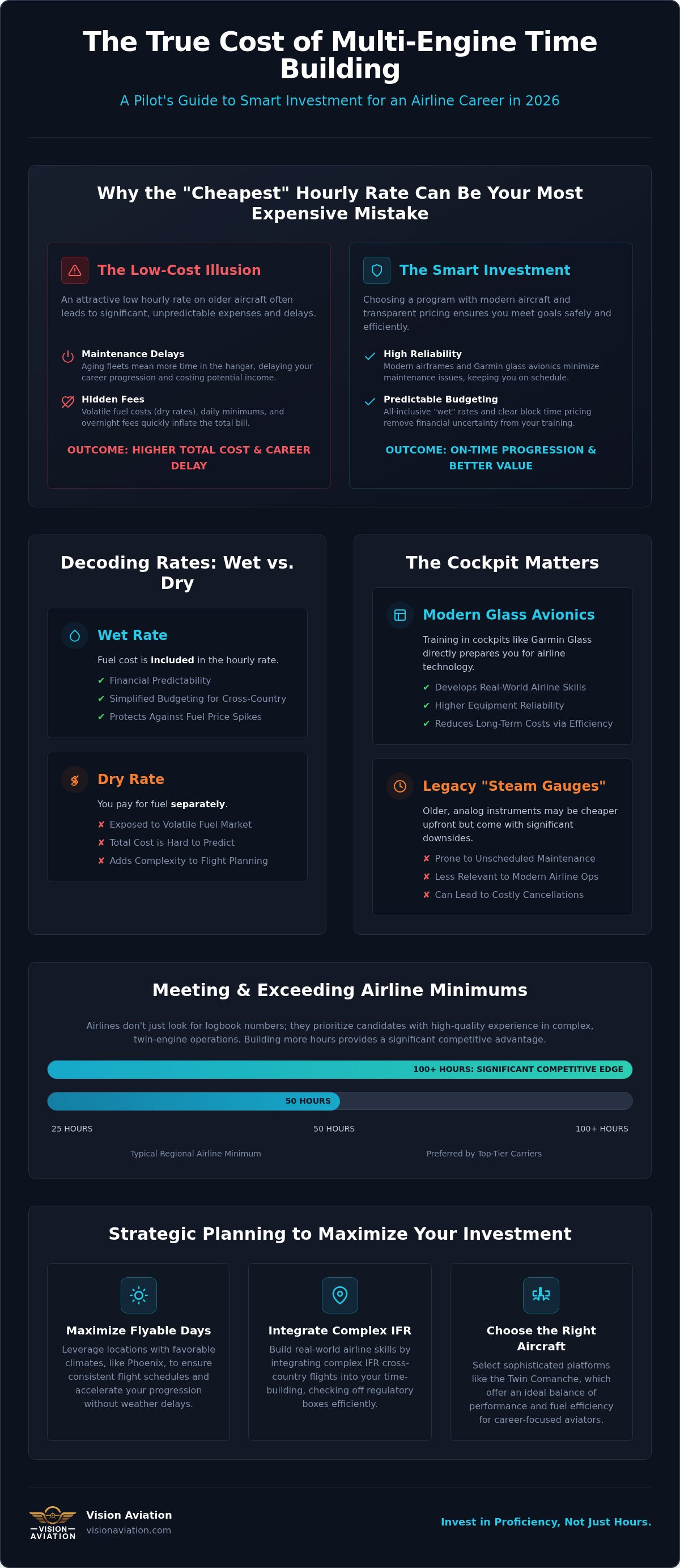
Most regional carriers require a minimum of 25 to 50 multi-engine hours for First Officer positions, though 100 hours often provides a significant competitive edge. Meeting the basic pilot certification requirements is only the beginning of your journey. The transition from single-engine aircraft to complex twins involves a steep learning curve. You'll need to manage asymmetric thrust, sophisticated fuel systems, and increased speeds. Building these hours isn't just about logging time; it's about developing the muscle memory and decision-making skills required for heavy iron. High-quality time building focuses on proficiency, ensuring you're prepared for the rigors of an airline simulator checkride.
The Basic Components of a Time-Building Quote
When you start comparing programs, you'll find that quotes can be misleading if you don't know what to look for. The "total cost to finish" is the only metric that matters. A low hourly rate on an older aircraft often hides expenses that emerge later in the process. Consider these primary cost buckets:
- Wet vs. Dry Rates: Wet rates include the cost of fuel, offering financial predictability. Dry rates leave you vulnerable to fluctuating fuel prices at different airports.
- Insurance Checkouts: Almost every provider requires a transition training period or an insurance checkout. This typically involves several hours of dual instruction before you can fly solo or with a safety pilot.
- Daily Minimums and Overnight Fees: If you plan on long-distance cross-country flights, check for daily minimum flight hour requirements. These can quickly inflate your multi engine time building costs if you spend more time on the ground than in the air.
- Maintenance Reliability: This is a hidden cost. A "cheap" aircraft that spends half the month in the hangar for unscheduled maintenance delays your career progression, which costs you potential seniority and salary.
Choosing a program that balances modern equipment with transparent pricing is the smartest move for a career-bound pilot. You want a partner that helps you reach your goals safely and efficiently, without the frustration of hidden fees or unreliable fleets.
Decoding Hourly Rates: Wet vs. Dry and Block Time Savings
Comparing rental rates is rarely apples-to-apples. A dry rate might look attractive at first glance, but it leaves you exposed to the volatility of the fuel market. If you are flying cross-country, fuel prices can vary by several dollars per gallon depending on the FBO. Choosing a wet rate provides a fixed cost per hour. This allows you to calculate your total multi engine time building costs with precision. This predictability is a massive advantage when you're managing a strict training budget. It removes the stress of hunting for the cheapest fuel stop and lets you focus on the flight.
Don't forget the peripheral expenses that can accumulate quickly. Landing fees at major airports, overnight ramp fees, and even the cost of oxygen for high-altitude twins can add hundreds to your final bill. Some schools also charge scheduling fees or insurance surcharges that aren't advertised in the headline rate. Always ask for a transparent breakdown of these potential add-ons before signing a rental agreement. Knowing the full scope of your multi engine time building costs prevents unpleasant surprises during your final check-out.
The Financial Advantage of Block Time
Committing to a larger chunk of hours upfront is the most effective way to secure multi engine block time rates. Most flight schools offer tiered discounts for 25, 50, or 100-hour blocks. Beyond the immediate savings, prepaying often locks in your rate. This protects you from mid-program fuel surcharges in volatile markets. Before you commit, verify the school's refund policy and check if the hours have an expiration date. You want flexibility in case your timeline changes. If you are serious about professional progression, exploring block rate options for modern aircraft is a logical first step.
PIC Time vs. Safety Pilot Sharing
The shared time model is a popular way to split costs, but it comes with caveats. Under FAA regulations, two pilots can log PIC time simultaneously if one is the sole manipulator and the other acts as a safety pilot. It's a common trap. Many major airlines and insurance providers look more favorably on pure, solo PIC time. They want to see that you were the sole decision-maker for every mile. While sharing can cut your hourly spend in half, it may slow down your hiring process if a recruiter questions the quality of those hours. Since multi-engine training focuses heavily on emergency procedures and system management, you need to ensure every hour logged translates to genuine skill. Solo operations build the command authority that airlines prize.
Legacy vs. Modern Cockpits: Is 'Cheap' Time Costing You More?
Many pilots fall into the trap of chasing the lowest hourly rate they can find. While a low dry rate on a 1970s light twin seems like a bargain, it often leads to a "death by a thousand cuts" for your schedule and your wallet. Older airframes are prone to frequent, unscheduled maintenance. A single busted alternator or a leaky hydraulic line can ground your time-building mission for weeks. When you calculate your total multi engine time building costs, you must include the value of your own time. Every week you spend on the ground is a week you aren't earning a paycheck at a regional airline. Reliability is the silent partner in your career progression.
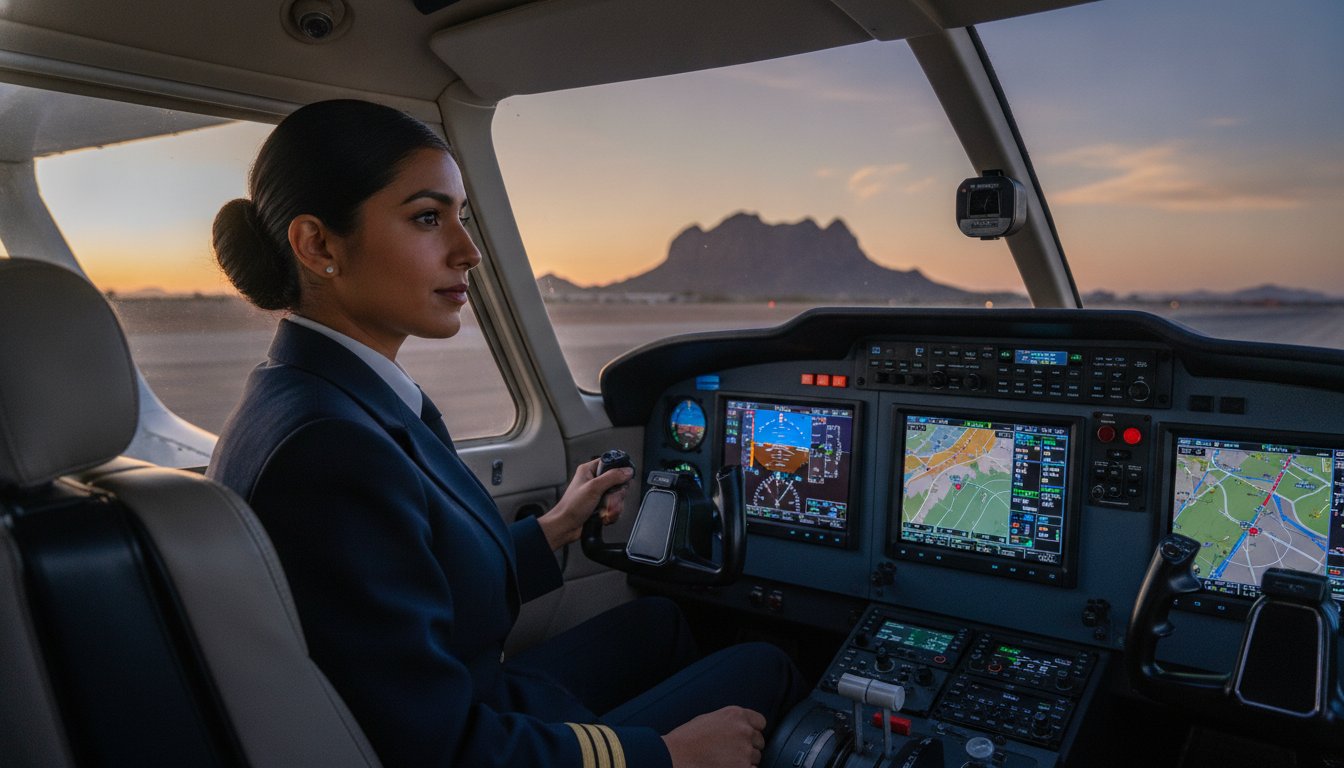
Modern cockpits offer more than just aesthetic appeal; they provide a functional bridge to the airlines. Training in an aircraft equipped with Garmin Glass systems allows you to master the same logic used in modern regional jets. This reduces the cognitive load during your transition to heavy iron. Utilizing tools like the GFC 500 autopilot during long cross-country legs allows you to focus on high-level IFR decision-making rather than just wrestling with the yoke. This workload reduction is essential for building the professional proficiency that recruiters look for during technical interviews.
Avionics and Efficiency
Transitioning to a modern cockpit isn't just about comfort; it's about career readiness. Understanding the nuances of Garmin G3X vs G1000 for flight training allows you to choose a platform that mirrors the technology found in regional jets. These systems encourage precision flying by providing high-fidelity data at a glance. Features like synthetic vision and active traffic monitoring don't just keep you safe; they build the situational awareness habits that prevent failed checkrides and costly retraining. By investing in modern avionics now, you significantly reduce the learning curve you'll face in a multi-million dollar simulator later.
The Real Cost of Equipment Failure
Reliability is the ultimate cost-saver in any flight program. While general flight training costs provide a baseline for your initial ratings, multi-engine operations are inherently more complex and expensive. Choosing a fuel-efficient airframe like the Twin Comanche offers a distinct advantage over heavier, thirstier models like the Piper Seneca or Beechcraft Seminole. It burns significantly less fuel while maintaining higher cruise speeds, which directly lowers your multi engine time building costs per mile. Modern digital engine monitoring systems provide real-time data on engine health, allowing you to identify potential issues before they become mid-flight surprises or expensive mechanical failures. By choosing a modern, well-maintained fleet, you ensure your momentum remains high and your path to the flight deck remains clear.
Strategic Planning: How to Minimize Total Spend on Multi-Engine Hours
You can't control the market price of Avgas, but you can control how many days you spend on the ground. Minimizing multi engine time building costs requires a tactical approach to where and how you fly. If you're stuck in a region with unpredictable weather, a 50-hour block can easily stretch from two weeks into two months. This delay increases your secondary expenses, such as housing and travel, while stalling your career progression. Efficiency is the ultimate cost-saver. By planning your hours strategically, you ensure that every dollar spent contributes directly to your professional advancement.
Location Matters: Why Phoenix Wins for Time Building
Phoenix offers a distinct geographic advantage for aviators on a timeline. With over 300 flyable days a year, the desert southwest provides the reliability you need to finish your hours in weeks, not months. You don't just get clear skies; you get a sophisticated training environment. Navigating the busy Class Bravo airspace around Phoenix Sky Harbor builds the professional communication skills that regional airlines demand. You'll gain experience in high-density traffic while enjoying predictable IFR conditions for your training legs. This reliability allows you to plan multi-day trips with confidence. You can hit your hourly minimums faster and return home ready for your next career step.
Integrating Requirements
Efficiency means making every hour count toward multiple goals. Don't just "bore holes in the sky" to reach a number. Instead, maximize your multi engine cross country IFR requirements by planning routes that satisfy the 250nm commercial requirement. You can also integrate your initial 15-hour multi-engine rating directly into a larger 50-hour time-building block. This approach provides a seamless transition from learning the basics to mastering the aircraft in a real-world environment.
Use this time to complete your Twin Comanche transition training. Mastering a modern, glass-cockpit twin adds a layer of sophistication to your resume that a standard trainer cannot match. If you plan to instruct, start working on your Multi-Engine Instructor (MEI) requirements simultaneously. This dual-purpose flying effectively lowers your multi engine time building costs by checking off two major milestones for the price of one. Strategic scheduling and requirement integration turn a standard flight hour into a high-value investment in your future.
Ready to accelerate your path to the airlines with a modern fleet and predictable weather? Explore our multi-engine time building programs in Phoenix today.
Professional Multi-Engine Solutions with Vision Aviation
Choosing the right environment for your professional development is just as important as the hours you log. At Vision Aviation, we provide more than just an aircraft; we offer a sophisticated training platform designed for the career-bound pilot. Our approach focuses on bridging the gap between general aviation and the high-performance standards of a regional airline indoc. By prioritizing modern technology and reliability, we help you manage your multi engine time building costs while ensuring every hour adds genuine value to your resume. You aren't just building time. You're building a foundation for your future career.
Our program centers on the multi engine time building Arizona advantage. Operating out of Phoenix, we leverage year-round flying weather to keep your momentum high. This consistency is vital for pilots who need to meet airline minimums quickly and safely. We act as a modern mentor, providing the technical expertise and high-tech equipment required to master complex systems before you ever step into a professional simulator.
The Twin Comanche Advantage
The Twin Comanche is widely regarded as the ultimate machine for efficient cross-country time building. It strikes a perfect balance between performance and economy. While heavier twins might burn through your budget with high fuel consumption, the Twin Comanche remains an efficient cross-country machine. Our fleet features a modern cockpit layout with a Garmin Glass Avionics Suite and GFC 500 autopilot. This setup mirrors current industry standards, allowing you to practice the automation management skills used in modern flight decks. It's a sophisticated platform that provides a superior cost-to-performance ratio compared to thirstier, legacy trainers.
Ready for the Next Level?
Your journey is unique, and your training package should reflect that. We specialize in customizing plans for your specific hour requirements, whether you need 25, 50, or 100 hours of multi-engine time. You'll have access to local Phoenix expertise to sharpen your IFR proficiency in one of the nation's most dynamic airspaces. This real-world experience is what separates a standard applicant from a top-tier candidate. Don't let your career wait on unreliable fleets or outdated avionics. Take control of your professional progression and ensure your multi engine time building costs are a smart investment in your long-term success.
Start your journey toward the flight deck today. Book your multi-engine checkout at Vision Aviation and experience the difference that modern equipment and professional mentorship can make.
Secure Your Future on the Flight Deck
Building hours for your airline career shouldn't feel like a gamble. It's about finding the precise balance between financial efficiency and professional development. By choosing a modern fleet and a location that guarantees flyable weather, you turn a logistical hurdle into a competitive advantage. You've seen how managing multi engine time building costs effectively comes down to aircraft reliability and strategic planning. The most successful pilots are those who view their time building as a professional investment rather than just a box to check.
Investing in hours on a Garmin Glass and GFC 500 equipped Twin Comanche ensures you're ready for the technical complexity of a regional jet flight deck. With over 300 flyable days in Phoenix, Arizona, you can maintain your momentum and meet your requirements on your own schedule. Professional mentorship is the final piece of the puzzle, guiding you through real-world IFR scenarios that build true command authority. The sky is waiting for those who prepare with precision and intent.
Explore Multi-Engine Time Building Packages at Vision Aviation
Your path to the airlines is clear. Take the next step with confidence and master the skies in a platform built for your ultimate success. You have the drive; now you have the right strategy to reach the finish line.
Frequently Asked Questions
What is the average hourly cost for multi-engine time building in 2026?
Industry rates in 2026 vary significantly based on your geographic location and the type of aircraft you select. Wet rates for light twins typically range from $295 to $395 per hour, while dry rates often start around $200 per hour. You must factor in the current price of fuel when evaluating dry rates to understand your true multi engine time building costs. Choosing a more fuel-efficient airframe can help keep these expenses at the lower end of the spectrum.
Is it cheaper to build multi-engine time in a shared-flight setup?
Yes, shared-flight setups are a common way to reduce hourly expenses by approximately 50%. Under FAA regulations, two pilots can log PIC time simultaneously when one acts as the sole manipulator and the other serves as a safety pilot. While this is a cost-effective strategy, keep in mind that some airline recruiters prefer seeing solo PIC time. They value the independent decision-making skills that come from being the only pilot on the flight deck.
Do multi-engine time-building rates usually include fuel (wet) or exclude it (dry)?
Rates are offered as either wet or dry depending on the flight school's policy. Wet rates include the cost of fuel and oil, providing you with a predictable price for every hour flown. Dry rates exclude fuel, which means your total spend will fluctuate based on the FBO prices at your destination. Most career-bound pilots prefer wet rates because they offer better financial protection against volatile fuel markets during long cross-country trips.
Why is the Twin Comanche considered a cost-effective aircraft for building hours?
The Twin Comanche is prized for its high cruise speeds and remarkably low fuel burn. It typically consumes significantly less fuel per hour than comparable trainers like the Piper Seneca or Beechcraft Seminole. This efficiency allows schools to offer more competitive rental rates without sacrificing performance. It's an ideal platform for pilots who want to maximize their distance and experience while keeping their total multi engine time building costs manageable.
Can I log multi-engine cross-country time while training for an instrument rating?
You can absolutely log multi-engine cross-country time while working toward your instrument rating. Combining these requirements is a brilliant way to increase training efficiency and save money. By planning your IFR training flights to meet the 250nm commercial cross-country requirement, you check off two major milestones at once. This integrated approach ensures that every hour in the logbook contributes to your professional progression.
How many multi-engine hours do I actually need for a regional airline job?
Regional airlines generally require a minimum of 25 to 50 hours of multi-engine flight time to qualify for a First Officer position. However, many pilots aim for 100 hours to remain competitive during more selective hiring cycles. Building these hours in a modern, glass-cockpit environment is often more important than the raw number alone. Airlines look for high-quality time that demonstrates your ability to manage complex systems and IFR procedures.
Are there hidden fees like insurance surcharges for multi-engine rentals?
Hidden fees such as insurance surcharges, overnight ramp fees, and scheduling costs can quickly inflate a "cheap" rental quote. Most providers also require a mandatory insurance checkout or transition training period before you can fly the aircraft solo. This usually involves several hours of dual instruction with a qualified instructor. It's essential to ask for a comprehensive breakdown of all potential fees to ensure your budget remains intact throughout the program.
How does training in a glass cockpit affect the total cost of time building?
While glass cockpit aircraft might have a slightly higher hourly rate, they often reduce the total cost of your career path by increasing training efficiency. Modern Garmin avionics provide superior situational awareness, which helps prevent the errors that lead to failed checkrides or extra training hours. Mastering these systems now also reduces the expensive learning curve you'll face later during airline simulator training. It's a strategic investment in your future proficiency.
